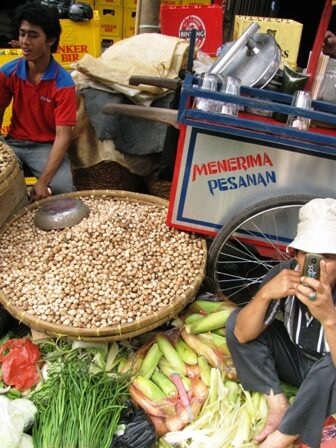
 Well, I finally made it back to the office after a couple of weeks on the road in Asia. Lots to talk about, of course, but it will have to wait for a while because I have too much catching up at work, and then I’ll be back home in Nairobi for the whole of August. But I can’t resist posting one little thing. What you see here is Bambara groundnut being sold in a street market in Bogor, Indonesia, where it is know as, wait for it, “kacang Bogor”, or Bogor peanut. This is the first time I’ve seen this crop outside Africa (including Madagascar). What prompted me to post about it is that I just saw an intriguing tweet about the crop from NRI:
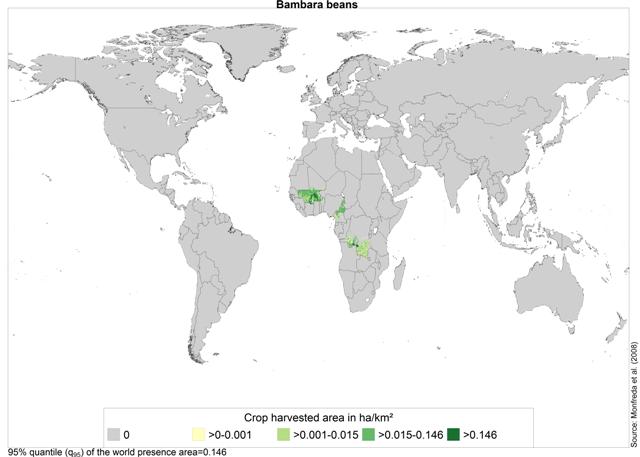
Wikipedia is clearly wrong about Bambara groundnut’s production areas. Though it does get the reference correct, it looks like it has reproduced the wrong map. But the correct one doesn’t seem to include Indonesia:
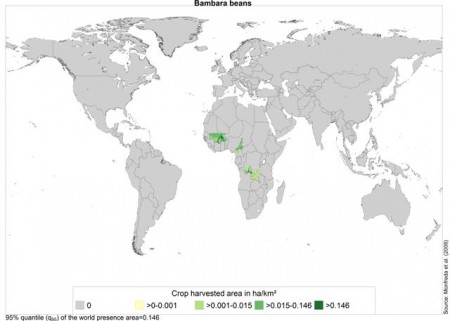
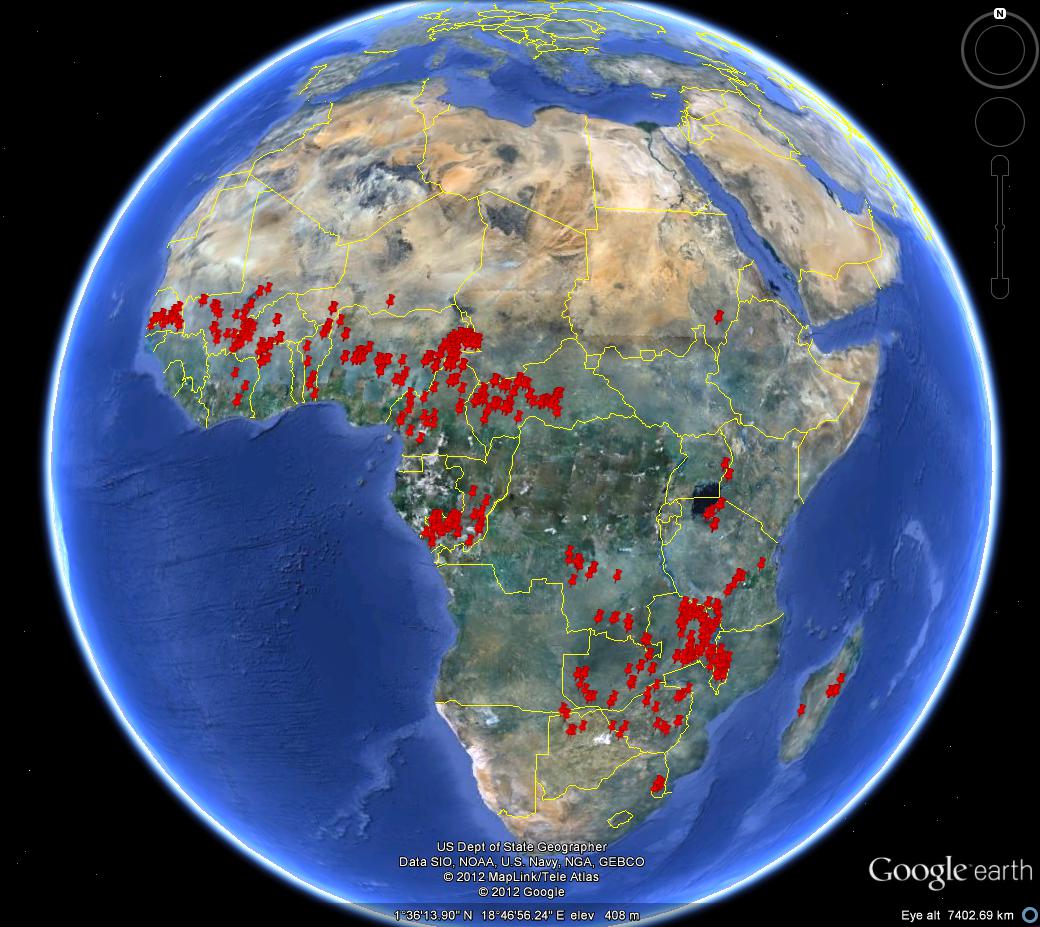
Mind you, it doesn’t include Madagascar either, where it is definitely an important crop, and from whence we even have germplasm, as Genesys reveals. I even collected it myself there, back in the day.
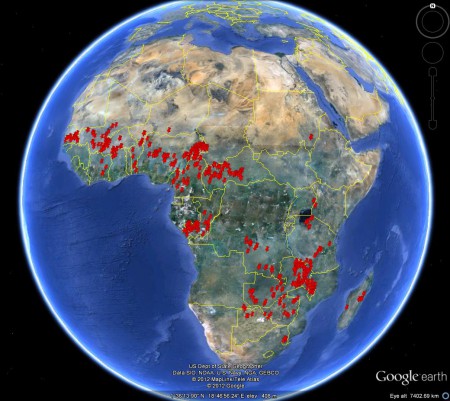
Oh, for decent crop distribution maps! Anyway, anyone have any other sightings of Vigna subterranean outside Africa/Madagascar?
 The
The