Mapping America

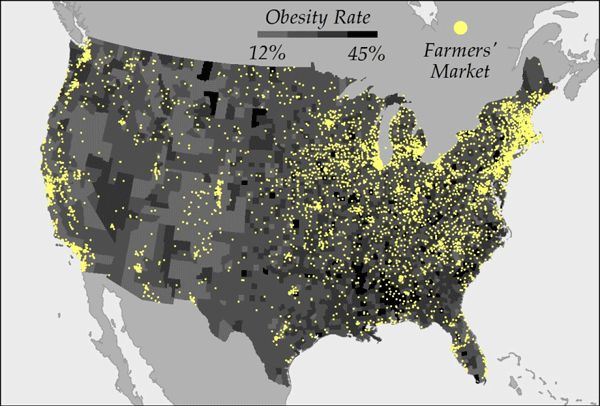
So there I was Scooping away, and what should turn up among the stuff I follow, and almost side by side on the screen to boot? Well, this map of obesity rates and farmer markets in the USA:
And, I kid you not, this map of food insecurity in, you guessed it, the USA.
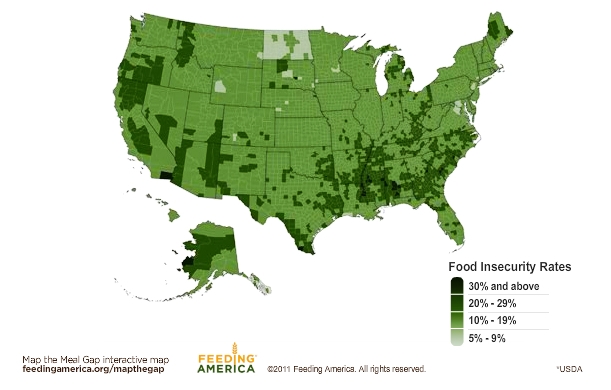
Eyeballing does suggest a certain association between obesity and food insecurity, doesn’t it? Talk about the double burden of malnutrition. Oh the fun one could have mixing and matching such maps, and the no doubt dozens of others that also exist out there, documenting the geographic distribution of McDonald’s, organic farms, drunkenness, gyms, pet ownership, house prices, fizzy drink consumption, weed busts…
How to react to emergencies

From early 2000, various agencies and individuals involved in livestock relief work began to question the quality and professionalism of their interventions.

Wow, thanks for sharing. Anyway, out of that crisis of self-esteem was LEGS born, the Livestock Emergency Guidelines and Standards. It’s not immediately clear to me after a brief browse of the website to what extent agrobiodiversity considerations come into these standards and guidelines, but I’ll explore some more and get back to you. Anyone out there aware of a similarly formalized initiative for seeds? It’s not as if guidelines for seed interventions are not needed. But they may be there already for all I know, embedded in the WFP and FAO seed relief playbooks.

LATER: And indeed they are. Good to know. Thanks to Tom Osborn from FAO.

Crop wild relatives of the USA

I’ve just come across the Jepson Flora Project, which

brings together all of the floristic references and data of the Jepson Herbarium. Resources of the Flora Project are directly linked the the Consortium of California Herbaria, CalPhotos, the California Native Plant Society, California Exotic Pest Plant Council, USDA-Plants database, and many other external sites. The Friends of the Jepson Herbarium help the Jepson Flora project carry out its work.

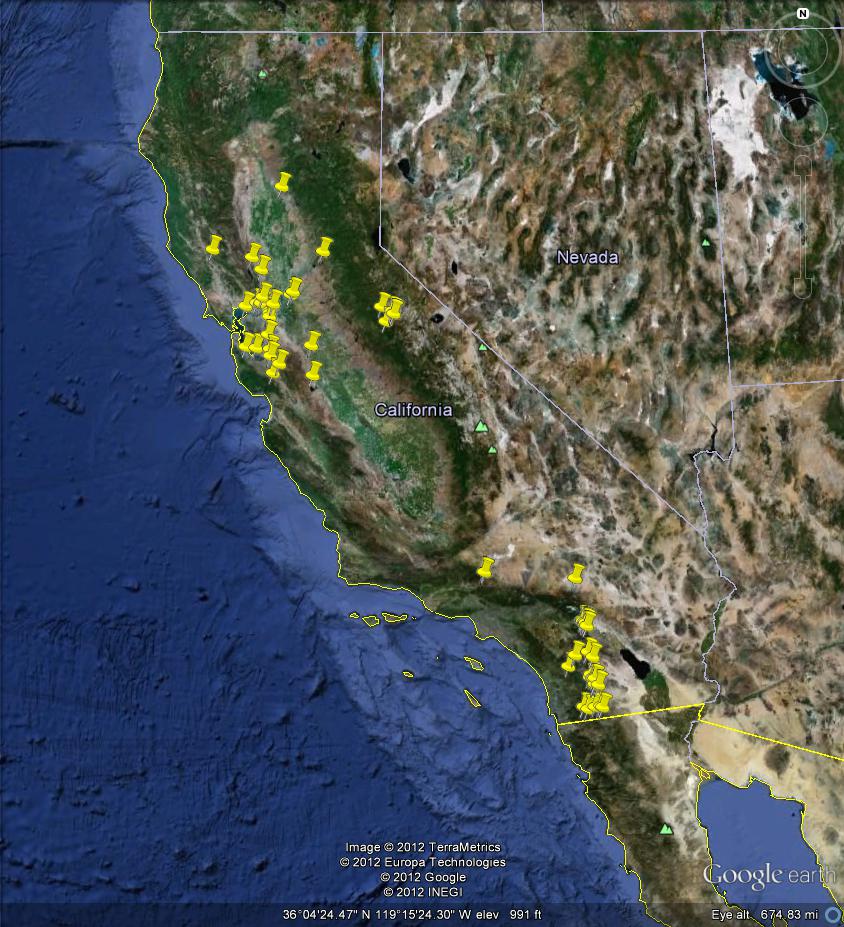
It doesn’t look particularly nice, but I do like the idea of aggregating all kinds of information about each taxon, like Helianthus californicus for instance, via the Jepson Online Interchange. From that admittedly ugly page you can dig deeper, and for example get a digest of taxonomic, distribution and phenology information based on specimens from members of the Consortium of California Herbaria. They don’t make it particularly easy for you 1 but you can, wonder of wonders, even export the location data to Google Earth, where you can mess with it as you wish.

I wonder how many other US states have something similar. And whether all their data on crop wild relatives could then automagically be aggregated up to the national level. Colin, are you there?

A valuable round up on watchamacallits (NUS, orphan crops, development opportunity crops etc etc)

On the Agricultures website our friends Stefano Padulosi and Paul Bordoni have just published a very valuable round-up on what they call “underutilized species”. 2 Valuable especially because it returns to the topic after six more years of research in the field, casting a historical eye over what worked and pointing out that these species — whatever you call them — can offer poor people a diversity of options to improve their lives, provided projects accept that it is complex and needs to be thorough.

The end-result … was very positive … and further confirmed that it is indeed possible to turn underutilized species into an effective instrument of development and improvement of peoples’ livelihood. This work did also demonstrate that the successful promotion of underutilized species needs to be solidly anchored in cultural-sensitive objectives that are fundamental in the sustainability of this work.

There is a lot more useful information in the article and the references it cites for anyone planning to work on underutilized species. That alone makes it worthwhile. More than that, though, it shows the value of returning to a topic after a little while, sharing the lessons learned, and bringing together in one place the many fascinating new activities, operational and planned.

I hope the African orphan crops project will be able to do something similar in six years time?