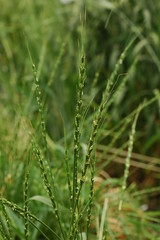
A new paper in GRACE from our friends at IPK sent me scurrying to check out a new database. The snappily titled “The Garlic and Shallot Core Collection image database of IPK presenting two vegetatively maintained crops in the Federal ex situ genebank for agricultural and horticultural crops at Gatersleben, Germany,” by Christian Colmsee et al., describes the Garlic and Shallot Core Collection Database (GSCC). This database provides very nice photographs and morphological descriptor information on each accession in said core collection. You can get data on the whole collection, minus the photos, from IPK’s main database. And much the same minus the characterization data in Eurisco, but then you get all the other European Allium collections as well. 1 I haven’t found a way to search either the core collection or the full collection on the basis of specific characterization descriptors but who knows, maybe the photos are enough for most Allium germplasm users. Perhaps someone from IPK can drop us a comment on their future plans for these databases.
World Food Day deconstructed
Lately we’ve done a fair bit of pointing you to other blog posts that have something worthwhile to say on topics of interest here. You may call this laziness. We call it content curation. And in that spirit I offer you one person’s take on World Food Day, which unfolded yesterday here in Rome and which continues all week with a diversity of talking shops. I’m not going to comment on the commentator, except raise a question about his description of FAO as
[T]he single entity that we rely on the most to inform us about the state of cultivators, what they’re growing in our world, and who isn’t getting enough of those crops as food.
Is it? Really? I’m too deep in to know whether this is a genuine reflection of how people see FAO, and would welcome enlightenment.
The pomegranate in Armenia
The pomegranate is everywhere in Armenia. And I don’t mean just in the markets. A famous film is named after the fruit. Tea and wine are made from it. And its image features on everything from church walls to tourist souvenirs. I suppose it goes back to pre-Christian mythology, in which it was a symbol of fertility and abundance — something to do with the belief that each fruit contained exactly 365 seeds, perhaps. Anyway, here’s a compendium of pomegranate iconography from my recent trip. Couldn’t get much information on diversity, I’m afraid, how much there is of it and to what extent it is endangered. Something for the next time.
Featured: Nutritional data
Robin Hide says nutritional data on PNG crops is pretty readily available:
The ready availability of such information to villagers is a problem, but at least this information is no longer buried in inaccessible journals.
And she has the references to prove it. But what about those villagers?
Brainfood: Ectomycorrhiza, Synthetic peanuts, Ancient Greek amphorae, European bison, Pea breeding, Animal domestication
- Ectomycorrhizas and climate change. One more damn thing to worry about.
- Meiotic analysis of the hybrids between cultivated and synthetic tetraploid groundnuts. It’s normal. The meiosis I mean. Why isn’t this sort of thing done with more crops?
- Aspects of Ancient Greek trade re-evaluated with amphora DNA evidence. More than just wine and olive oil.
- Reconstructing range dynamics and range fragmentation of European bison for the last 8000 years. More eastern and northern than thought, and more affected by the spread of farming than climate change in the Holocene.
- Resistance to downy mildew (Peronospora viciae) in Australian field pea germplasm (Pisum sativum). It comes from Afghanistan.
- Deciphering the genetic basis of animal domestication. Despite all that selection and all those bottlenecks, they really are diverse.
Don’t forget the open Mendeley group for the papers we link to here.