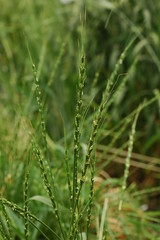
A photo of one of the wild relatives being used at CIMMYT to replay wheat evolution, minus the genetic bottleneck.
Mobile phone apps for agricultural biodiversity
When I was asked recently whether I knew of anyone developing mobile phone apps “which can assist with seed diversity” my first reaction was: nah. And that’s where I left it. For a couple of hours, at any rate.
Because then my second reaction kicked in: but wouldn’t it be cool to have one? Or many, in fact. Like a mobile version of Genesys which tells you if any germplasm is being conserved in a genebank from the vicinity of your present location. Like a little thing that updates the environmental niche model for a species on the fly as you find (or fail to find) more specimens during a collecting trip. Like a way of recording an event or activity likely to lead to genetic erosion in a place you’re visiting. Like a way for farmers to feed back information on the performance of seeds they’ve been given. Like a version of Climate Analogues that farmers could actually use. And that’s where I left it for a few more hours.
Which is when my third reaction arrived: hang on, maybe there are some after all. And indeed there are various things in the App Store that are agrobiodiversity relevant, though admittedly clearly not aimed at subsistence farmers. So is anyone keeping track of stuff that may be useful to developing countries? Well, google reveals Ken Banks is, at kiwanja.net. Mongabay.com did an interview with him a few years back. Nothing very seedy in his database, though. Yet. Do you know of any relevant apps we could send in to them? Maybe you’re developing one yourself? Let us know.
And yes, I know. I should just have googled right at the start. But I was in a mood.
GlobalHort provides focused searching for horticulture
Ever google “onions” to get information on what varieties to plant or the crop’s nutritional composition or how to grow it and get bombarded with nothing but recipes for the first n pages? No, neither have I, but one of the things I learned at yesterday’s GlobalHort meeting on DOCNet here in Rome is that they have a nifty function on their website which limits searching to a number of technical websites, thus minimizing this problem. What it doesn’t do, alas, is return the results from searches of different online species databases, as we’ve seen in these case of the taxonomic information aggregator we discussed recently. I also learned that the GlobalHort website, for all its searching sophistication, lacks an RSS feed.
Become a plant breeder, online!
News to me. Something called Extension “is an interactive learning environment delivering the best, most researched knowledge from the smartest land-grant university minds across America.” And next week, on January 21st, you can take part in 2 webcast workshops. Here’s the blurb:
This webinar is two 90-minute sessions with a 30-minute break between sessions.
Breeding for Nutrition: Organic eaters want nutritious food, but some modern breeding programs may be increasing yields at the cost of nutrition. Learn about breeding programs working with classical breeding methods (non-GMO) to breed nutritionally superior crops.Breeding for Microbial Interaction: Many beneficial soil microorganisms provide plants with access to nutrients, improve water uptake and even have the potential to suppress certain soil borne diseases. The ability to breed plants to optimize their interaction with the soil microbiology holds great potential to enhance organic farming systems. Hear about the latest studies in this important and expanding field.
Loads more at the Registration and further information page.