- The impact of distance and a shifting temperature gradient on genetic connectivity across a heterogeneous landscape. Climate change bringing formerly genetically isolated populations together, possibly increasing adaptive potential.
- Intra-varietal genetic diversity of the grapevine (Vitis vinifera L.) cultivar ‘Nero d’Avola’ as revealed by microsatellite markers. 15 distinct genetic group among 118 plants from 30 Sicilian vineyards seems quite a lot.
- Emerging cultivation of oregano in Sicily: Sensory evaluation of plants and chemical composition of essential oils. More from Sicily. Wild is best.
- Effect of vineyard-scale climate variability on Pinot noir phenolic composition. Its complicated. But at least Pinot noir is not like Nero d’Avola. Or is it? Oh, crap.
- Landraces in Inland areas of the Basilicata region, Italy: monitoring and perspectives for on farm conservation. “Farmer-maintainers” of landraces tend to be old and isolated. Interesting stratified sampling strategy. Basilicata? They grow horseradish there, don’t they? They do indeed.
- Critical distances: Comparing measures of spatial accessibility in the riverine landscapes of Peruvian Amazonia. GIS-calculated time-based accessibility influences rural livelihoods and land use pressure. And agrobiodiversity? Apply to Basilicata next?
- A morphological assessment system for ‘show quality’ bovine livestock based on image analysis. Image of side of animal fed through neural network almost as good as experts in determining how beautiful the animal is. well there’s a triumph for science.
- Endosymbionts and honey bee colony losses? Something else to add to the list of possible causes of colony collapse disorder.
- Commercial teas highlight plant DNA barcode identification successes and obstacles. About a third of products revealed signatures of stuff that was not listed in the ingredients, but that could be due to a number of reasons.
- What would happen to barley production in Finland if global warming exceeded 4°C? A model-based assessment. Nothing good, surprisingly. Better get some new varieties, I guess.
- Cajanus platycarpus (Benth.) Maesen as the donor of new pigeonpea cytoplasmic male sterile (CMS) system. Gotta love those CWRs.
- Australia’s Stock Route Network: 1. A review of its values and implications for future management. Established for movement of livestock before trucks and trains, but has lots of endangered species and communities. Great value on many fronts, in fact. Needs proper governance though.
- Should forest restoration with natural hybrids be allowed? Yep.
How grafting a plum tree led to an obsession
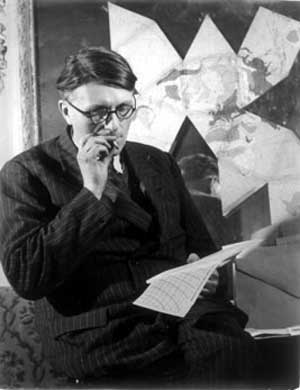 Joseph Needham is known as the Man Who Put the S in Unesco. And he did indeed successfully lobby Julian Huxley for the inclusion of science in the mandate of that new-fangled UN organization. More importantly, however, he is also known for his monumental work Science and Civilization in China. Eventually stretching over 27 volumes and comprising more than three million words, Needham worked on the project for the best part of fifty years, from the Caius College, Cambridge room which is now inhabited by Stephen Hawking, as it happens. And the volumes have continued coming out after Needham’s death in 1995.
But what possessed him to set off on such a journey, a journey which would consume his whole life? Well, it’s a fascinating story, and beautifully recounted by Simon Winchester, who wrote a recent biography of Needham, in a podcast in TVO’s Big Ideas series. If you’ve got an hour spare, listen to the whole thing. If you don’t, skip to 38 minutes in, and just listen to Winchester’s description of the epiphany Needham had in 1942 in a Kunming garden, a matter of only hours into his first visit to China, after five years of obsessively studying the language back in Cambridge at the knee 1 of his remarkable Chinese biochemist mistress. Needham had an interesting, complicated private life. Anyway, he was there on a mission from the British government to report on the needs of Chinese universities during the difficult years of the Japanese occupation, when they had in effect migrated west, trying desperately to continue functioning under siege.
 That epiphany has to do with agricultural biodiversity, and is the reason why I’m talking about this here. Although of course Needham’s work includes huge accounts of botany, agriculture and agroindustries, forestry, cooking and food sciences, and one of these days I’ll have to delve into them to see what they say about numbers of varieties in the past. But one thing at a time, what Needham saw in that wartime garden was an…
…old Chinese gardener in ragged blue coat and trousers with a wispy white beard who potters around smoking one of these long pipes with a tiny bowl — and a mongol cap, periodically performing elaborate grafting techniques on the plum tree. 2
Comparing that technique to what he remembered his father doing in their London SW11 garden many years before brought home to him how differently they did things in China. But there was something else. Here’s Winchester:
Perhaps the Chinese not only did their grafting differently but may have done this different kind of grafting very much earlier than anyone in Europe had done anything like it. Perhaps this old man’s technique was thousands of years old. Further still, quite possibly Needham could prove it was thousands of years old by researching old Chinese books on botany — which of course he could now read with ease.
He did research the problem of course — for fifty years. And it’s true, he did prove the antiquity of the grafting techniques that he saw. And of many other Chinese inventions too, thousands of them. That was the project of Science and Civilization in China. It changed the West’s perception of the Middle Kingdom forever, and the idea of it was born watching an old man top graft a plum tree in a Kunming garden.
There’s a coda to the story. The ashes of Joseph Needham and his two wives (both interesting characters in their own right), whom he outlived, were commingled on his death and spread under a Chinese plum tree growing in the gardens of the institute named after him in Cambridge, and which continues his work.
Mapping sacred sites
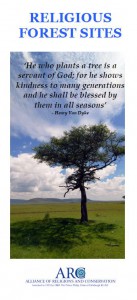 A short piece in The Times of India 3 pointed me to a longer version of basically the same press release on an interesting project to map the sacred forests of the world. This is a collaboration between the Oxford Biodiversity Institute and the Alliance for Religion and Conservation (ARC), the latter of which is new to me. Worth keeping an eye on. Unfortunately none of the players involved seem to have heard of RSS.
Ecological intensification at IBC18
Doyle McKey‘s presentation at IBC18 sounds like a doozy. I was alerted to it by Eve Emshwiller on Twitter, who said, among other things:
McKey: ecological intensification, not just green revolution model “intensification” of ag needed. #ibc18
Music to our ears, of course. Here’s a summary from the (very large) Abstract Book of the congress.
The evolutionary ecology of plant chemical defenses in agroecosystems: past, present and future.
McKey, Gleadow, Cavagnaro
Plant chemical defenses mediate interactions between plants, their herbivores and pathogens, and the naturalenemies of these plant parasites. In domesticated plants, farmers are added to this web of interactions. Plant defenses have been subjected to complex selection pressures under domestication, leading both to decreases and to increases in their concentration, and to shifts in their intra-plant distribution. This complexity is explained partly by variation in the kinds of plants farmers chose to domesticate, and partly by the kinds of environments that nature and farmers combined to create in agroecosystems. Today, the interactions mediated by plant defenses are affected by changing climate, rising temperature and increased atmospheric concentrations of carbon dioxide. These changes can threaten food security by lowering not only the production of food but also its nutritional quality. The strategies proposed to counter these threats envisage a wide range of ways, not mutually exclusive, to manage biotic interactions in agroecosystems. These include modifying crop plants’ natural constitutive and induced defenses and other sources of resistance; engineering crop plants to express novel defenses; and increasing the effectiveness of ‘integrated pest management’ (through natural enemies, other components of agrobiodiversity and pesticides) by modifying the structure and functioning of agroecosystems. In this presentation, we examine these proposed solutions through the evolutionary ecologist’s lens: What are their respective costs and benefits, and how do these affect the ecological situations in which each could help farmers produce sufficient amounts of high-quality food? How can the coevolutionary dynamics of interactions between crop plants and their biotic environment be managed to avert catastrophic fluctuation of yield?
A day in the life of archaeologists

Today is Day of Archaeology 2011 and a whole bunch of archaeologists are going to tell you about their day using social media. I bet many of them are digging up the remains of farming communities and studying the origins of agriculture. A great idea. How about A Day in the Life of a Genebanker next? Via.