We’ve blogged a few times about the emerging threat of taro leaf blight in West Africa, and what could be done about it. In case anyone was still in doubt about this threat, here comes the science.
The sequence analysis, morphological characteristics, and pathogenicity test confirmed the taro leaf blight pathogen as P. colocasiae. There are previous reports of occurrence of taro blight-like disease attributed to P. colocasiae in Ethiopia, Equatorial Guinea (1), and more recently in Cameroon, but comprehensive details on pathogen or disease are not available. To our knowledge, this is the first confirmed record in Nigeria of P. colocasiae causing taro blight. This disease poses a serious threat to the production and biodiversity of this important food crop. Urgent interventions are necessary to halt this emerging epidemic in West and Central Africa.
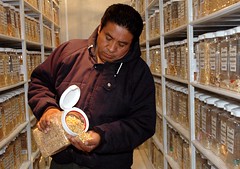
One possible intervention of course, is introducing resistant varieties, and I believe some of the resistant material from various South Pacific breeding programmes has now arrived at IITA from the in vitro genebank at SPC’s Centre for Pacific Crops and Trees.
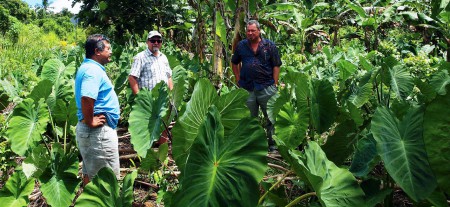
The history of the effort to breed resistant varieties is described in a recent ACIAR publication. Grahame Jackson, who was involved in the early stages of that work, had this to say about the article in a recent exchange of emails:
Interesting article; but it does not ask the hard, and perhaps more interesting questions: why did it take 5 years before there was a concerted effort to take the only route possible to solve the taro blight problem — to breed for resistance? … How many regional meetings were there over 5 years, until the start of TaroGen; how much money was wasted until a concerted effort was made to tackle the problem? … And in the meantime the Samoa farmers had solved their food insecurity: they had diversified into Alocasia, cassava, breadfruit, and rice. … More recently, another donor said of the disastrous epiphytotic of taro leaf blight in West Africa: “We get half a dozen emails a week describing some outbreak or other, mostly exaggerated. And anyway we can’t do anything until the countries ask.”
Shouldn’t be long now…
 You may remember that in