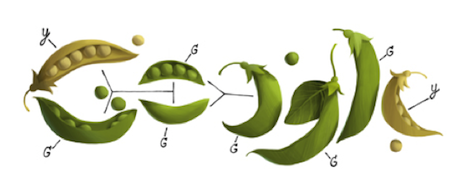
Good for Google. h/t Samantha. And if you want to see what you can do when you understand what Mendel did, visit Rebsie.
Crops, livestock, microbes, pollinators, wild relatives, agroecosystems, foodways …
Good for Google. h/t Samantha. And if you want to see what you can do when you understand what Mendel did, visit Rebsie.
Regarding in situ and on-farm conservation, the EU requested the identification of indicators of diversity to establish and monitor changes in diversity at a national, regional and global level.
That’s from IISD’s report on day 2 of CGRFA 13. 1 I like to think it’s because they read our post.
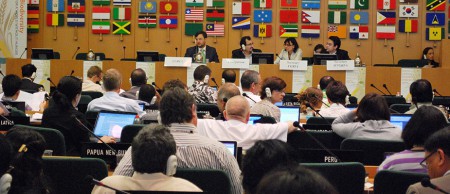
IFPRI is currently conducting a project entitled “How to achieve food security in a world of growing scarcity: role of technology development strategies.” The goal is to assess the impact of a range of technologies on crop production and yields; production costs; soil and water quality; on-farm incomes; and the use of water, energy, and other resources.
The technologies include breeding, so go and vote!
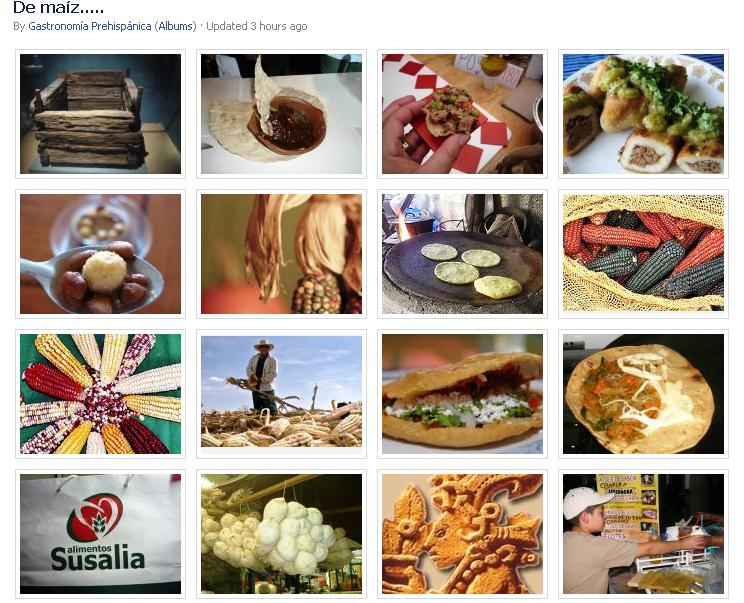
Gastronomía Hispanica has a great set of photos on its Facebook page on the “miracle of maize.” 2 Here’s a totally inadequate teaser. Go and friend them.
We get hours of amusement from poking holes in the many ways in which statements about the loss of 75% of agricultural biodiversity are likely to be less than accurate any way you slice them. But here’s an entirely new wrinkle. A friend recently wrote asking for some moral support for a grant proposal, which included a forceful justificatory phrase to the effect that 75% of agricultural diversity has been lost since 1990. 3
I twitted him gently about this, something snitty to the effect of “interesting statistic, have you got a source for that?” And blow me down if he didn’t. Not just any old source either. A communication from the [European] Commission to the European Parliament, the Council, the Economic and Social Committee and the Committee of the Regions, no less, entitled Our life insurance, our natural capital: an EU biodiversity strategy to 2020, aka COM(2011) 244 final.
And there it is, on page 1 of the Introduction.
[A]ccording to the FAO … 75% of the genetic diversity of agricultural crops has been lost worldwide since 1990.
I wonder where they got that figure? Not from FAO. The same year is present in at least one other language, so if it is a typo it entered the proceedings early. But honestly, did nobody find it just the least little bit odd? Then again, my friend didn’t either. I suppose we’re the odd ones.