 Participatory research and on-farm management of agricultural biodiversity in Europe, by Michel Pimbert, looks like an interesting read. So, in a different way, does the EU biodiversity strategy to 2020. What is not so great is that, at first sight, there doesn’t seem to be much of the former in the latter. But let me get back to you when I’ve gone through both in more detail.
Yes! We do have bananas
Almost a week ago we reported on the fabulous news that bananas, and especially the threat posed by a virulent new race of Fusarium wilt (better known as Panama disease) 1 had featured on BBC’s The One Show. That show, alas, is not available outside the UK without some very fancy jiggery pokery, which hoops everyone who wanted to see it would have had to jump through for themselves. 2 So, in a spirit of sharing and collective action for agrobiodiversity, we assembled a crack team of hoop-jumpers and did the jiggery pokery for you.
Here you go: Restaurant critic and all around good guy Jay Rayner comes to grips with the threat to bananas, aided and abetted by Pat Heslop Harrison, whose blog post on the subject we refer you to once again, just in case you want more on the topic than The One Show offered.
Was it worth it? Of course it was.
Private cabbages go public in North Carolina
Of course the obligatory conspiracy theories have surfaced, but Monsanto’s gift of its extensive cabbage germplasm collection to North Carolina’s State University’s Plants for Human Health Institute seems genuine enough.
“Monsanto is pleased to contribute cabbage germplasm to N.C. State University’s Plants for Human Health Institute at the N.C. Research Campus,” said Consuelo Madere, Monsanto’s Global Vegetable and Asia Commercial lead. “We sell cabbage seed under our Seminis brand in several world areas,” she said, “and we are delighted that the Institute will be working at NCRC to develop cabbage varieties well suited to the local production needs in North Carolina. It’s a great example of public and private efforts coming together at the campus.”
That might suggest that Monsanto would look askance at the material getting too far beyond North Carolina, but Dr Allan Brown, the breeder with the Plants for Human Health Institute who will be managing the collection, assures me there are no strings attached with regard to availability. He has a long job ahead checking on the viability of all the accessions, and regenerating and multiplying the material as needed, but he sees no impediment to it eventually being widely available, though he cannot put a date on that.
That’s good news for cabbage breeders around the world. If I were a proper reporter I would ask Monsanto why they didn’t make the donation to the USDA’s Northeast Regional PI Station at Geneva, New York, which manages plenty of cabbages, and which would then very willingly have made the material available to NCSU, and everyone else to boot. Maybe I will anyway.
The Pahiyas festival
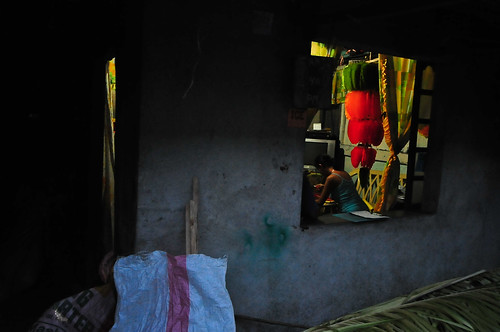
“Pahiyas is a Filipino term that means precious offering and predates the Spanish colonial period of the country by several centuries. This celebration was originally an animistic ritual practiced by the pre-Christian Filipinos to honor their rice god, Ampo’t Paray, and to ask for bountiful harvests in the coming year.”
What the UK’s DfID is doing about nutrition
Anna Taylor is Senior Nutrition Adviser at the UK Department for International Development (DfID). In this little video she discusses the Scaling-Up Nutrition initiative and the Montpellier Panel Briefing. I don’t think I heard the D-word …