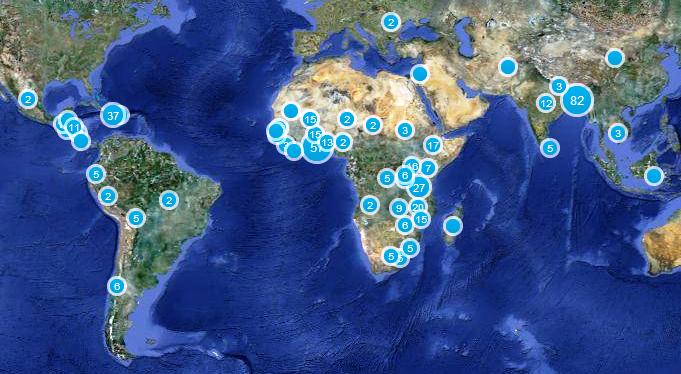
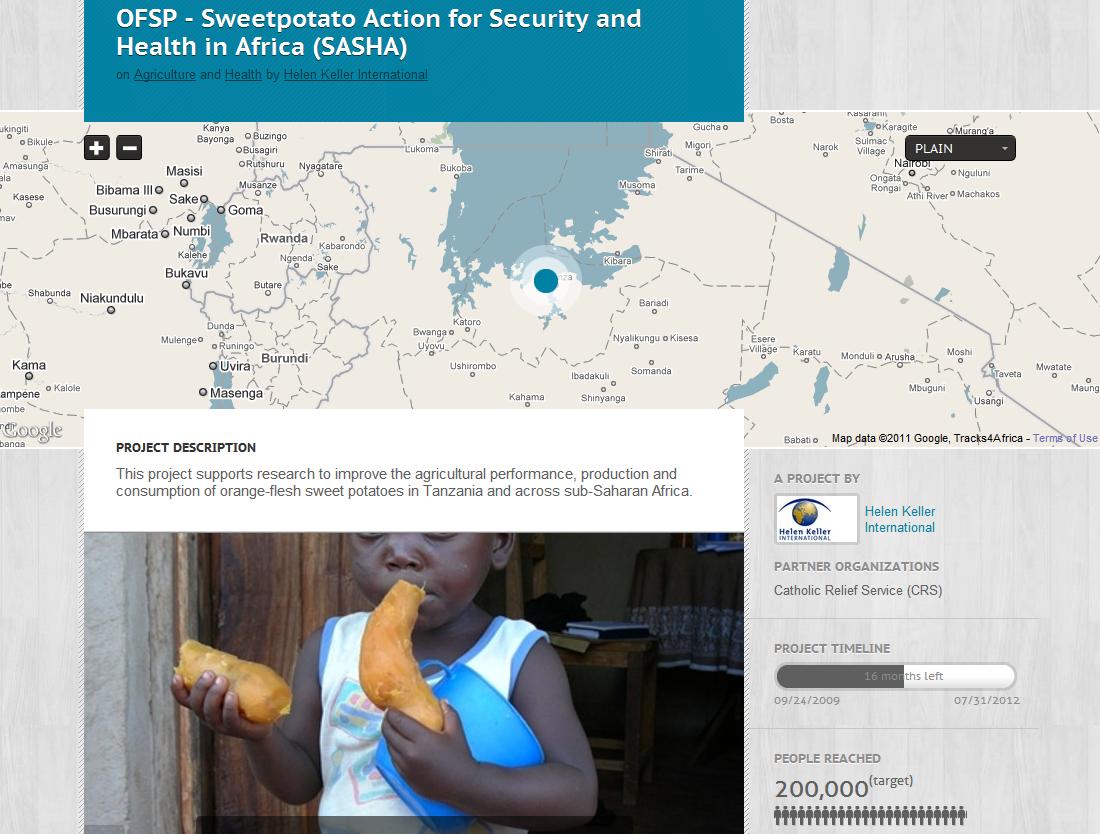
This picture contains more layers of meaning than you can possibly imagine. Nicola Twilley unpacks some of them at GOOD. Has she left any out?
Agrobiodiversity is crops, livestock, foodways, microbes, pollinators, wild relatives …

This picture contains more layers of meaning than you can possibly imagine. Nicola Twilley unpacks some of them at GOOD. Has she left any out?
The many benefits of growing a mixture of crop varieties together have now been demonstrated for many crops under many conditions. Latest entry is in a kind of specialised niche — organic tomatoes for processing — and the results are a little underwhelming. Three scientists at the University of California, Davis, grew one, three or five tomato varieties in soil that was either fallow or had a mustard cover crop the preceding winter. 1 Although there were differences between the mixtures and the monocrop, they were not very pronounced: more shoots, and more fruits that were somewhat redder.
The 3-cv mixture thus had some minor advantages compared with the monoculture, but overall, there was little evidence of higher ecosystem functions from mixtures vs. monoculture.
Leaving aside the question of whether the growing conditions on the farm, as described in the paper, accord with organic ideals, given that they do abide by the rules, it is hard to know what to make of the poor showing of mixtures. The authors concede that there may simply be no benefit to be had because the conditions on California organic processing tomato farms don’t stress the crop to the point where a mixture might be a good thing. It is also possible that the varieties — AB-2, CXD-19, H-2601, H-8892 and Red Spring — do not actually encompass enough trait diversity to offer any benefits. But then, they were chosen as simply the best-performing processing varieties. If mixtures were assembled deliberately to deliver potential benefits, the results might well be different.
Still, good to know.
We’ve heard more from El-Sayed Mohamed El-Azazi, who’s doing a PhD at the Desert Research Centre on seed conservation of Acacia spp. (“Ecophysiological studies for some Acacia species grown in Egyptian Deserts and its conservation in gene bank” is the title). You’ll remember that the place was looted a few days ago, and people are justifiably worried about the Egyptian Deserts Gene Bank housed by the institute.
El-Sayed is adamant that the seeds and field genebank are safe. However, it is clear that the laboratories have been thoroughly trashed, and a lot of equipment broken or taken.
Along with the computers went a lot of data. El-Sayed says he has lost some of his PhD data. And the genebank’s database seems to be gone, although the passport data is still around in hardcopy. There are about 1100 accessions in the genebank, of about 750 wild plant species.
Which brings up a point that’s maybe not often addressed. And that is that the desirability of safety duplication goes as much for the data about germplasm accessions as for the seeds themselves.
A Svalbard for data, anyone?
Less bad news from the genebank at the Desert Research Centre in North Sinai, Egypt.
ElSayed ElAzazi, a PhD student there, has left a string of comments assuring us that the seeds are safe for now, even though a lot of equipment has been looted. Including, alas, his PhD data. All we can do is wish him, and the genebank, good luck in getting back on track.
A request from MapSpaM for people to help them in mapping the distribution of cassava cultivation in Africa 2 forced me into some more playing with Google Earth. I just took MapSpaM’s draft cassava map…
…and plonked on top of it the germplasm provenance data from Genesys. Here’s the result (right click to save the kmz file):
Which highlights — not for the first time, but very powerfully — the lack of material from eastern and southern Africa in the international genebanks. It is definitely important to think about safety duplicating national collections from those countries.
Here’s a close-up for West Africa:
Pretty good representation overall, but even here there are some definite gaps. Time to get collecting again in Africa too. Though of course a geographic gap is not necessarily a genetic gap…