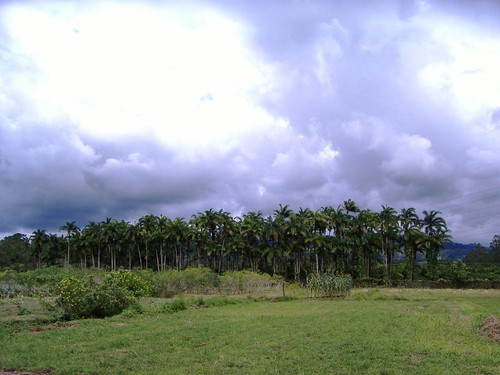
It’s been in the news recently…
Isolated agrobiodiversity

Tristan da Cuha is the most remote inhabited island in the world. When I saw this photo from the island (used by permission from Maurits Heech, who has a lot more on his Flickr site) in a post earlier today I had to wonder whether there might possibly still be some interesting old(ish) agrobiodiversity lurking in the fields and gardens of the place. Would make a nice little project.
To Serve and Conserve abstracts
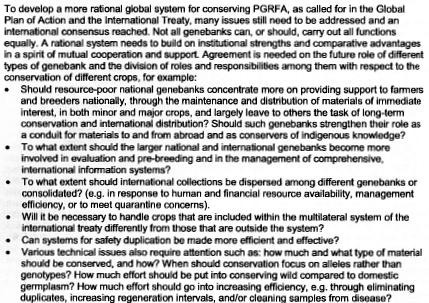
 We’ve managed to get our sweaty little hands on the volume of abstracts 1 of the Eucarpia To Serve and Conserve conference, which has just ended in Wageningen. No time to digest the contents fully yet, but to stimulate your appetite, here’s part of the abstract of Geoff Hawtin’s paper, which asked: “Whither Genebanks?” Some provocative questions in there.
FAO says crop wild relatives must be collected
Plant genetic material stored in gene banks should be screened with future requirements in mind. Additional plant genetic resources — including those from wild relatives of food crops — must be collected and studied because of the risk that they may disappear.
Climate-adapted crops — for example varieties of major cereals that are resistant to heat, drought, submergence and salty water — can be bred. FAO stressed however that this should be done in ways that respect breeders’ and farmers’ rights, in accordance with the International Treaty on Plant Genetic Resources.
That’s from FAO’s a submission to the United Nations Framework Convention on Climate Change about a week ago. Can’t think how I missed it. Of course, there is some collecting work being planned now on crop wild relatives…
VIR’s Pavlovsk Research Station in the snow


VIR’s Pavlovsk Research Station, a set on Flickr.
Still all to play for at Pavlovsk.