As promised earlier, here’s a little something on recent efforts to deconstruct an ancient Roman medicine. The short piece in The Plant Press which initially intrigued me eventually led to the website of the Institute for Preservation of Medical Traditions, a fascinating organization of which I was entirely ignorant. It has some more information and some photographs, and in an easier to handle form than the pdf you get The Plant Press in. It will do while I try to locate the published paper.
It seems that in 1974 a 2000-year-old Roman shipwreck was found off the coast of Tuscany. It the course of excavating it, various remains were recovered which pointed to the presence of a physician on board. Among these were a water-proof tin container with what looked like pills inside. In 2004, fragments of these reached Alain Touwaide and Antonella Appetiti at the Institute for Preservation of Medical Traditions, who started to analyze their organic and inorganic composition. They teamed up with geneticist Robert Fleischer of the Smithsonian to identify the botanical constituents of the tablets using the latest DNA fingerprinting technology.
First results seem to indicate that the tablets contained at least carrot, radish, parsley, celery, wild onion, and cabbage, that is, simple plants to be found in the garden. There was probably also yarrow and the more exotic hibiscus, possibly introduced in the Mediterranean area from Asia. Significantly, all the components of the pills identified so far (be they vegetal or inorganic) can be found in the ancient medical texts that the scholars in the Institute have been locating in manuscripts preserved in collections worldwide, transcribing and digitizing, studying and databasing for decades, all activities that contribute to the Institute’s program aimed at recovering the medical heritage of the ancient Mediterranean world.
This is apparently the first time that archaeological remains of ancient medicines have been found, let alone their ingredients identified.
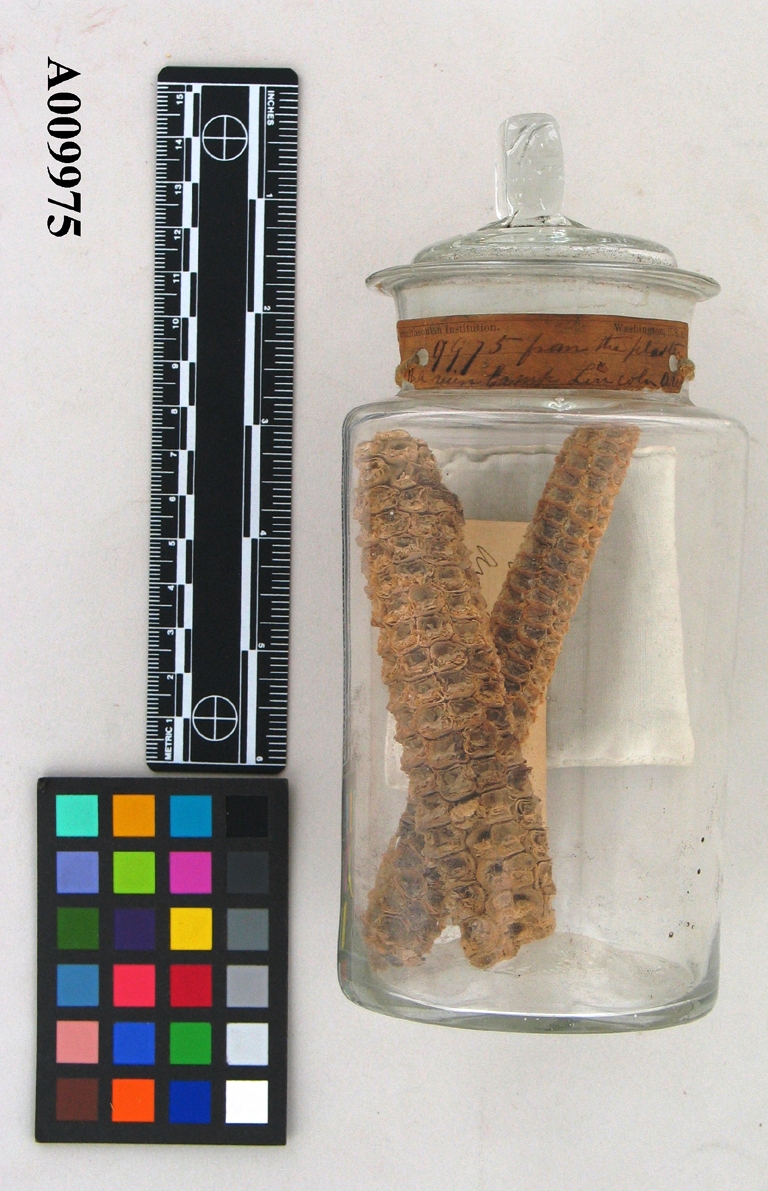 Another great find from the recent issue of The Plant Press I blogged about yesterday is the Smithsonian’s website on Edward Palmer: