As promised a few days ago, the Roots for Life campaign was officially launched on 1 October. In a nutshell, it is looking for 4235 “heroes” to donate US$ 5,000 each. That will save every variety of the cultivated potato, plus its wild relatives, forever. The money will be “channeled” to the genebank of the International Potato Centre. So, get out your checkbook.
Climate change winners and losers in Europe: the story so far
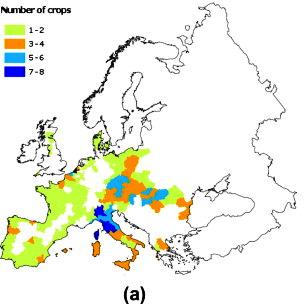 A recent paper in Agricultural Systems looks at what’s happened to the potential yields of eight crops (winter wheat, spring barley, maize, winter rapeseed, potato, sugar beet, pulses and sunflower) in Europe from 1976 to 2005. Italy and central and eastern Europe have been the big losers (left), probably due to higher temperature increases, sometimes in combination with lower radiation values.
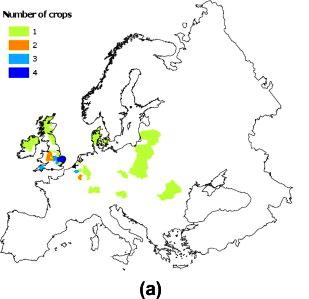 And the British Islands have been the big winners (right), due to to longer period during which temperature is optimum for CO2 assimilation, sometimes in combination with higher radiation levels. That, of course, cannot last forever, though.
Featured: Genetic erosion
Our innocuous post on genetic erosion in Georgia elicits consternation from Dirk at the lack of proper reference to previous work, support from Eliseu by analogy with a similar study in Portugal, and the usual diatribe from Luigi about the level of discourse on genetic erosion. But really, it was all about the threshing board.
Protected areas and crop wild relatives: opportunity or dead loss?
Just wanted to point out to everyone that the biodiversity vs agriculture conflict is being played out in the comments to a recent post of ours.
Danny says:
I can’t help but feel we, the agricultural biodiversity community, have failed to tap into the ‘spirit of Nagoya’, and that this has happened in the International Year of Biodiversity (IYB) may well represent a real missed opportunity.
Dave sees that and raises him:
…the only reason the conservationists want agricultural biodiversity is to document key wild relatives in reserves to prop up justifications for the failing system of protected areas.
Jump in, the water’s fine!
Farming relicts in peril in Georgia
From our friend and colleague David comes news of a paper on erosion of crop genetic resources in Georgia. The one in the Caucasus, not the southern US. Anyway, good to be reminded that it’s not just species that are in trouble, but also crop varieties.
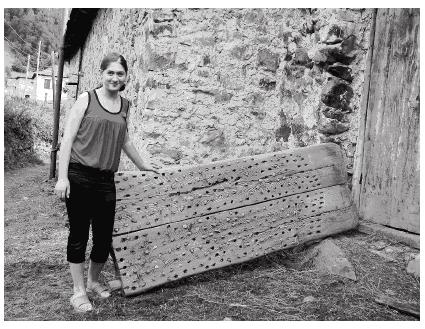
There are some nice B&W photos in the article, including this one of a threshing board, which reminded me of one of our earliest posts.
The bottom line?
…in Georgia the main reason for genetic erosion of ancient crop varieties is demographic decline in mountain regions due to harsh economic conditions and lack of modern infrastructure.
Wait. So if there were more people in the mountains, and better roads, there would be more landraces? All those people wouldn’t be growing modern varieties and trucking the harvest to markets in the cities?