On the occasion of the World Cowpea Conference 2010 in Dakar, which is going on now and has resulted in some press interest, IITA have published an interview with the manager of their genebank. Which of course maintains the world’s largest cowpea collection on behalf of us all. Many of the points she makes are addressed in the global strategy for conservation and use of cowpea genetic resources, which I believe she’ll be presenting in Dakar. Dominique doesn’t mention core collections, but another IITA article does. We even have the results of a gap analysis for wild Vigna in Africa. And finally, also doing the rounds is a summary of the results of a survey of users of the collection. Though I wouldn’t bet the farm on those cost numbers turning out to be accurate. Do we have any readers in Dakar who’d like to tell us what’s going on?
Pavlovsk commission presents its results
Thanks to Tatyana Livshultz, we have a translation of the interview with the members of the expert scientific commission that was appointed by the Russian Government Department of Economic Development to examine and report on the living collections at the Pavlovsk Experimental Station.
Here’s Tatyana’s summary of the main findings:
1) The station holds extremely valuable (from scientific, agronomic, and historical perspective) living collections particularly the stone fruits (which was assembled beginning 80-85 years ago by the Vavilov Institute) and currants (which is a younger collection).
2) Some of these collections (particularly the stone fruit) are in very bad condition (old trees at risk of death) and need urgently to be renewed (re-grafted, re-propagated); others (e.g. the currants) are relatively well-maintained. The brambles are overgrown by grasses.
3) The collection has not been well-documented or well-maintained. They recommend a change of management/administration at the Pavlovsk Experiment Station, and additional resources made available for maintenance and repropagation of the collection.
4) They recommend that the station be maintained. The 13 hectares where the fruit collections are currently planted must be maintained, an additional 20 hectares are needed to renew and re-propagate the collection while maintaining the original plantings. Additional areas that do not hold collections (e.g. a wetland) or are currently planted with field crops (grains or potatoes) are identified as unnecessary to protect and may be developed.
5) The commission recommends against moving the fruit collection, considered too risky (too great a risk of loss of accessions).
Well, that sounds pretty hopeful to me. 1
Berry Go Round comes around again
The blog carnival know as Berry Go Round is up and about for the 31st time. Do go have a look at its tempting miscellany of botanical lore. And if you arrived here from A Blog Around The Clock, welcome.
Mediterranean hotspots get Nagoya love
It must be the spirit of Nagoya, because following the announcement of publication of a list of threatened plant species from IUCN and Kew, there’s news of a major conservation effort, this one focusing on the Mediterranean.
The areas targeted look to me like they might well have quite a few crop wild relatives. 2
• Southwest Balkans
• Mountains, Plateaus and Wetlands of Algerian Tell and Tunisia
• Atlas Mountains
• Taurus Mountains
• Cyrenaican Peninsula and
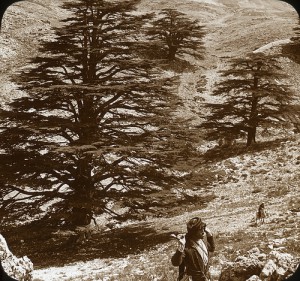
• Orontes Valley and Lebanon Mountains 3
There’s more information on the project, including an ” ecosystem profile” and a call for proposals, on the website of the Critical Ecosystem Partnership Fund.
Featured: Spatial data
Glenn tells us Google is all people need to find the spatial data they need.
Whether we could find spatial data from Google or whether we need some kind of special setup has not yet been fully resolved… I understand that Google is working on some protocols for finding spatial data. But my sense is that this question has been put on the back burner because people don’t think it is all that relevant. They can seem to find what they need.
One less thing for the CG to do, I guess.