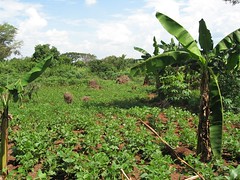
It’s very easy to assume that after a disaster one of the things that farmers would most welcome from the outside is good seed. But of course it’s a bit more complicated than that, as an assessment by Catholic Relief Services of the seed sector in Haiti after the recent earthquake makes clear. Perhaps the key result was that there was plenty of seed around:
Good quality seed of the varieties that farmers’ prefer is available in the areas surveyed. The household survey shows that farmers are utilizing similar levels of own seed stock as in previous years. Vendors in the market report normal levels of seed for sale.
The problem was access:
Families simply do not have resources available to make the usual investments in agriculture. This has led, in some instances, to decisions to actually cultivate less because of inability to acquire inputs (including seed, fertilizer, and animal traction).
There were also changes in cropping patterns, with a shift towards shorter-duration crops to get quick yields and income. The main recommendation was stark:
Direct seed distribution should not take place… This emergency is not the appropriate time to try to introduce improved varieties on anything more than a small scale for farmer evaluation.
And there was some trenchant criticism of previous seed distribution programmes:
…seed provided by FAO post hurricane last year either arrived too late to plant during the season or failed to germinate.
Rather, CRS recommended that there should be seed fairs to facilitate access to locally available and adapted planting material, food distribution to alleviate pressure on seed reserves and cash for work to build up household capital to purchase inputs. And also something I’d never heard of: livelihoods fairs, with vouchers. There’s not much on the internet about these, but they seem to take the idea of seed fairs and extend them to other necessities of rural life, such as tools, fertilizers and tin roofing. The idea is “to help restore liquidated reserves and enable farm households to start reinvesting in their productive capacity.”
Now that all seems very sensible, and it strikes me that it probably isn’t the fist time a survey along these lines has been done, and such recommendations put forward. But are the mistakes of the past being repeated anyway?
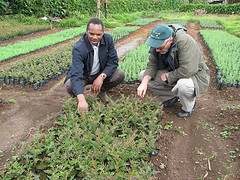 Got photos of Africa? I know we do. But that’s not the point. The point is that the Worldwatch Institute wants your pictures to illustrate its forthcoming report State of the World 2011: Innovations that Nourish the Planet.