Conservation Letters has a paper which estimates how much conservation NGOs have spent in Sub-Saharan Africa. The short answer is about US$160 million a year in 2004-6, but there’s plenty of dissecting of the headline numbers in the paper. What I want to know is: how much of that went on agrobiodiversity. Or maybe just the wild relatives of crops and livestock?
César Gómez Campo RIP
Prof. César Gómez Campo died in Madrid on September 5 last year. I’m sorry we didn’t note this earlier.
In 1966 César established the ‘‘Banco de Semillas de la Escuela Técnica Superior de Ingenieros Agrónomos de Madrid’’ (Seed Bank of the Higher Technical School of Agronomists of Madrid, in short: UPM Seed Bank), the first example ever of gene bank devoted to the conservation of wild species seeds. In César’s idea the long term ex situ conservation of wild taxa was a form of conservation of species endangered of extinction complementary to botanical gardens. In fact, his mind conceived this idea in a very modern way, that is including concepts of the genetic variation, in times when the concepts of nature conservation were at their very beginning.
That’s from the obituary at Genetic Resources and Crop Evolution, which is unfortunately behind a paywall except for the first page; everyone can, however, access Gómez Campo’s “essential” bibliography. He’s been described as a pioneer of the conservation of the Spanish flora, especially crop wild relatives, and that is true. But his work on ex situ conservation had an impact far beyond the Iberian peninsula.
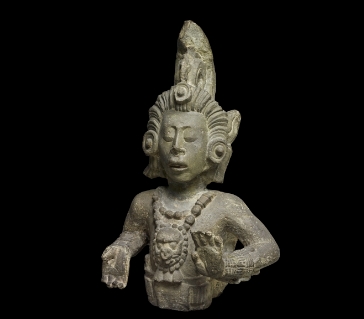
Maize god appears on radio
Jeremy has just contacted me from London saying that today’s artifact on the BBC’s A History of the World in 100 Objects series is none other than a Mayan statue of (one of?) the maize god, Hun Hunahpu. 1
In Mayan mythology, the maize god was decapitated at harvest time but reborn again at the beginning of a new growing season.
You can read all about it, and listen to the programme, online. I’m sure this will not be the last agrobiodiversity-themed object to be featured on the programme.
Documenting African agricultural innovation
Do you have examples of the policies and institutional arrangements needed to promote agricultural innovation in Africa? If so, the Agricultural Innovation in Africa (AIA) Project would like to hear from you.
FAO publishes two key animal genetic resources references
Our FAO animal genetic resources colleagues have been busy. From DAD-Net, news of “Breeding strategies for sustainable management of animal genetic resources:”
Genetic improvement is an essential component of the management of animal genetic resources and can make important contributions to food security and rural development. Yet, the majority of developing countries have not been successful in sustaining breed development programmes. The objective of these guidelines is to help countries plan and develop effective genetic improvement programmes and to maximize the chances that such programmes will be sustained. They are intended for use by policy-makers and organizations involved in livestock development. They provide practical advice on how to identify livestock development objectives and strategies and define breeding objectives that are in line with them, match animal genetic resources to production systems and identify the most appropriate breeding scheme, initiate or improve straight-breeding or cross-breeding programmes and evaluate investment decisions.
And, once you’ve managed the beasts sustainably, of course you need to market them: Adding value to livestock diversity – Marketing to promote local breeds and improve livelihoods.