In a recent post about genetic erosion I asked one of the commenters, Andre, two questions:
1: What is the justification for a single set of seed regulations designed for and with large commercial farmers, which does not meet other growers’ needs?
2: Why, in your view, is Europe’s position preferable?
He was kind enough to send this reply.
There are three questions in the first one.
1. Is there a single set of seed regulations? The answer is yes and no. No as regards the underlying policies; yes, on balance, as regards the technicalities. Any country that wishes to partake in the international seed trade will adopt the standards and procedures recommended by OECD and ISTA. And , of course, any country considering regulations for the domestic market (and any consultant working for such a country) will draw inspiration from existing proven systems, and this leads to a certain degree of uniformity. Technicalities are also largely defined by agricultural biology and technology.
2. Are seed regulations designed for and with large commercial farmers? The answer is again no. Seed regulations are designed in the public interest. Their fundamental objective is that farmers, small and large, can reliably source high-quality seed, which is a basic element of agricultural and food security..
It is fair to say that seed regulations – both major components (seed control and variety listing) where they exist – benefit small farmers much more than large ones. Small farmers have indeed much more to loose than big ones from spurious seeds, or from defective varieties. Big farmers also have more options.
3. Do seed regulations fail to meet the needs of some growers? If you consider a farmer who is determined to produce seed for sale outside the legally defined parameters in systems which only allow trade in certified seeds, then the answer is yes. If you consider the European system, with limitative lists of varieties authorised for sale, and a grower who is adamant at growing a non-listed variety, then the answer is also yes. If you consider the needs of the vast majority of growers, then the answer is no.
The regulatory framework is wrongly blamed for a number of things, and three points will be made below. The basic premise is that the regulations are not cast in stone, and are easily adaptable, even though the lawmaker or the administrative authority may sometimes be a little slow (this is a criticism that one can in fairness make in respect of the adaptation of the system to the needs of agricultural biodiversity management).
1. There is no fundamental or conceptual exclusion of non-uniform varieties. European variety catalogues have listed, and may still list, population varieties (landraces or ecotypes) next to varieties that have been made uniform to the higher standard applicable to, say, F1 hybrids. The OECD schemes for the varietal certification of oil-seeds moving in the international trade provide for the possible inclusion of “bred varieties” and “local varieties”, whereas those for cereals use a definition of “variety” that is akin to that of “cultivar” (and does not specifically refer to uniformity).
There is, of course, a trend towards more uniformity as ‘modern’ varieties replace the more traditional ones (this has been the case for many outbreeding vegetables with the advent of F1 hybrids); and sometimes towards less, for instance with varietal associations of CMS lines and pollen parents… The world of agriculture is complex. The underlying principle here is that the standards acknowledge that which breeders and seed producers can reasonably do – and ought to do for the benefit of farmers – rather than set administratively defined requirements.
2. The relation with biodiversity issues is not an easy one. Basically, however, the regulatory framework, particularly variety listing, is a record-keeper rather than an actor of the obsolescence of varieties and their eventual disappearance from the marketplace. Countries with a thriving agriculture have large lists of varieties (over 100 winter wheats in Germany, and seven spelts…), and varieties can still be around when they are multiplied on some two hectares in the case of cereals. The system is thus quite friendly to varieties with an anecdotal presence on the marketplace.
The introduction of variety listing in the United Kingdom in the run-up to the country’s accession to the European Union, in particular, gave rise to a polemic on genetic erosion (the famous argument of the genetic wipe-out by the stroke of a pen). The fact is that, after years of laisser faire, the authorities conducted careful comparative trials and essentially eliminated synonyms. This, by the way, speaks volumes on the usefulness, if not necessity, of an elaborate framework.
On the unarguably positive side, authorities that conduct DUS tests and VCU trials maintain large reference collections (16,000 varieties from 120 species in the case of the French GEVES) and thus contribute to conservation. Through their extensive multi-location trials (1,400, with some 100,000 plots in the case of GEVES) and biochemical and technological tests, they also contribute to characterisation.
On the positive side too, the testing system creates a single platform for data generated on varieties produced by all kinds of breeders, small and large, for a reasonable price. This has contributed to the maintenance of a network of small and medium-size breeding enterprises, with diversified breeding programmes. There is a recent trend towards concentration, but even there, many entities maintain a good deal of their original identity.
3. There is no link with plant variety protection. As a matter of fact, the UPOV Convention requires that the two systems be independent.
To combine the three points above, the source for de Schutter’s following statement is a complete mystery: “First, seed regulations (national seed certification schemes) may only catalogue commercial varieties which are PVP protected (since only these present the stability and uniformity required for cataloguing), and either explicitly exclude the trade of non-PVP-protected seeds or lead to de facto exclusion of traditional varieties, since the latter are normally not genetically homogeneous enough to meet the requirements for approval and certification.”
As to the second question, I do not think that one can simply posit that Europe’s position – with a catalogue system that basically prohibits the marketing of non-registered varieties and a certification system which basically prohibits the sale of ‘ordinary’ seed– is preferable.
To move up one step in the comment which is the subject of this response, it is difficult to adduce the caveat emptor principle for seeds – particularly so in relation to small farmers and much more so in developing countries – and standard consumer protection legislation – even in countries where it is developed – is close to ineffective. A major challenge in laisser faire systems is, first, to have a clear definition of the features and qualities that were expected from the seed and, second, to prove that a crop failure was due to the seed.
The European catalogue system is the result of a co-evolution with overall agricultural policy, public institutions backing the system, the plant variety and seed industry and, last but not least, mentalities leading to a reasonable degree of acceptance of the system. “Reasonable” is required here if one considers, for instance, the fairly large body of opinion among farmers in favour of farm-saved seed.
In developing countries, a structured, effective and reliable variety and seed system can only be established gradually, particularly for staple crops. Seed legislation must not only allow, but also promote the transition. The European-style system cannot do that. But this does not mean that it should be excluded altogether; on the contrary, it could be entirely appropriate for specific crops and types of varieties (the legislation on genetically modified varieties is essentially leading to the same degree of control over varieties than the European catalogue system; same for the OECD schemes in relation to seed for export).
Evidently, a strategy of choice is to move the ‘informal’ seed system into the tracks of a ‘formal’ one. There is little to nothing on the promotion of a ‘formal’ seed system in de Schutter’s report, whose recommendations are in this respect utterly counter-productive.
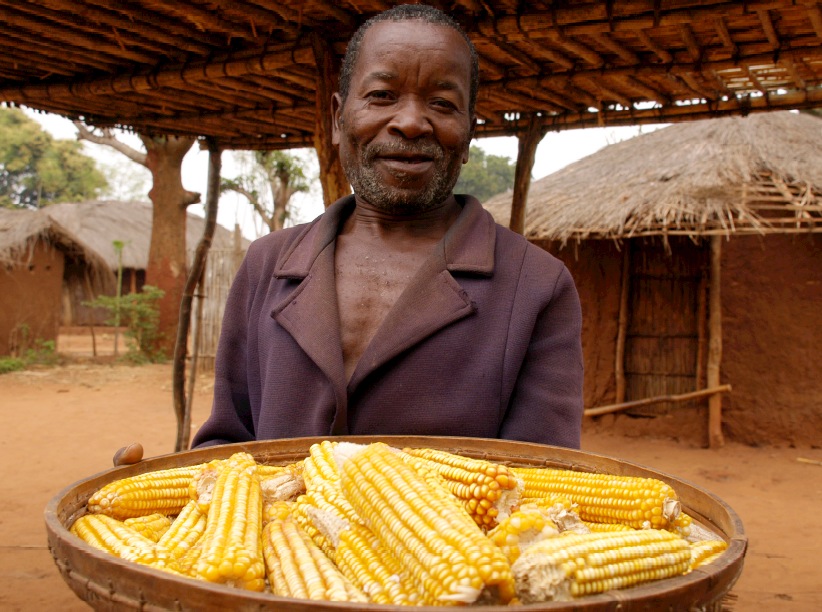 Judging from the picture accompanying the piece on the Helvetas proposal, the grain in question is maize. And maize does indeed suffer from inbreeding depression if seeds from too few individuals are saved, but I’m not aware of any evidence that experienced maize farmers don’t understand this. Does Helvetas have evidence that inbreeding depression is a real problem? Or is it, perhaps inadvertently, promoting a view that one reason subsistence farmers don’t have Swiss bank accounts is that they don’t know what they’re doing?