- Evidence of an Eleventh-Century AD Cola Nitida Trade into the Middle Niger Region. Before then, there was not much trade between the savannah and forest zones of West Africa, which is kind of remarkable.
- Risk factors and plant management activities for the terraced agricultural systems on the Amalfi coast (Italy): an interdisciplinary approach. The terrace walls need agriculture just as much as agriculture needs the walls. Had me wondering whether those terraces were there when the cola trade started up in West Africa.
- Nexus of the awareness of ecosystem services as a “public-benefit value” and “utility value for consumption”: an economic evaluation of the agricultural culture of Satoyama in Japan. Ecosystem services are hard to sell. Probably in Amalfi too, I bet.
- Values and Beliefs That Shape Cattle Breeding in Southwestern Burkina Faso. Community-based breeding programmes need trusted leadership. Don’t we all.
- Limited effects of tree planting on forest canopy cover and rural livelihoods in Northern India. Decades of tree planting wasted. If only there had been better leadership.
- Unplanned but well prepared: A reinterpreted success story of international agricultural research, and its implications. Yeah, but even when an intervention is a success, as in this case, the reasons are beyond the control of researchers. The lesson: plan for the unplannable…
- Smallholder farmer engagement in citizen science for varietal diversification enhances adaptive capacity and productivity in Bihar, India. …and bet on diversity, of course…
- Introducing Beneficial Alleles from Plant Genetic Resources into the Wheat Germplasm. …like wheat breeders have been doing…
- A B73 x Palomero Toluqueño mapping population reveals local adaptation in Mexican highland maize. …and maize farmers too for that matter.
- Developing climate-resilient crops: improving plant tolerance to stress combination. And the need for diversity is only going to increase.
- Suitability of root, tuber, and banana crops in Central Africa can be favoured under future climates. I wouldn’t plan on it though…
- A review of global gridded cropping system data products. …but it’s good to finally know how all the different products that can be used to make these predictions stack up against each other.
How are plants doing out there?
The International Workshop on the Global Plant Health Assessment is being held in Toulouse, France, on October 5-8, 2021.
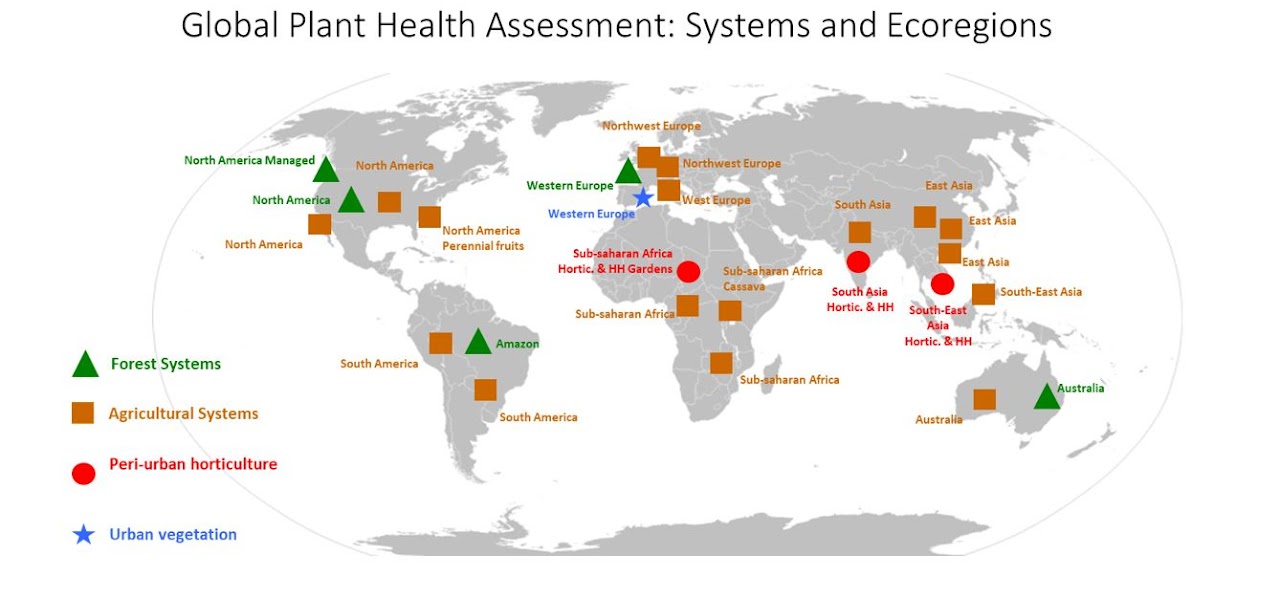
The Global Plant Health Assessment (GPHA) aims to provide a first-time ever overall assessment of plant health in the natural and human-made ecosystems of the world. Plant health is assessed through the functions that plants ensure in ecosystems: “ecosystem services”. The GPHA will assess plant health on the basis of published, science‐ and fact‐based, expert evaluations.
There’s lots of interesting reporting on Twitter using #GPHA2021.
A very hot spot for agrobiodiversity
You probably heard about the eruption and lava flow on La Palma in the Canary Islands. Or even seen it on Twitter. What you may not know is that there’s an interactive map of it online. And what came as a further — and very welcome — surprise to me is that it allows you to import your own data. That’s quite unusual. Genesys shows 442 georeferenced accessions from the island, and importing their locations suggests that two of them (a pepper and a watermelon) were originally collected from farms that are now in the vicinity of the lava flow.
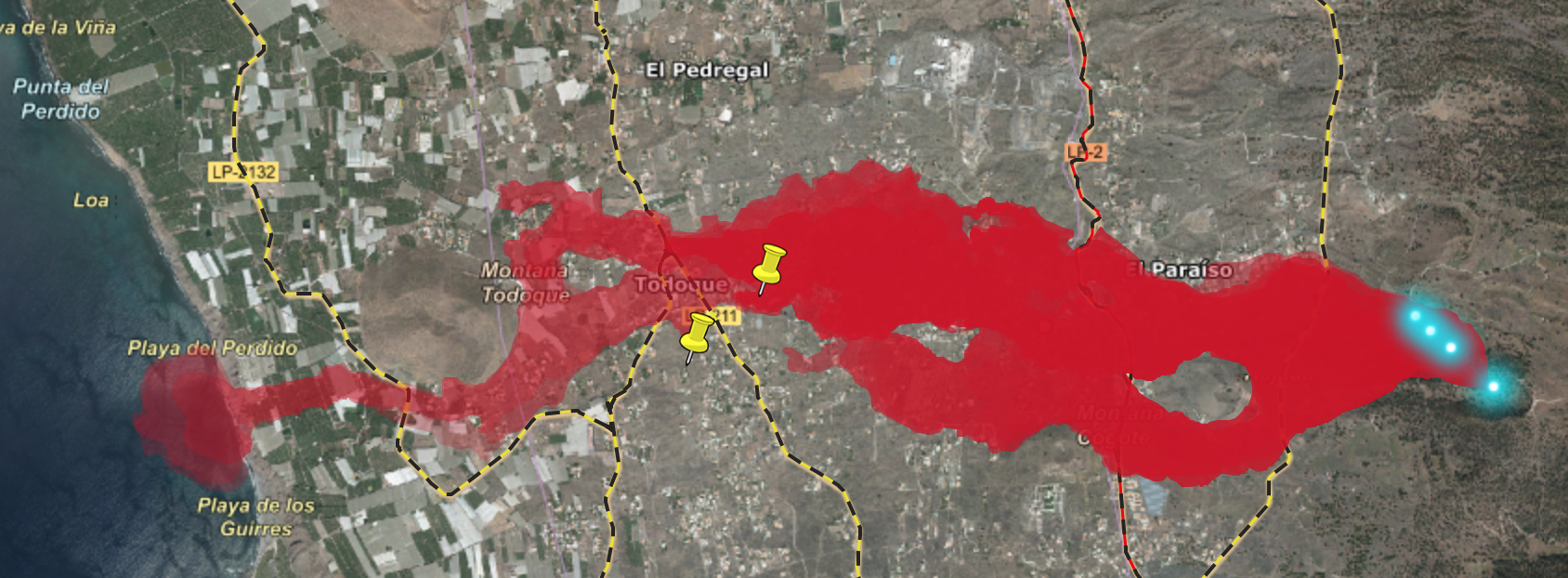
Does that matter? Probably not, but it was nice to be able to do this sort of mashup quite easily for once. All too often combining spatial data is an almighty chore if you’re not a GIS specialist.
Brainfood: Commons edition
- Seeds of resilience: the contribution of commons-based plant breeding and seed production to the social-ecological resilience of the agricultural sector. A seed production commons is good for agroecology and resilience. At least in the German-speaking vegetable sector. Yeah, but give them an inch…
- Crop Diversity Management System Commons: Revisiting the Role of Genebanks in the Network of Crop Diversity Actors. …and they’ll take a mile.
- Changing patterns in genebank acquisitions of crop genetic materials: An analysis of global policy drivers and potential consequences. Maybe it would be good if they took that mile.
- Seeds as natural capital. This is the mile we’re talking about. It’s worth fighting for.
- A Critical Review of the Current Global Ex Situ Conservation System for Plant Agrobiodiversity. II. Strengths and Weaknesses of the Current System and Recommendations for Its Improvement. It has become a really complicated mile.
- Uses and benefits of digital sequence information from plant genetic resources: Lessons learnt from botanical collections. And this makes it even more complicated.
- Impact of climate change on biodiversity and food security: a global perspective—a review article. Yeah, but look what happens if we don’t do something.
- Agrobiodiversity Index scores show agrobiodiversity is underutilized in national food systems. And we’re certainly not doing enough.
- Endangered Wild Crop Relatives of the Fertile Crescent. See what I mean?
- Crop diversity is associated with higher child diet diversity in Ethiopia, particularly among low-income households, but not in Vietnam. Sure, I know it’s complicated…
- Insights into the genetic basis of the pre-breeding potato clones developed at the Julius Kühn Institute for high and durable late blight resistance. …but just look what’s possible with a little effort…
- Spatiotemporal seed transfer zones as an efficient restoration strategy in response to climate change. …and a little thinking. Well, a lot of effort and thinking.
- Current Advancements and Limitations of Gene Editing in Orphan Crops. And on top of all that, we have this to look forward to.
- Inactivation of the germacrene A synthase genes by CRISPR/Cas9 eliminates the biosynthesis of sesquiterpene lactones in Cichorium intybus L. Well actually it’s already here.
- Living standards shape individual attitudes on genetically modified food around the world. Maybe if they were in a commons? Wait, isn’t this where we started?
- Waive CRISPR patents to meet food needs in low-income countries. It does look like it.