- Epic narratives of the Green Revolution in Brazil, China, and India. Symbols, heroes, heritage-making and we-will-do-it-even-better-next-time in the service of self-preservation and self-assertion. But, as we shall see below, not everything needs to be an epic success to be interesting, and useful.
- Using landscape genomics to infer genomic regions involved in environmental adaptation of soybean genebank accessions. Analysis of USDA collection shows that many haplotypes associated with high-latitude cold tolerance in China are still absent from modern American and European cultivars.
- Phenotypic evolution of the wild progenitor of cultivated barley (Hordeum vulgare L. subsp. spontaneum (K. Koch) Thell.) across bioclimatic regions in Jordan. Re-collecting after 23 years shows some loss of phenotypic diversity.
- Decades of Cultivar Development: A Reconciliation of Maize and Bean Breeding Projects and Their Impacts on Food, Nutrition Security, and Income of Smallholder Farmers in Sub-Saharan Africa. Much done, much remains to be done.
- Genetic Trends Estimation in IRRIs Rice Drought Breeding Program and Identification of High Yielding Drought-Tolerant Lines. Progress, but not fast enough.
- A new method to reconstruct the direction of parent-offspring duo relationships using SNP array data and its demonstration on ancient and modern cultivars in the outcrossing species Malus × domestica. Sometimes it’s difficult to tell which variety is the parent and which the offspring.
- What are the links between tree-based farming and dietary quality for rural households? A review of emerging evidence in low- and middle-income countries. Meta-analysis shows that trees can help with diets, but it depends on a lot of things.
- Genebanks and market participation: evidence from groundnut farmers in Malawi. Improved peanut varieties derived from genebank accessions encourage market participation by farmers through expanding the area under cultivation, but not the amount sold.
- IITA’s genebank, cowpea diversity on farms, and farmers’ welfare in Nigeria. Improved varieties derived from genebank accessions don’t push out landrace diversity and are associated with higher yields and other benefits to farmers.
- The role of CGIAR Germplasm Health Units in averting endemic crop diseases: the example of rice blast in Bangladesh. The IRRI Germplasm Health Unit contributed about 2% to the benefits of the rice blast resistance breeding programme, but that’s a cost:benefit ratio of 112.
- Policy directions in public agricultural research: CGIAR’s public goods mandate and plant genetic resources. There has been too much focus on the “global” bit of “global public goods,” and opportunities have thus apparently been missed. The three papers above would like a word though.
- Landscape complexity and functional groups moderate the effect of diversified farming on biodiversity: A global meta-analysis. Diverse farming systems are better for both agricultural production and biodiversity.
- Breeding future crops to feed the world through de novo domestication. Ah yes, we will do it better this time.
Nibbles: Conservation & food, Mauritia, Garcinia, Harvest for Health
- Prof. Bhaskar Vira on why we should look beyond the staples, and even beyond agriculture, for sustainable food and nutrition security.
- He means things like burití I guess.
- And achacha, a plantation of which you can now visit in Australia, of all places.
- And anything else that is a “potential as sources of functional and nutritious ingredients that could replace, complement or aid in reformulating the existing food products or developing new ones”? Well, maybe…
A new genebank for the ages is set for ages
Great news from the opening ceremony of the new Future Seeds genebank in Palmira, Colombia on 15 March:
The Bezos Earth Fund pledged US$17 million for Future Seeds, a new CGIAR genebank inaugurated today. The new genebank will bolster global efforts to safeguard the world’s future food supply.
This genebank is truly next-level:
Future Seeds is the most advanced facility in Latin America and is expected to become the first ever platinum-level LEED (Leadership in Energy and Environmental Design)-certified genebank building in the world. Its Data Discovery and Biotechnology Lab will use big-data technologies to mine the genebank using the latest in genetics to document the range of possibly useful traits in the current collection. Other breakthrough technologies across genebanks include drones and robotic rovers, which are helping analyze crop characteristics in the field more rapidly, and the use of artificial intelligence to enable collectors to identify potential biodiversity hotspots in nature.
Here, check it out for yourselves:
And here’s an overview of the collections from Genesys (beans in red, cassava blue, forages green).
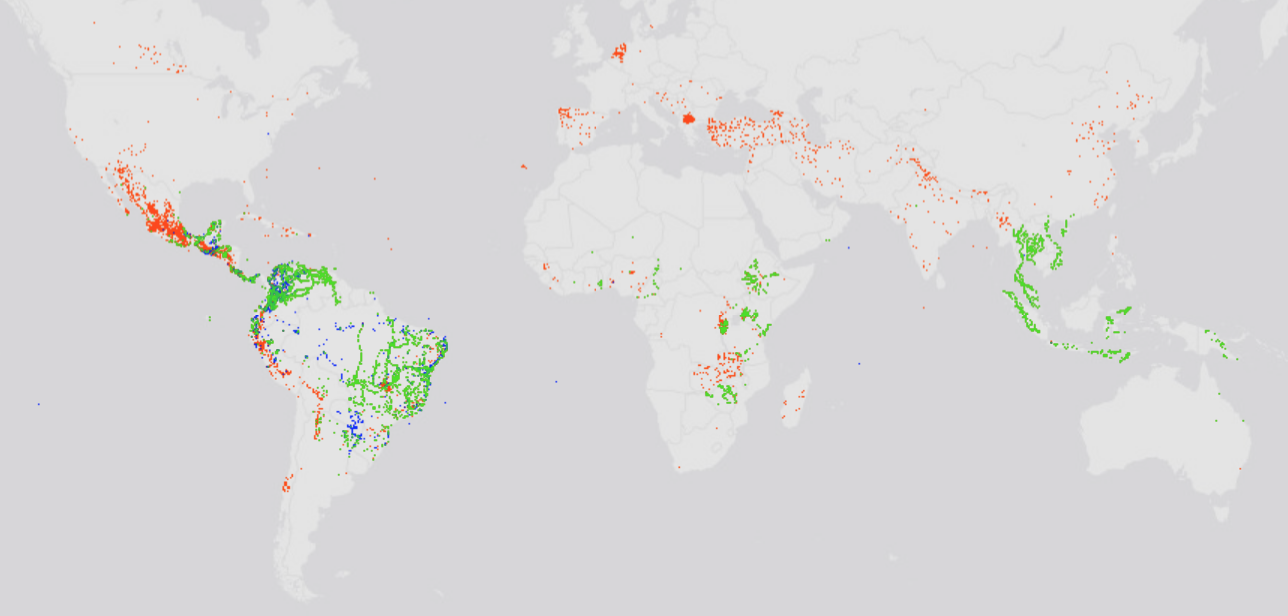
Full disclosure: we also support the place at work.
A champion rice going for a song in China
A few days back Jeremy shared with me a blog post he had come across that made reference to a documentary that in turn featured an old scroll from China’s Song Dynasty:
The documentary had a nice section about a scroll produced in this period, showing the scrum of life along a river during a festival. It is apparently one of the most famous images in all of Chinese history, so, I feel chastened never to have heard of it previously.
The scroll is online, with annotations along the way to help you understand what’s going on. They’re all pretty interesting, but the very last one is particularly relevant to us here. It’s associated with a farmhouse in some paddy fields.
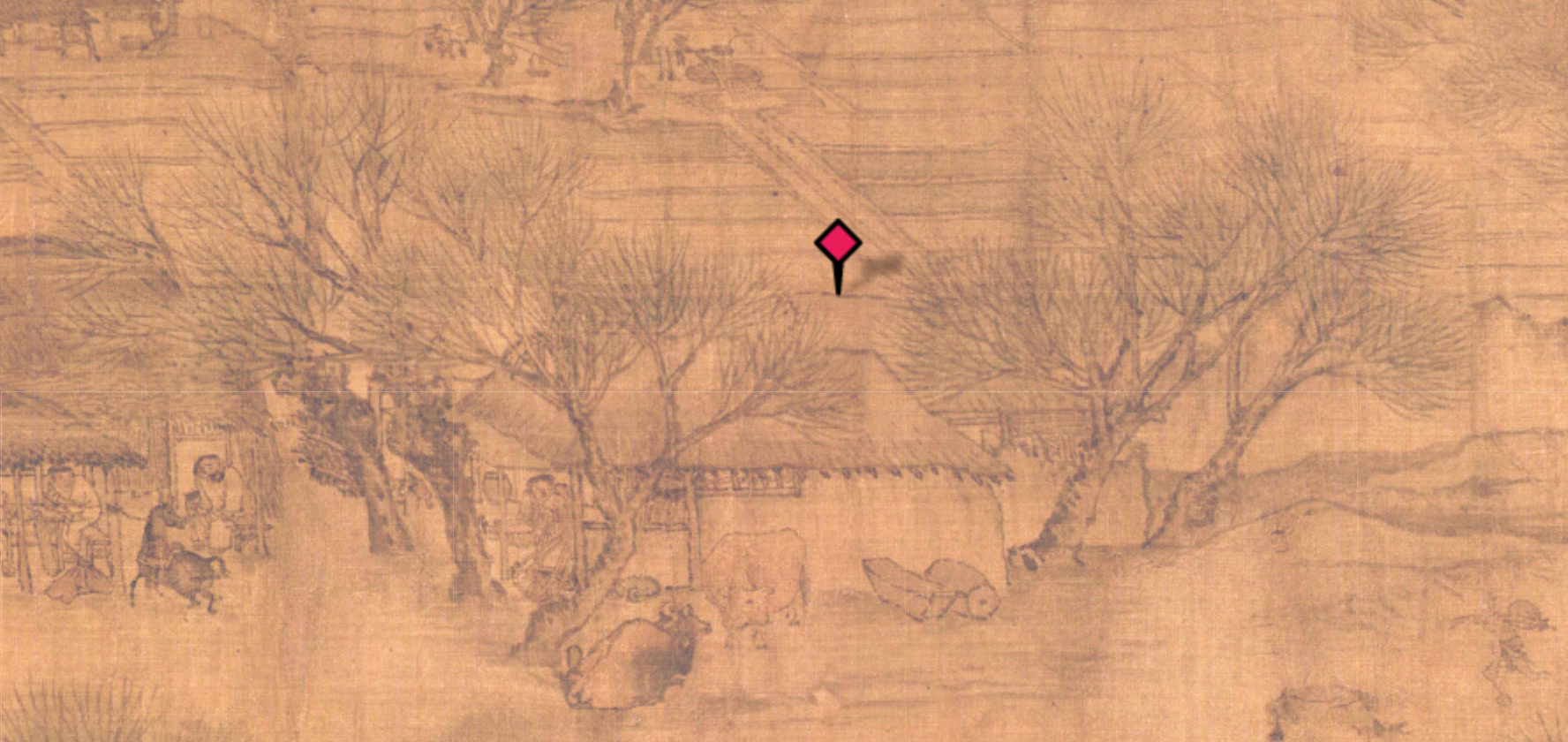
Here’s what is says.
New Varieties of Rice
A farm house on the outskirts of the city. “In the early part of the Song dynasty … a new variety of early-ripening rice was introduced into China from Champa, a kingdom then located near the Mekong River Delta in what is now Vietnam, and by 1012 it had been introduced in the lower Yangzi and Huai river regions. … Because the variety of rice was relatively more drought-resistant, it could be grown in places where older varieties had failed, especially on higher land and on terraces that climb hilly slopes, and it ripened even faster than the other early-ripening varieties already grown in China. This made double-cropping possible in some areas, and in some places, even triple-cropping became possible … the hardiness and productivity of various varieties of rice were and are in large part responsible for the density of population in South, Southeast, and East Asia. According to the Buddhist monk, Shu Wenying, the Song Emperor Zhengzhong (998-1022), when he learned that Champa rice was drought-resistant, sent special envoys to bring samples back to China.”
Lynda Noreen Shaffer, in “A Concrete Panoply of Intercultural Exchange: Asia in World History,” in Asia in Western and World History, edited by Ainslie T. Embree and Carol Gluck (Armonk, N.Y.: M.E. Sharpe, 1997), 839-840.
If you’re interested in Champa rice, there’s a whole paper about it.
Turkey Red from Ukraine feeds America, and the world
As we ponder the possible effects of war on food security, a piece in Modern Farmer reminds us that Ukraine contributes to the world’s wheat crop more than just its annual harvest.
“If you’ve ever eaten a slice of bread, you can thank Ukraine. That’s not an exaggeration. The flavorful grains that transformed the North American prairies during the nineteenth century into a continental breadbasket were varieties native to Ukraine’s famed Black Earth districts of Crimea and Galicia [what is now southeastern Poland and western Ukraine].”
It has to do with the “Turkish type” hard red winter wheats that German Mennonite farmers, originally invited into the Russian empire by Catherine the Great, took with them to the US from the Crimea when things got tricky for them in the late 1800s.
Dr Tom Payne, formerly the head of the wheat genebank at CIMMYT, tells me that such varieties as Kharkov, Kherson and Kubanka were the foundation for Great Plains modern wheats, with Kharkov being the “check” against which new varieties have been compared for more than 50 years.
A few years ago, Jeremy told the story of Red Fife on his podcast. A foundational variety for Canadian wheat farming, that too can perhaps trace its ultimate origin to Ukraine.
One legend states that a load of wheat grown in Ukraine was on a ship in the Glasgow harbour. A friend of Farmer Fife dropped his hat into the red-coloured wheat, collecting a few seeds in the hatband, which he then shipped off to Farmer Fife. The wheat grew. The family cow managed to eat all the wheat heads except for one, which Mrs Fife salvaged. This was the beginning of Red Fife wheat in Canada.
Lately, some American and Canadian farmers, millers and bakers have been going back to older heritage varieties such as Turkey Red and Red Fife; and now, alas, these are making their way back home, though sadly not as one would have wished:
Janie’s Mill, which grinds grains from Janie’s Farm in central Illinois, sent customers a note about being the “direct beneficiaries of countless generations of Ukrainian wheat farmers.” In service of that direct connection, the mill is sending profits from sales of Turkey Red grains and flour to World Central Kitchen, which has been providing hot meals in the region to feed the more than two million refugees that have fled Ukraine since the attack began in February.