- NordGen genebank information system gets a boost.
- Uji for everyone in Kenya, thanks to genebank and breeding.
- Assam’s government supports a field genebank. One of many such efforts in India.
- Will Bonsall‘s genebank needs help. Maybe should move to India.
- Video on the Italian olive plague. This is why we need genebanks.
Cheers for Pompeii
Do you remember an old blog post of mine on the vineyards of Pompeii? Well, there’s an update, and more info, on Twitter, in a thread from the official Pompeii Sites account dating back to August:
The new ‘Green’ itinerary, that visitors can enjoy in Pompeii, celebrates gardens in the city. One of the largest gardens is found next to the amphitheatre,occupying an entire insula block, & has been variously identified as a cattle market (Forum Boarium) &gladiator cemetery pic.twitter.com/yoCvV6tRuz
— Pompeii Sites (@pompeii_sites) August 25, 2020
I found it at the end of another, more recent, thread from Pompeii Sites, about Roman wines more generally:
Just as in Roman times, this time of year sees the harvest of grapes in the vineyards of #Pompeii for wine production. To celebrate we will take you from the ‘harvest to the hangover’ through the archaeological evidence. pic.twitter.com/yJf1YHXVLq
— Pompeii Sites (@pompeii_sites) October 30, 2020
LATER: More on the grapes and wines of Pompeii.
EVEN LATER: It turns out there’s someone documenting all the gardens of Pompeii.
EVEN LATER STILL: And Dr Jane Draycott has written extensively on Roman gardens in general.
OH FOR PITY’S SAKE: Now there’s a podcast. Very good it is too, though.
Brainfood: Now what edition
- Image-Based Goat Breed Identification and Localization Using Deep Learning. Fancy maths can identify goat breeds from photos. Ok, cool, now what?
- AI Naturalists Might Hold the Key to Unlocking Biodiversity Data in Social Media Imagery. Fancy math can often identify common flowers on Flickr. Ok, cool, now what?
- FoodMine: Exploring Food Contents in Scientific Literature. Fancy maths can trawl the literature to pick out the chemical components of different foods. Ok, cool, I guess, now what?
- Cultural and linguistic diversities are underappreciated pillars of biodiversity. Well, yeah. But now what?
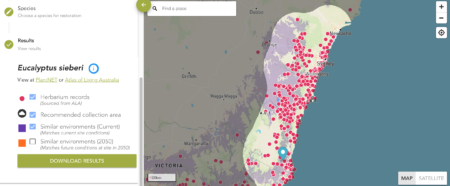
- Global priority areas for ecosystem restoration. Fancy maths says restoring 15% of converted lands in identified priority areas could avoid 60% of expected extinctions while sequestering 30% of the total CO2 increase in the atmosphere since the Industrial Revolution. Cool, now what?
- An unexpectedly large count of trees in the West African Sahara and Sahel. Wait, does that mean some of the above won’t be necessary?
- Cost and affordability of nutritious diets at retail prices: Evidence from 177 countries. Fancy maths shows that nutritious diets are almost 3 times as expensive as diets supplying basic energy needs, and costs increase with remoteness. Ok, cool, now what?
- Phylogenetic inference enables reconstruction of a long-overlooked outbreak of almond leaf scorch disease (Xylella fastidiosa) in Europe. The olive plague started on almonds. Ok, now what though?
- Genome-wide association study in accessions of the mini-core collection of mungbean (Vigna radiata) from the World Vegetable Gene Bank (Taiwan). Genotyping, phenotyping and fancy maths find that mungbean could grow in temperate conditions. Ok, cool, now what?
- Enhancing the searchability, breeding utility, and efficient management of germplasm accessions in the USDA−ARS rice collection. Genotyping and fancy maths can improve genebank management. Well, yeah, but now what? No, wait, we know exactly now what: digital genebanks!
- Ok, that was a bit of fun, but the important point is that research, no matter how cool, is only the beginning.
Genebanks and “no regrets” options
One of the reasons I haven’t been very active on here for the past couple of weeks is that I’ve been busy at work with a little thing called the Chatham House Dialogue on “Crop Diversity for Challenging Times: the Role of Genebanks in Sustainable Development.”
The Chatham House Dialogue comprised three separate sessions that aimed to build a vision of how genebanks can play a fuller and more effective role in helping agriculture meet future challenges. Special attention was paid to the evolving role of the international genebanks managed by the CGIAR. The key findings and recommendations of the dialogue were written up as a brief statement and, together with background documents prepared for the Dialogue, were used as the basis for a System level review of CGIAR genebank costs and operations (GCO review).
It’s all described on the website of the CGIAR Genebank Platform. There you’ll find the background papers, presentations, a brief personal summary by your truly, and videos of some of the participants.
The bottom line?
In these circumstances, indeed, conserving crop diversity is the ultimate option to ensure “no regrets.” If it is useful in good times, it is absolutely essential under TUNA 1 conditions. The participants could not envisage any future scenario, at whatever scale, in whatever part of the world, in which agriculture’s need for crop diversity—whether intra- or inter-specific—was likely to decrease. There will be changes in the nature of the demand, for sure, but not an absolute decrease. Countries, institutes and people are in fact likely to become ever more interdependent for crop diversity, and not only because of climate change, but also because of changes in pests and diseases, in consumer demand, and in trade, to name just a few major drivers. Interdependence requires shared governance and trust, which led to a plea from one participant that researchers become more politically active.
Seed production in times of climate change
Interested? It’s the topic of an online symposium planned for 9-11 March 2021. Details on the IPK website.