- Land‐use history determines ecosystem services and conservation value in tropical agroforestry. Not all agroforests are created equal.
- Temperate agroforestry systems provide greater pollination service than monoculture. No word on land-use history though.
- Machine learning for high-throughput field phenotyping and image processing provides insight into the association of above and below-ground traits in cassava (Manihot esculenta Crantz). Fancy maths helps you estimate root yield from drone images of the canopy of cassava plots.
- A dynastic elite in monumental Neolithic society. Ancient DNA suggests Atlantic megaliths were built to honour incestuous god-kings. But n=1, so there’s that.
- Keeping pace with climate change in global terrestrial protected areas. The representation of climates in protected areas is going to change, with cold and warm climates suffering.
- Network analysis of regional livestock trade in West Africa. It all starts in Burkina Faso.
- Gender and Trait Preferences for Banana Cultivation and Use in Sub-Saharan Africa: A Literature Review. Farmers still prefer traditional cultivars.
- Decoding diversity in the food system: wheat and bread in North America. “Although the dominant trends are toward uniformity, there are also numerous forms of resistance.” Banana farmers available for comment.
- Against the Grain: Long-Term Patterns in Agricultural Production in Prehistoric Cyprus. There was resistance during the agricultural transition too.
- Legacy of Amazonian Dark Earth soils on forest structure and species composition. Forest that was actively managed and farmed in pre-Columbian times is more diverse.
- Evidence of genetic diversity within Solanum Lycopersicum L. ‘Platense’ landrace and identification of various subpopulations. The accessions thus labelled in an Argentinian genebank show a lot of variation.
- Genetic diversity evolution of a sheep breed reintroduced after extinction: Tracing back Christopher Columbus’ first imported sheep. Decolonization in action.
- Simple rules for concise scientific writing. Easier said than done, as all the above confirm.
Nibbles: Seed movement edition
- From Indigenous communities, to Carol and Robert Mouck, to the Sisters of Providence of St. Vincent de Paul Motherhouse, to the Kingston Area Seed System Initiative and Ratinenhayén:thos: seed rematriation in Canada.
- Simran Sethi gets to the bottom of the COVID seed sales surge.
- And more on the same from Dan Saladino.
- There’s been quite a surge in quinoa in the past few years. All presentations here.
- And the potato has been getting around too of course. The podcast of the book.
Exploring Afghanistan’s wheat
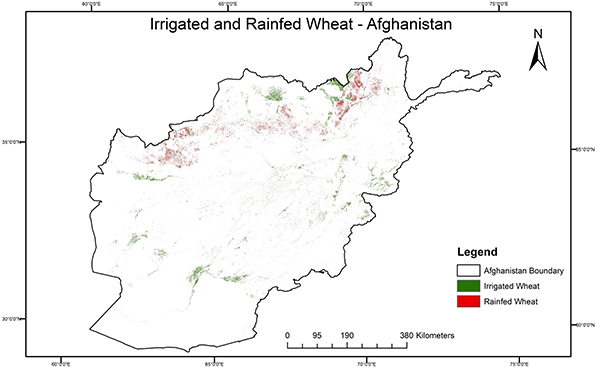
There’s a new paper on the geographic distribution of wheat cultivation in Afghanistan. You can explore the data online. But here’s the bottom line, the paper’s Fig. 9.
I downloaded the cultivated wheat data from Genesys and imported everything into QGIS to play around with. That’s almost 5,000 genebank accessions, about half of which are geo-referenced. Here’s the result.
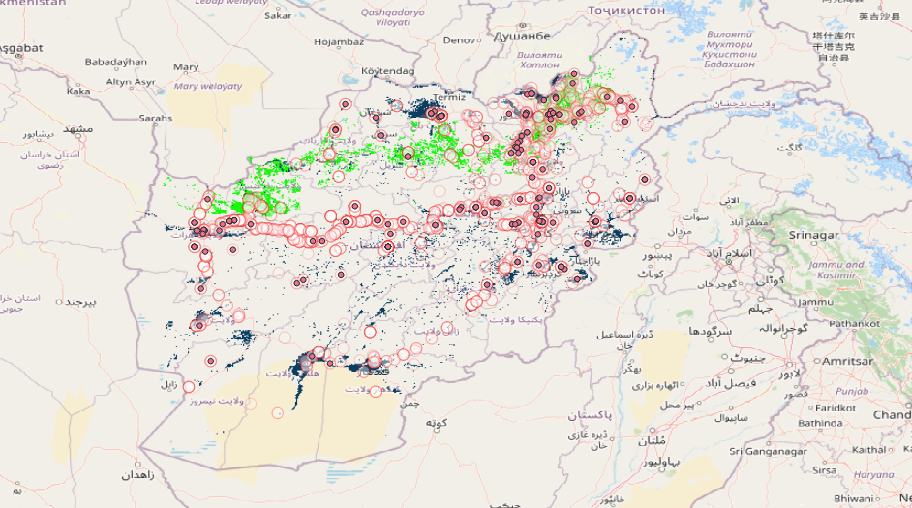
Circles are all cultivated wheats, red dots everything that is not bread wheat. Note the irrigated areas (dark blue) are more likely to have modern varieties, and that the area of rainfed cultivation (bright green) varies considerably from year to year with precipitation. Probably some more collecting to be done then, in particular in the rainfed northwestern region, based on this map. But I’m not going to bet on that until I see whereVIR’s 570-odd Afghan wheats were collected.
Nibbles: Black rice, Citrus pollen, Swiss nuts, GIAHS, Seedy IUCN
- Australia delves into black rice, thanks to IRRI genebank.
- Romans had mandarins after all.
- Switzerland protects walnut oil.
- Hanging gardens, lagoon farms and traditional bamboo agroforestry are exactly what I need at the moment.
- The IUCN Seed Conservation Specialist Group has a new website.
Mixed up shook up crops
Nice Twitter thread from Dr Christian Schöb of ETH Zurich summarizing a whole bunch of results from a crop mixture experiment. Do crops have an in-built disadvantage in mixtures? Something else for breeders to think about?