- The church forests of Ethiopia.
- Monumental monographic study of Ipomoea.
- New project on breeding cereals for organic farming in Europe.
- Sorghum genetic resources in the USA.
- Fun studentship on date palm diversity.
Brainfood: Accessibility data smorgasbord, Microclimate megadataset, Breeding strategies, Aeroponic cassava, Jatropha conservation, Wheat diversity, Botanic gardens, Polyploid duo, Rhizosphere symbiosis, Selfing niches, Pepper priorities, Eggplant core, Ipomoea evolution, Kenyan supermarkets
- A suite of global accessibility indicators. How long it takes to get from anywhere in the world to settlements of different size. Or took, in 2015.
- A method for computing hourly, historical, terrain‐corrected microclimate anywhere on Earth. Why you might want to move in the first place.
- Genetic strategies for improving crop yields. “Valuable genetic diversity for increasing crop resilience resides in cultivated landraces, heirloom varieties and the wild relatives of crops.”
- A low-cost aeroponic phenotyping system for storage root development: unravelling the below-ground secrets of cassava (Manihot esculenta). But sometimes you have to work hard to get at it: case in point.
- High SNP diversity in the non-toxic indigenous Jatropha curcas germplasm widens the potential of this upcoming major biofuel crop species. And here’s another.
- Genome-wide variation patterns between landraces and cultivars uncover divergent selection during modern wheat breeding. In China and Pakistan anyway.
- Plant populations of three threatened species experience rapid evolution under ex situ cultivation. So don’t cultivate, store seeds instead. Or as well.
- Genes derived from ancient polyploidy have higher genetic diversity and are associated with domestication in Brassica rapa. Polyploidy pre-adapts plants for domestication.
- Genome duplication effects on functional traits and fitness are genetic context and species dependent: studies of synthetic polyploid Fragaria. Case in point.
- A mutualistic interaction between Streptomyces bacteria, strawberry plants and pollinating bees. The rhizosphere protects.
- Do selfing species have greater niche breadth? Support from ecological niche modeling. Yes indeed.
- Modelled distributions and conservation status of the wild relatives of chile peppers (Capsicum L.). 50% are high priority for conservation. No word on their mating systems.
- Construction of a core collection of eggplant (Solanum melongena L.) based on genome-wide SNP and SSR genotypes. From 893 to 100, in 4 geographical clusters.
- A taxonomic monograph of Ipomoea integrated across phylogenetic scales. A whole bunch of new species, and evidence that some 60 species independently developed storage roots before humans were even around. Yes, even sweetpotato.
- Supermarket food purchases and child nutrition in Kenya. Not a bad thing.
Support BCGI’s Global Botanic Garden Fund
Botanic Gardens have long been centres of excellence for plant conservation and many are experts in sustainable practices. This project aims to support smaller botanic gardens that don’t have the expertise or infrastructure required to adopt sustainable practices in saving water, energy, and food.
A very worthy cause.
The world’s largest sorghum genebanks
USDA … Plant Genetic Resources Conservation Unit located in Griffin, Ga., is home to over 100,000 accessions of preserved plant germplasm including the largest collection of sorghum germplasm in the world.
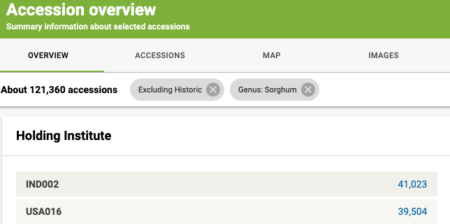
Well that’s the kind of statement that I just have to fact-check. It’s a little difficult to be entirely sure, Genebank Database Hell being what it is, but I think perhaps the ICRISAT genebank edges it. At least if you go by what’s in Genesys. IND002 is ICRISAT, USA016 the USDA Griffin genebank.
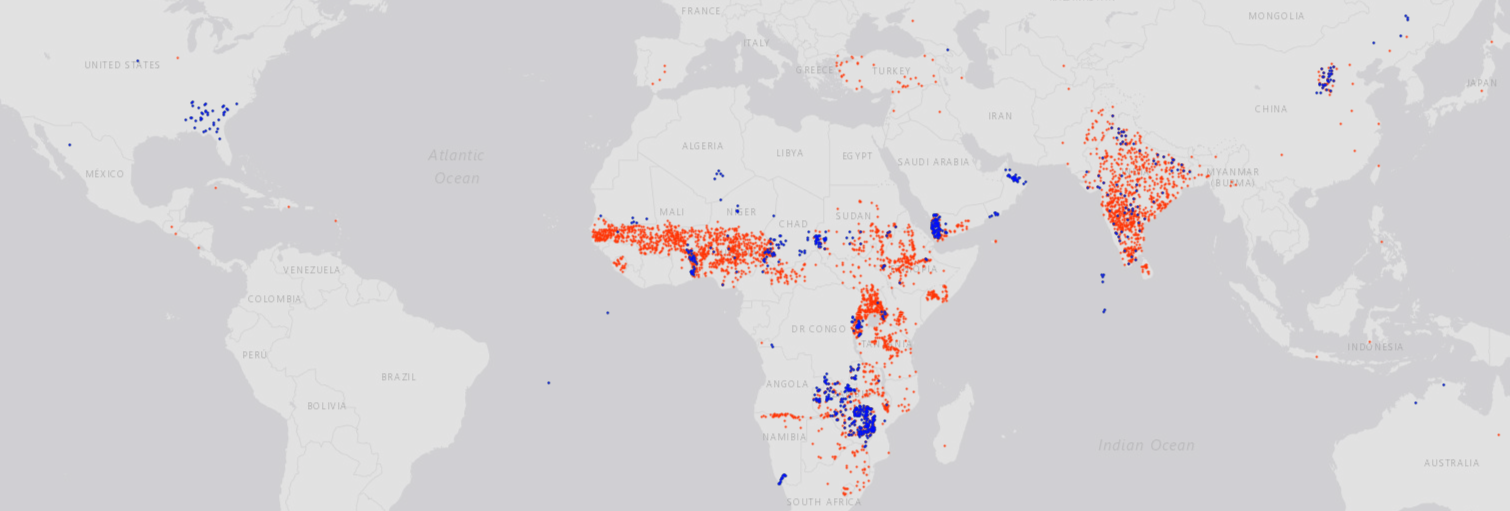
But, of course, it’s not just about the numbers. Only 20% or so of the accessions are geo-referenced, but mapping what data there is does suggest that there are interesting complementarities between the two collections (ICRISAT in red, USDA in blue — click on the map to see it better).
Anyway, do read the rest of the article in Seed World, there’s interesting stuff in there, and what’s a couple thousand sorghum accessions between friends anyway.
Deconstructing crop TED
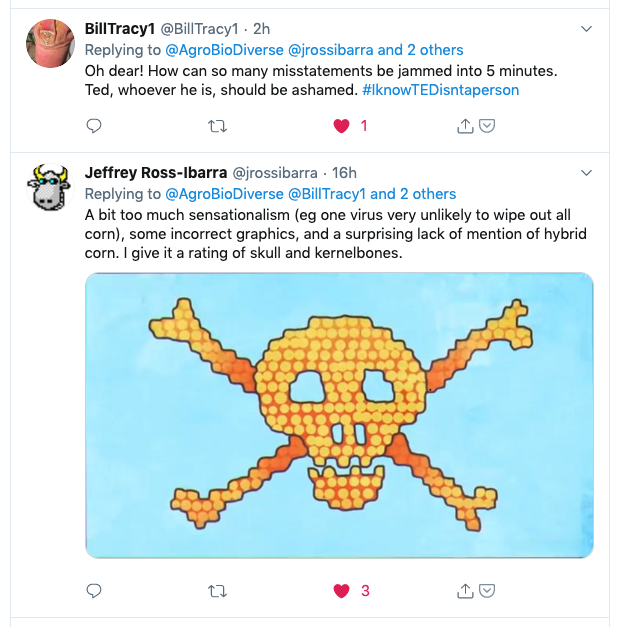 TED-Ed has a bunch of videos on the history of different crops: cacao, tea, and maize for a start. They’re cute, and do provide some interesting information. But a pinch of salt is recommended with your corn on the cob.