- Mongolians nuts for pine nuts.
- Indians increasingly nuts for heirloom rices.
- Tea: a tale of two words.
- Wait, Mongabay does podcasts now?
- DfID backs sustainable supply chains. But is diversity considered?
- The origins of cryo.
- Student saves apple. Species, that is.
- Scurvy was not all bad? Who needs fruit.
Brainfood: Desho grass, Wheat breeding, Restoration seed policies, Drought rice, Dietary quality, Passport data, Bombyx breeding, Tea domestication, Carp diversity, Abyssinian pea, Chickpea subsetting, Oat breeding, Phenointegration, Food trade
- The potential of desho grass (Pennisetum pedicellatum Trin.) for animal feed and land management practices in Ethiopia: A review. “Physiologically, desho grass has a peculiar characteristic of drought tolerance, ability to produce large biomass per unit of land.”
- Wheat genetic resources in the post-genomics era: promise and challenges. Need to go for more wide crosses, which requires more cytological expertise.
- Native seed trade of herbaceous species for restoration: a European policy perspective with global implications. Current policies are inadequate.
- Screening African Rice (Oryza glaberrima) for Tolerance to Abiotic Stresses: II. Lowland Drought. 4 out of over 2000 accessions are promising.
- Dietary species richness as a measure of food biodiversity and nutritional quality of diets. Number of species consumed is a good indicator of the quality of the diet, across seasons and countries.
- Could taxonomic misnaming threaten the ex situ conservation and the usage of plant genetic resources? Only 3% of Citrullus accessions in major genebank databases correctly named.
- Genetic breeding of silkworms: from traditional hybridization to molecular design. Brave new world.
- Domestication origin and breeding history of the tea plant (Camellia sinensis) in China and India based on nuclear microsatellites and cpDNA sequence data. 3 domestication areas, in China and India.
- Preservation of the genetic diversity of a local common carp in the agricultural heritage rice–fish system. Farmers like to select different colour types.
- Abyssinian pea (Lathyrus schaeferi Kosterin pro Pisum abyssinicum A. Br.) – a problematic taxon. May have been the result of a spontaneous interspecific cross under cultivation.
- Managing and Discovering Agronomically Beneficial Traits in Chickpea Germplasm Collections. Cores, mini-cores and reference sets facilitate use.
- Evaluation of resistance to Blumeria graminis (DC.) f. sp. avenae, in Avena murphyi and A. magna genotypes. In oats, the lower-ploidy species have better resistance.
- Editorial: Plant Phenotyping and Phenomics for Plant Breeding. The name of the game is integration.
- Trade and the equitability of global food nutrient distribution. Trade is important to nutrition.
Celebrating Africa
Well, while we can all agree that living conditions in many places in Africa may not be up to the standard of the current President of the USA, that hasn’t stopped the continent producing some very remarkable women and men. I’ll just mention two from our field who have been in the news lately, one for a happy reason and one for a sad.
On the happy side, Dr Segent Kelemu, director general of ICIPE, was just featured by Bill Gates in the recent issue of Time magazine which he guest-edited:
Kelemu, 60, grew up in a small Ethiopian village with only one dress and no shoes to wear. She rebelled against the constraints placed on her as a girl. (They cracked.) Along the way, she has fostered a faith that each problem possesses a solution. Among her discoveries: “Life is always a lesson,” she says. “Every day, I learn from everybody.”
On a much sadder note, Harvard’s Prof. Calestous Juma passed away just before Christmas:
Africa, he wrote, contained 60% of the world’s available arable land. It also contained, in sharp contrast to monocultures elsewhere, a vast range of indigenous crops. Many of these, long adapted to arid conditions, could help feed the world despite climate change. Africa was a reservoir of biodiversity, and the next step was to ensure that the storing of seeds, and research into them, became the business of African governments, universities and farmers. Perhaps his most satisfying stint was as the first executive secretary of the UN convention on biodiversity of 1992—in effect an African safeguarder of that vast and endangered genetic library, still hardly catalogued and still largely unread.
Let’s celebrate them, and all the others too.
Jerry Konanui
Some bad news from Penny:
It is with great sadness that I convey the news that Jerry Konanui, of the giant kalo, cultural practitioner, traditional Hawaiian kalo and ‘awa cultivar expert, friend and colleague has passed. Jerry was a shining example of an indigenous scientist who bridged both research and traditional practice effortlessly and was highly respected in Hawaii and elsewhere for his work. He was instrumental in reviving interest in Hawaiian crop biodiversity in the Islands and I was honored to have spent almost two decades working on cultivar recovery and identification with he and his wife. His verification work led to the re-establishment of improved collections among botanical gardens and agriculture stations in Hawaii. Jerry shared his knowledge with great aloha and humor over the years, captivating and inspiring hundreds of students and farmers to plant and rediscover the unique and fragrant flavors of Hawaiian taro and ‘awa. Aloha ‘oe Jerry! You will be sorely missed.
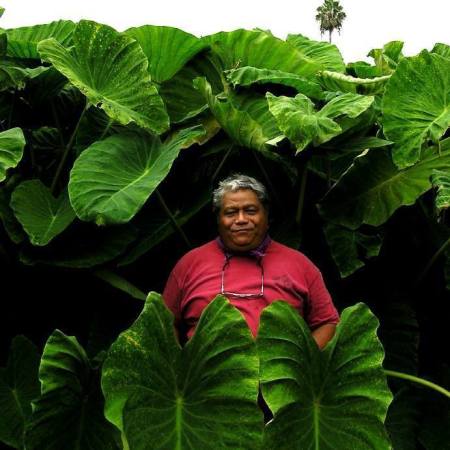
Aloha ‘oe Jerry!
Photographing dietary quality
People in other cultures are often portrayed as scary or exotic. This has to change. We want to show how people really live. It seemed natural to use photos as data so people can see for themselves what life looks like on different income levels.
That’s Anna Rosling Rönnlund of Gapminder on Dollar Street.
Dollar Street lets you visit many, many homes all over the world. Without travelling.
.@AnnaGapminder uses art and science to create an engaging portrait of how people live and help us make dollars and sense of a complicated world. pic.twitter.com/EeysLLpGjm
— Gates Foundation (@gatesfoundation) January 11, 2018
There are photos of everything from toilets to pets. The food items included are “grains”
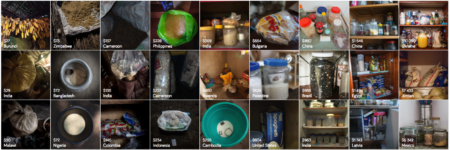
“vegetables”
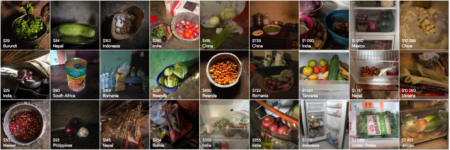
and “spices.”
We know from recent work from our friends at Bioversity and their partners that number of species consumed is a good proxy for the nutritional quality of diets across countries and seasons. I wonder if such photographic documentation can be used to estimate dietary richness, and thus quality?