You can get material from a number of other genebanks besides USDA.
Wheat landraces centre stage
The program for the 1st International Conference of Wheat Landraces is out and it looks fab. There are about 95,000 wheat landraces recorded in Genesys.
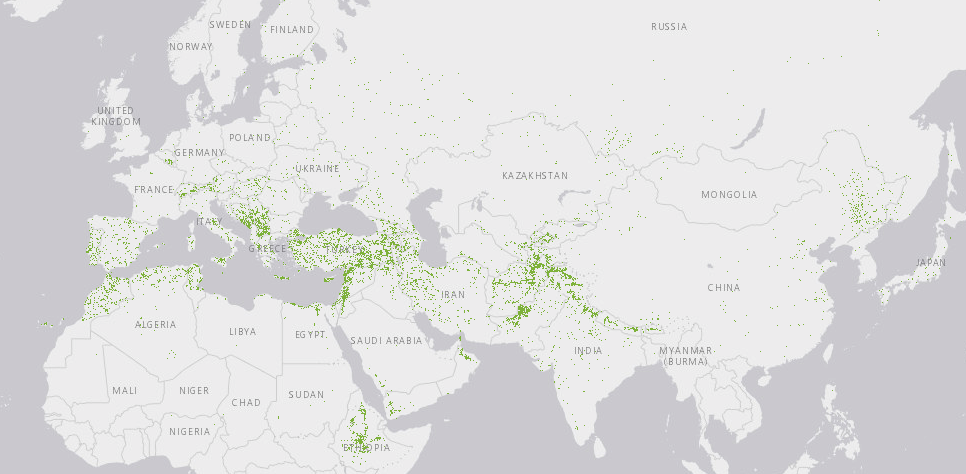
Lots to play around with.
So much variation in #Durum Reference Collection.. how many PhDs will take to study it all? @ICARDA_CGIAR @WheatInitiative @CropWildRelativ pic.twitter.com/SUTCVFkwZJ
— Filippo Bassi (@fillobax) May 15, 2018
Nibbles: Turkish roses, Old apple tree, Kenyan reforestation, Pillar coral, ICARDA, Comical CWR
- The black roses of Halfeti.
- That original Bramley is still hanging on.
- Seedballs!
- A coral genebank? Why not.
- More on the ICARDA genebank.
- Sketching crop wild relatives.
Farmer’s Pride’s survey
If you are involved in conserving wild or cultivated plant genetic resources in situ or if continued access to plant genetic diversity is important to you, please take 10–15 minutes to complete our survey.
That’s from Farmer’s Pride, a new EU-funded project coordinated by, ironically, the University of Birmingham.
Brainfood: Spanish livestock, IPK forage & wheat, USDA soybean diversity, NERICA/ARICA, Nagoya, Intensification, Greek lentil, Zulu sheep, Kola vs cocoa, African rice farming, Wild foods
- Human and ecological determinants of the spatial structure of local breed diversity. The closer Spanish provinces are in demography, ecology, history and geography, the more similar in their livestock breeds.
- Enhancing the Sustainable Use of Lolium perenne Genetic Resources from Genebanks in Plant Breeding and Research. The importance of international collaboration illustrated yet again. Material best at different things comes from different countries.
- Leveraging the use of historical data gathered during seed regeneration of an ex situ genebank collection of wheat. Accessions should be regenerated at random. From same genebank as above.
- Population and quantitative genomic properties of the USDA soybean germplasm collection. 8 major clusters.
- Assessment of Genetic Variation and Population Structure of Diverse Rice Genotypes Adapted to Lowland and Upland Ecologies in Africa Using SNPs. Lowland NERICA close to indica, highland NERICA close to japonica.
- Do You Conduct International Research? What You Need to Know About Access, Benefit‐Sharing, and the Nagoya Protocol. Quite a lot.
- Pasture intensification is insufficient to relieve pressure on conservation priority areas in open agricultural markets. Intensification relieves pressure on land in Africa, but not in Latin America, where it stimulates increased trade.
- Genetic diversity analysis of the Greek lentil (Lens culinaris) landrace ‘Eglouvis’ using morphological and molecular markers. 400 years old, quite distinct, and with some variation.
- Genetic structure of South African Nguni (Zulu) sheep populations reveals admixture with exotic breeds. Quite variable and not much inbreeding, but gotta watch out the admixture with exotics.
- Is kola Tree the Enemy of Cocoa? A Critical Analysis of Agroforestry Recommendations Made to Ivorian Cocoa Farmers. No, but you wouldn’t think it from Big Chocolate recommendations.
- ‘The Tides Rhyme with the Moon’: The Impacts of Knowledge Transmission and Strong Spring Tides on Rice Farming in Guinea-Bissau. The youth resist.
- Wild Foods: Safety Net or Poverty Trap? A South African Case Study. Depends on the season.