- Morphological and phenological consequences of ex situ conservation of natural populations of red clover (Trifolium pratense L.). Regeneration has caused directional morphological changes.
- Breeding Common Bean for Resistance to Common Blight: A Review. A lot is known and has been done, but, still, “Andean and Middle American common bean cultivars with high levels of combined resistance to less-aggressive and aggressive bacterial strains in all aerial plant parts are not available.”
- Half of 23 Belgian dog breeds has a compromised genetic diversity, as revealed by genealogical and molecular data analysis. Especially native breeds with small populations, unsurprisingly.
- Neither crop genetics nor crop management can be optimised. Because of ever-present trade-offs.
- The Influence of Gender Roles And Human Migrations on the Distribution of Crop Biodiversity in Tharaka, Kenya. Crops move with people, and different genders move different crops.
- Somaclonal variants of taro (Colocasia esculenta Schott) and yam (Dioscorea alata L.) are incorporated into farmers’ varietal portfolios in Vanuatu. Farmers have lots of varieties, but they need more variety.
- Morphological and molecular genetics of ancient remains and modern rice (Oryza sativa) confirm diversity in ancient Japan. Modern Japanese rice is a subset of ancient Japanese rice.
Nibbles: Dog origins, Dutch wheat trials, Chinese agricultural origins, Grass endophytes
- This origin-of-dogs saga is getting tedious. Figure it out, already.
- Dutch wheat varieties still improving.
- Chinese ate wild grasses for 20,000 years before domesticating crops.
- Fungal endophyte helps tall fescue cope with drought and high temperatures, but some fungal genotypes more than others. And some do it without producing livestock toxins.
Milking quinoa for livelihoods
We’ve been contacted by Alexander Wankel of Pachakuti Foods with news of an intriguing Kickstarter campaign. Pachakuti is…
…a social enterprise committed to sourcing rare Andean superfoods directly from farmers to create unique products for a healthier life and a better world. By finding markets for underutilized crops, we strive to support biodiversity while providing a fair income for Andean farmers.
The unique product that is the focus of the Kickstarter is, of all things, quinoa milk.
Pachakuti Foods is launching the first quinoa milk made with carefully selected native quinoa varieties that have a naturally milky flavor and texture. Made from some of the yummiest quinoa in Peru, our quinoa milk is richer and creamier than quinoa milk made from conventional quinoa that is currently on the market. It is 100% vegan, gluten free, and contains high quality proteins with all the essential amino acids that the body needs.
They’re about half-way to their goal, which is $15,000.
This Kickstarter campaign is our first opportunity to hit the ground running, both by helping us raise money as well as tell the story of why quinoa diversity is important.
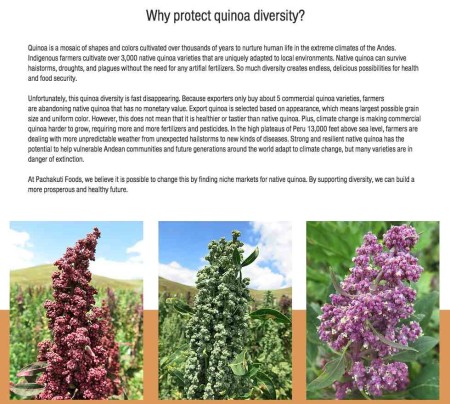
So help them out, if you’re so inclined. Or maybe point them to a bank that might be interested in giving them a business loan.
AVGRIS revamped
The World Vegetable Center has come up with a redesigned front-end for presenting data on its germplasm collection to the world.
The AVRDC Vegetable Genetic Resources Information System (AVGRIS) is an information system that manages the data of all vegetable germplasm conserved in the AVRDC genebank. The Genetic Resources and Seed Unit uses this system to efficiently manage genebank operations. AVGRIS links all germplasm conservation and management operations, from registration, characterization, evaluation and seed inventory to seed distribution to end-users.
Check it out. And before you ask, no, I looked, and Varrone is not there.
Featured: Varrone come back
Sergio Salvi sets me straight:
Varrone tomato IS in the VIR database, it is the accession No. 178 of the genus Lycopersicon and it was found firstly by consulting the database. After found it, a seed sample was requested to VIR.
Indeed. Sorry!