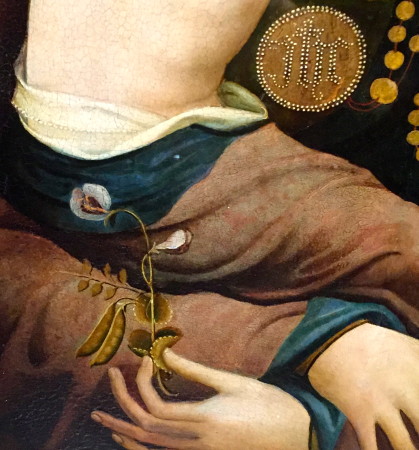
Went to the Wallraf-Richartz-Museum in Cologne at the weekend, and what should I find but a 15th century tryptich of the Madonna holding a crop wild relative flower? Apparently it symbolises virginity.
Agricultural Biodiversity Weblog
Agrobiodiversity is crops, livestock, foodways, microbes, pollinators, wild relatives …
Went to the Wallraf-Richartz-Museum in Cologne at the weekend, and what should I find but a 15th century tryptich of the Madonna holding a crop wild relative flower? Apparently it symbolises virginity.
And speaking of Facebook, which has somehow become the go-to place for fun agrobiodiversity stuff, get a load of this recent photo of “bush potato” from the Waltja Tjutangku Palyapayi Aboriginal Corporation.
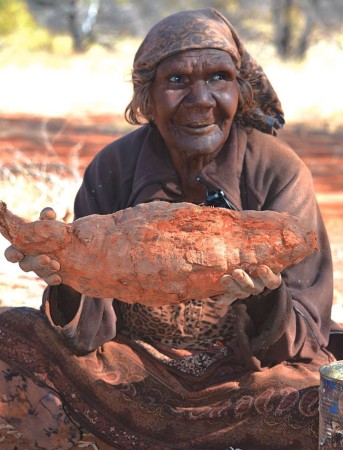
Impressive, isn’t it? It’s Ipomoea costata, according to a commenter. And it reminded me of another recent Facebook post of a sweet potato wild relative, Ipomoea bolusiana, this time from southern Africa.
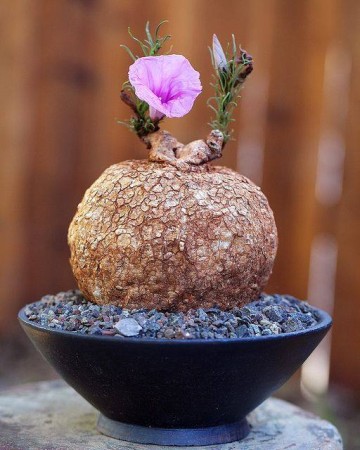
Thinking back to our earlier post today on domesticating promising wild plants, I wonder if anyone has actually tasted these tubers?
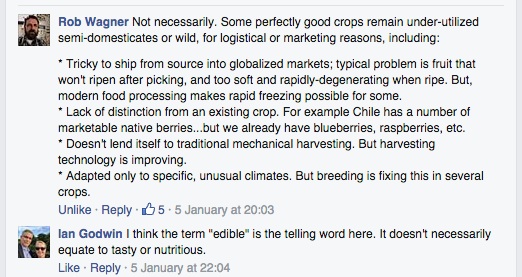
Over on Facebook, I half-facetiously commented on a piece entitled Global food shortage? How advanced breeding could domesticate 50,000 wild, edible plants by saying that if any of those plants were really any good, they would probably have been domesticated already. I’m not entirely sure I believe that, but I liked Rob Wagner’s and Ian Godwin’s reactions, and I hope they don’t mind me sharing them here. There’s more to adding a new crop to our agricultural menu than fancy breeding.