- Nice video on the Millennium Seed Bank at Kew. Compare and contrast with Ft Collins. Or CIAT’s genebank for that matter.
- Quality video on quality management systems in genebanks. No doubt followed to the letter by the three above.
- Video of webinar by Roger Leakey explaining how trees will save us: “The Global Food Crisis: Can we Heal a Divided and Ailing World?”
- Collecting wild rice in Australia. No video, alas, but nice pics.
- App to identify plants for leaves. If ever a video was needed…
- The latest on the CGIAR re-re-structuring. Hollywood interested, I’m told.
- Meanwhile, El Niño beginning to affect PNG.
- Which doesn’t stop a watermelon going for thousands in Japan.
- Hope El Niño doesn’t affect Colombia’s plans to stuff it to poor Bolivian quinoa farmers.
- Enough plants already. Asian sheep more diverse than previously thought, thanks to both migration from Fertile Crescent and indigenous development and back-dispersal.
- Not to mention “Surprising ways Kenyans are embracing climate-smart agriculture“.
Brainfood: Endophytes, Diet data, Nutrition & agriculture, Japanese Rubus, Hybrid conservation, Iranian cattle, Fat hen complications, Himalayan agroforestry, Gathering moss
- Diazotrophic Endophytes of Poplar and Willow for Growth Promotion of Rice Plants in Nitrogen-Limited Conditions. No doubt this will be touted as The Next Big Thing.
- Assessing global dietary habits: a comparison of national estimates from the FAO and the Global Dietary Database. FAO overestimates grains and vegetables, underestimates beans and nuts.
- Nutrition-sensitive agriculture and the promotion of food and nutrition sovereignty and security in Brazil. Experience suggests that interventions need to be “intersectoral, decentralized and framed in order to allow for institutional coordination.”
- Assessment of genetic relationships among cultivated and wild Rubus accessions using AFLP markers. 15 species and some hybrids between them in Japan.
- Characteristics for evaluating the conservation value of species hybrids. And some of those hybrids may need conserving too.
- Prioritization for conservation of Iranian native cattle breeds based on genome-wide SNP data. Some of the breeds are in trouble.
- The taxonomic riddle of Chenopodium album L. complex (Amaranthaceae). Three ploidy levels and lots of variation in a wild-weedy-domesticated vegetable complex.
- Does agroforestry conserve trees? A comparison of tree species diversity between farmland and forest in mid-hills of central Himalaya. It can be a complement, but never a substitute, for protected areas.
- Sphagnum farming: the promised land for peat bog species? Yes, but do it on degraded peatland, and with long rotation cycles.
The size of the task
#sabiennial a glimpse and summary of aspects of the state of plant #biodiversity pic.twitter.com/fwDnquaPoN
— Donat Agosti (@myrmoteras) August 28, 2015
Not much better for crop wild relatives, I suspect. And this doesn’t even mention genetic diversity. And the clock is ticking.
Potatoes in the Arctic
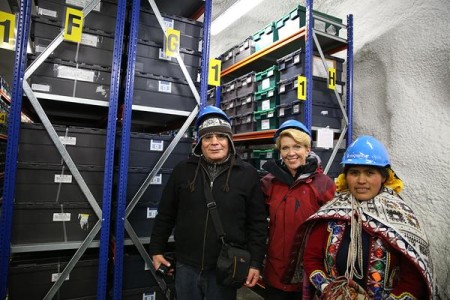
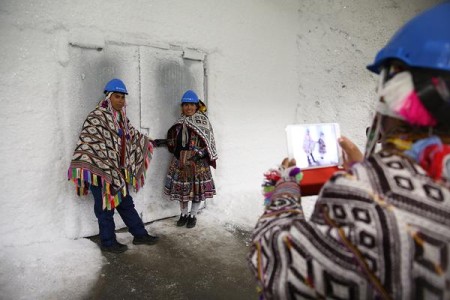
Wonderful to see indigenous leaders from the Parque de la Papa — joined by Alejandro Argumedo of Asociacion ANDES, the Director General of FAO, Graziano de Silva, and Marie Haga of the Global Crop Diversity Trust — deposit botanical seeds of their native potatoes, which they themselves produced with help from CIP, in the Svalbard Global Seed Vault. A great example of collaboration and complementarity between on farm and ex situ conservation.
Nibbles: Weird veggies, National Center for Genetic Resources Preservation, Indian litchis, Colony Collapse Disorder
- Funky vegetables from around the world.
- Ft Collins genebank on CNN.
- India gets a litchi genebank. None of that in Ft Collins.
- Honeybees get help from museum collections.