- Isolation and detection of differential genes in hot pepper (Capsicum annuum L.) after space flight using AFLP markers. Space flight resulted in some new traits.
- Addressing chronic malnutrition through multi-sectoral, sustainable approaches: a review of the causes and consequences. Many causes, many consequences, many things that could be done. Too complicated? Here’s a ray of hope for you: “…diet diversity for children older than 6 months, measured as consumption of at least four food groups, has been found to have the strongest impact on the prevention of stunting compared to other IYCF interventions.”
- Antioxidants and sensory properties of the infusions of wild passiflora from Brazilian savannah: potential as functional beverages. Possibly better than green tea, and just as acceptable, except for P. alata, which is inexplicably bitter. Which personally makes me want to try it even more.
- Formative Research on Acceptability of Pearl Millet in Rural Eastern Kenya – A Pilot Study. A lot of families were willing to barter their maize for it.
- Genetic relationships between wild progenitor pear (Pyrus L.) species and local cultivars native to Georgia, South Caucasus. Local Georgian cultivars are close to the local wild species, which is genetically distinct in that country compared to others represented in the USDA collection.
- Traceability of 9 Portuguese cattle breeds with PDO products in the market using microsatellites. You can do it, but will there really be viable Protected Denomination of Origin products based on different Portuguese cattle breeds?
- Divergent adaptation to climate variability: A case study of pastoral and agricultural societies in Niger. What’s good for the farmer is bad for the pastoralist. ‘Twas ever thus.
- Molecular characterization of olive (Olea europaea L.) Sicilian cultivars using SSR markers. Some things with the same name were different, some things with different names were the same. Still no cure for cancer.
- Characterization of Jordanian olive cultivars (Olea europaea L.) using RAPD and ISSR molecular markers. All the 13 tested were different. No word on relationships with the Sicilian varieties. But then I’ve given up on finding that sort of collaboration.
- Detection of Genome Donor Species of Neglected Tetraploid Crop Vigna reflexo-pilosa (Créole Bean), and Genetic Structure of Diploid Species Based on Newly Developed EST-SSR Markers from Azuki Bean (Vigna angularis). “V. trinervia and one taxon of V. hirtella are the genome donors of V. reflexo-pilosa.” Never heard of any of them.
Brainfood: Tea cores, Amazonian domestication, Sicilian remedies, Odisha wild veggies, Insect biomass, Energy crops, Adoption, Field size, Rye diversity, Crab breeding
- Worldwide core collections of tea (Camellia sinensis) based on SSR markers. From 788 to 192 doesn’t seem like a great deal.
- Crop Domestication in the Amazon. The first arrivals were not just hunter-gatherers.
- Plant genetic resources and traditional knowledge on medicinal use of wild shrub and herbaceous plant species in the Etna Regional Park (Eastern Sicily, Italy). 71 wild species are used for medicine, but the properties of most are known by only a few informants.
- Traditional knowledge on wild edible plants as livelihood food in Odisha, India. 86 wild species are eaten. No word on the pattern of distribution of knowledge, at least in the abstract.
- Insects in the human food chain: global status and opportunities. The real potential is in animal feed production.
- Energy crops: Prospects in the context of sustainable agriculture. They have a role in Europe to reduce effects of climate change while supporting food security and preserving the environment, but most are in early stages of domestication, and we’ll need more efficient enzymatic systems for the conversion of cellulose, and the development of multiple products.
- Are there systematic gender differences in the adoption of sustainable agricultural intensification practices? Evidence from Kenya. Not for improved seeds, apparently.
- A contemporary decennial global Landsat sample of changing agricultural field sizes. Nine hotspots of field size change, driven by different factors, and not all in same direction. I wonder if you can use this as a proxy for levels of agricultural biodiversity?
- Genome-wide characterization of genetic diversity and population structure in Secale. Limited diversity in improved material, and no structure. Need those genebanks.
- Comparison of the culture performance and profitability of wild-caught and captive pond-reared Chinese mitten crab (Eriocheir sinensis) juveniles reared in grow-out ponds: Implications for seed selection and genetic selection programs. Wild is best. For now.
A honey of a marketing opportunity
We visited Mida Creek in Watamu on the Kenya Coast last week. It’s a tidal inlet which boasts 8 of the 9 species of mangrove found in the western Indian Ocean, plus lots of birdlife.
The Mida Creek Conservation Community is a local community umbrella group consisting of 11 sub-groups, all of whom are engaged in conservation and community work. Our main activities are based on the eastern side of Mida Creek near Dabaso.
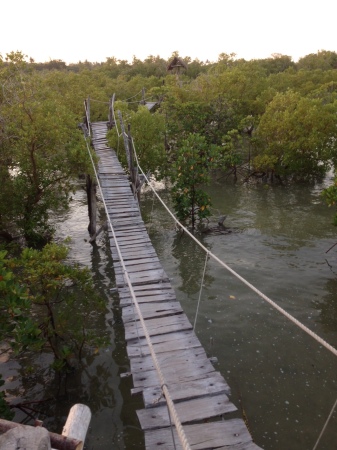
Lots of opportunities for ecotourism, as you can imagine. There’s a terrifying boardwalk, for example, that takes you right across the tidal zonation in the dry, if not exactly comfort.
The most unusual offer was perhaps the mangrove honey, though. Delicious.
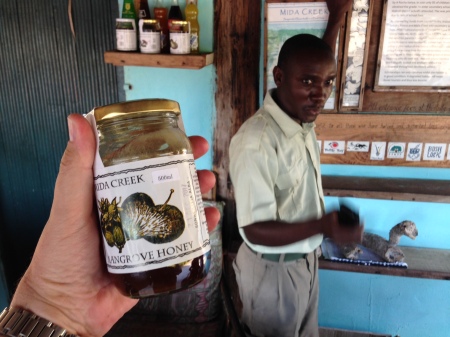
The only other place I could find mangrove honey from on the internet was Florida. The Mida Creek Conservation Community may have a real opportunity here with some savvy marketing.
Unusual nyama to choma
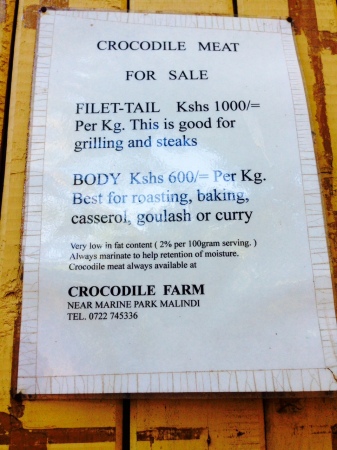
Kenyans do love their nyama choma, and it’s usually goat meat that’s involved. Usually, but not always. There’s also the somewhat offbeat on offer on occasion.
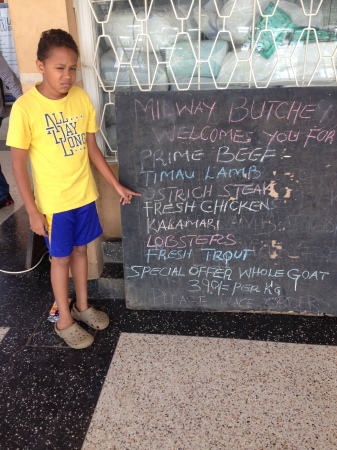
And the downright unusual.
Taro on display at SIDS meeting
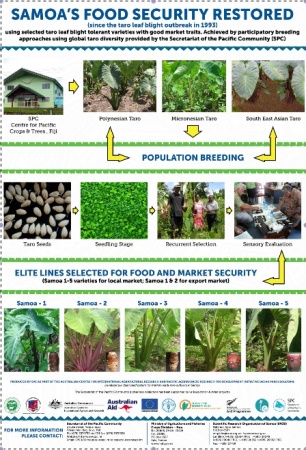 The UN Conference on Small Island Developing States has just ended in Apia, Samoa. Lots of talk about partnerships for the sustainable development of these particularly vulnerable countries, although it’s unclear to me, as ever, how much of the money announced is actually new. Be that as it may, my old colleagues at SPC were very much involved, and took the opportunity of showcasing their work on the conservation and use of taro genetic resources in the poster reproduced here. An excellent example of the kind of partnerships made so much of in the media release.