- Plants for Europe is (are?) incensed about new EU regulations. Should it/they be?
- Squash is a Native American word, natch. I bet they’re incensed.
- Speaking of Native American crops, here’s a big writeup on the potato, including great pix, and nice shoutout for the CIP genebank.
- If you live in the tropics and want to learn about agroforestry, you could just go out and talk to the first smallholder you meet. Or you could read a textbook.
- A roundtable on whether genetics can help us figure out whether wine is good for you. When they do the large scale clinical trial, as they surely must, I’ll be first in line.
- The breakthroughs of agriculture. Sadly, working out the seed viability equation does not feature. Nor does vegetarianism.
- Breeding does, though. And here’s an example why, featuring soybeans.
- And another from rice: IRRI bags another silver bullet gene.
- And we’ll soon have those in cotton too.
- Which is all fully recognized in the latest WRI report on how to feed the world.
- Though not in this other mega-report on Brazil, at least not quite so explicitly.
- “We need more research” is the wrong answer. Even when it’s breeding?
A genebank gets a slap on the back
I have to say that IPK’s an incredibly important resource for plant breeders. Without gene banks like Gatersleben we’d have lost so much more of our crop diversity. They deserve wider recognition for the work they do.
Oh wow. Unsolicited praise for a genebank. Whatever next. It comes from Graham. D. Jenkins-Belohorska, on the Facebook group Plant Breeding for Permaculture. With all due respect, I suspect its audience is limited. So I’m reproducing the whole exchange here. I really hope they won’t mind. It gets more specific, so it’s worth reading in full. Click on the image to enbiggen, and squint. Just in case this link doesn’t work. And kudos to IPK.
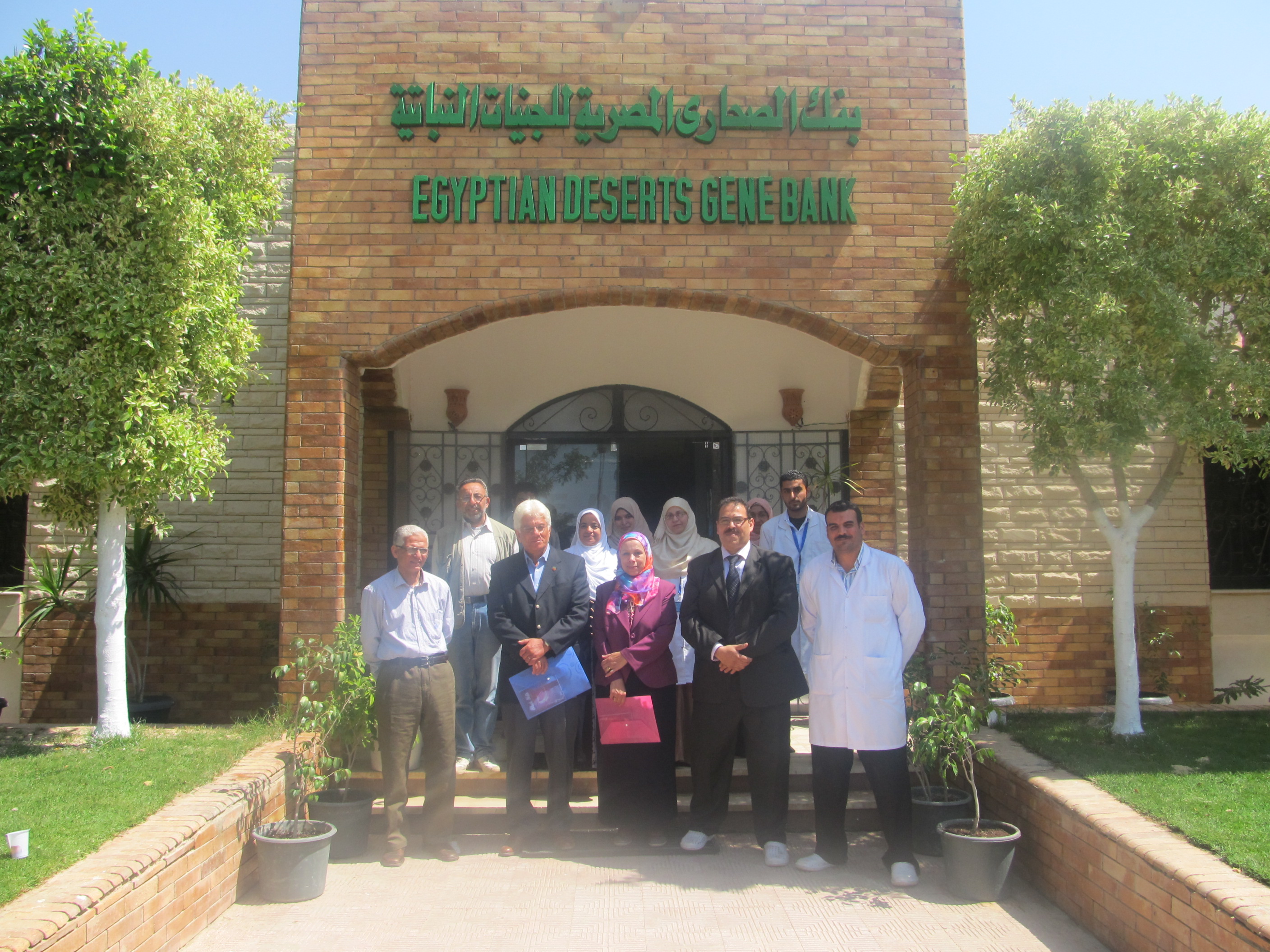
But do you have a genebank you’d like to thank (or complain about, what the hell)? Let us know here.
Pea soup
The pea lines are descendants of an inbred population of plants derived from an ARS cross made in 1993 between the cultivar Dark Skin Perfection and germplasm line 90-2131. Besides their tolerance of Aphanomyces root rot, the lines were also chosen for their acceptable agronomic characteristics.
They make it sound so easy, don’t they, in the USDA press release? But then you realize that 1993 was twenty years ago. And that “germplasm line 90-2131” is PI 557501, which has a bit of a pedigree itself:
{[(Small Sieve Freezer/C-165) / (Early Perfection 3040 / C-165) / PH-91-3] / 74SN4 / PI 180693}
And that you can parse that pedigree:
Line C-165 is a University of Wisconsin selection resistant to fusarium wilt (Race 1 and 2). PH-91-3 (Reg. no. GP-11) and 74SN4 (GP-17), released by the USDA-ARS, are fusarium root rot and fusarium wilt resistant. PI 180693 is resistant to A. euteiches. Line 90-2131 is resistant-to-tolerant to fusarium and aphanomyces root rot, both in pure culture tests and in the field. This line is also resistant to Races 1, 5, and 6 and segregating for Race 2 of fusarium wilt.
And that Small Sieve Freezer and Perfection were local US varieties dating back to at least the fifties. And, digging further, that PI 180693 is Hohenheimer Pink-Flowered, which the original USDA plant introduction book reveals was one of a big batch of seeds that came from Germany in 1949:
From Germany. Seeds presented by the Biparte Control Office, Food, Agriculture, and Forestry Group, Frankfurt. Received Apr. 20, 1949.
Quite a backstory to our promising new little pea line. If people understood that a bit better, maybe they’d understand better why something like the International Treaty on Plant Genetic Resources for Food and Agriculture is needed. And why you need genebanks. 1 And that if you’re going to want varieties able to grow in what climatic conditions will be like twenty years hence, you’d better start now. But try and put all that into a press release.
Nibbles: Innovative farmers, Feed resources, Sweet potato biscuits, Vegetable pests & gardens, Rooting for tubers, Kew collecting, Seed systems, Jess Fanzo, Blogging, Wild foods, Perennial crops, Ghana cacao, Sugar book review
- Oh, bloody hell, you mean there’s an International Farmer Innovation Day, and it was yesterday? I suppose agroecology is a form of farmer innovation? And here you can hear the very voices of innovative farmers.
- Sometimes farmers don’t innovate enough.
- And sometimes they need a helping hand from the media. Or ACIAR. Or WFP.
- Sometimes, though, they just go it alone, ploughing a lonely furrow like Rhizowen Radix.
- Kew seed bankers visit the Caribbean. Nice gig if you can get it. Any CWR?
- Wonder if they’ve read CTA’s new dossier on seed systems. Start here.
- The Jess & Jeremy Show goes on the road. All food security and nutrition, all the time.
- Is this why Jess blogs?
- I wonder if Jess would agree with Jo Robinson on wild foods. Probably.
- Whatever, as long as it’s perennial!
- CIAT gets its climate-smart cacao work in Ghana into The Economist.
- Well of course you need sugar in your cocoa.
Scaling up everything except communications
Scale is very much on the agenda today in Africa, though a little bit under the radar, for some reason. We’ve seen no advance publicity, for example, for the launching of the the African Plant Breeding Academy by the African Orphan Crops Consortium (AOCC). We were insufficiently attentive, no doubt. Here’s the press release. And you can follow the proceedings live from the World Agroforestry Centre in Nairobi. There is also tweeting:
Cabinet Secretary Kosgei: Scientists should take advantage of the academy for improved food security #orphancrops http://t.co/ORHbRpu4wX
— CIFOR-ICRAF (@CIFOR_ICRAF) December 3, 2013
You’ll remember that the African Orphan Crops Consortium plans to use next-generation technologies to sequence dozens of heretofore neglected crops and use the resulting megadata to improve them. Good luck to them.
Meanwhile, a little further north, another CGIAR Centre is hosting a meeting of Feed the Future’s Agriculture & Nutrition Global Learning and Evidence Exchange, a meeting which is apparently focusing on scaling up technology adoption. I found out about it via the redoubtable comms people at ILRI:
@ILRI Addis today hosts @FeedtheFuture GLEE on scaling up adoption and use of agricultural technologies. http://t.co/5kuVH3UXZd@agrilinks
— peterballantyne (@peterballantyne) December 3, 2013
But further information is very scarce. Maybe a participant will fill us in. In particular, of course, we’d be very interested in what is being said about the use of agricultural biodiversity in scaling up nutrition interventions.