A couple of things on wheat today, thanks to Tom Payne at CIMMYT, our go-to guy for all things triticaceous. First, Kew’s new page on Bread Wheat, which has a lot of useful information, including this:
About 250,000 samples of bread wheat are held in agricultural gene banks around the world, so the plant is far from being threatened. However, there is cause for concern in terms of bread wheat landraces, which are being replaced by modern cultivars and under threat of extinction if not already conserved in ex-situ collections.
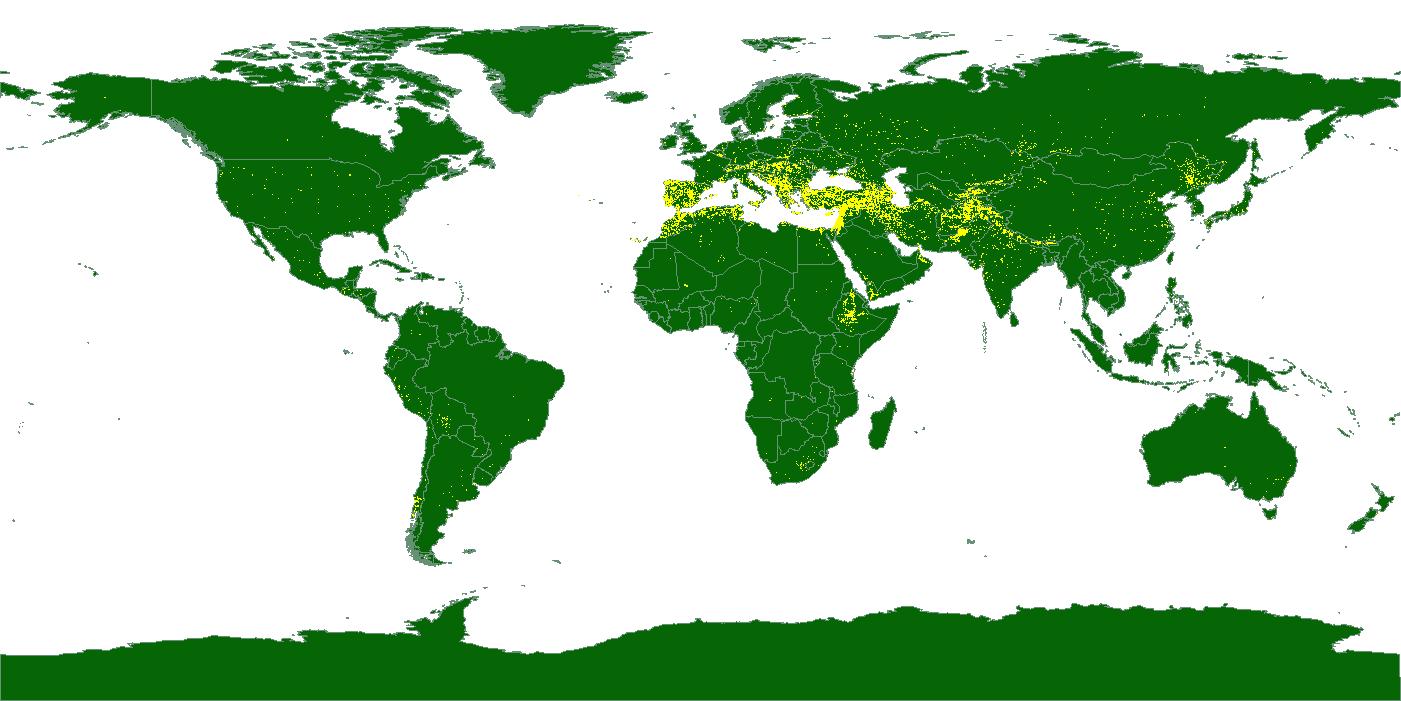
The figure is I suspect from Genesys, from which the map below is taken. WIEWS, which covers many more genebanks, gives 546,797, but there’s probably much more duplication in that number than in the Genesys one.
And second, from the just published study “Agricultural Innovation: The United States in a Changing Global Reality,” a wide-ranging analysis of the benefits to the US of investment in international agricultural research, a discussion of the pedigree of the hard red winter wheat variety Jagger, the most widely planted wheat variety in the United States:
The breeders who developed Jagger drew on genetic material from all over the world and throughout the United States. Jagger was formed by crossing the breeding line KS82W418 (developed by the Kansas agricultural experimental station) with the variety Stephens (developed jointly by the Oregon agricultural experiment station and USDA-ARS). In turn, these two varieties stand firmly on the shoulders of the investments in scientific crop breeding over the past century and the eons of selection and seed-saving efforts of farmers since wheat was first domesticated around 10,000 years ago. Jagger’s ancestry includes varieties like Turkey Red from Russia, Noe from France, Federation and Purplestraw from Australia, Yaqui from Mexico, and Etawah from India.
Too bad that the closest the authors come to saying where those ancestors of Jagger, along with their 250,000 or 500,000 or whatever cousins, may be found, despite numerous references in the text to CIMMYT and USDA, is this laconic sentence:
In addition to the efforts of private citizens, the US Department of Agriculture (USDA) sent its scientists to the far corners of the globe in search of better plant varieties.
Maybe I’ll send them that Kew link.