What causes genetic erosion? People in our business are way too fond of making lists of all the things that can possibly lead to a farmer abandoning a variety. But sometimes it’s just down to an accident. Take my mother-in-law. Please. No, but seriously, this is an interesting example of the law of unintended consequences. Bear with me. The mother-in-law grows some hybrid maize on her spread in the Limuru highlands of Kenya. Here she is with a bag of the stuff, which she likes, despite the recurrent cost, because of the large cobs.
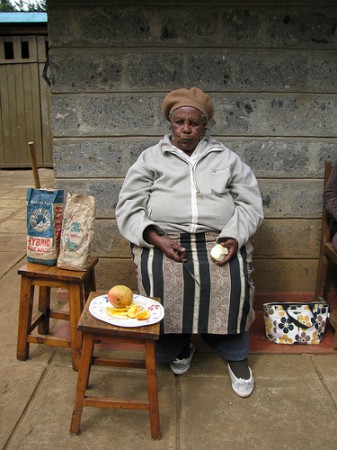
But she also grows a local landrace which she says goes back to before independence. It doesn’t yield as much, but it has thick juicy stems, and she needs that for her cows. So she grows both the hybrid and the landrace, not mixed up in the same field, but often side by side. Would be interesting to look at the geneflow that’s been happening up there over the years, but that’s not the point of this story.
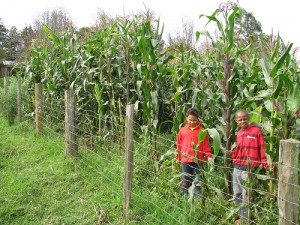 The point of the story is in fact that she almost lost the landrace recently. What happened is that last year she came to visit us in Rome for a few months, and left the farm in the otherwise quite capable hands of her daughter-in-law. Problem is, Violet, unaware of the preciousness of the landrace seed, went and fed most of it to the family. Fortunately, a handful or so survived, and quickly went into the ground for multiplication when grandma returned. You can see it here above. A close-run thing indeed. She says she would have been very upset if she had lost that seed, and asked me whether I could get it into Svalbard. After all, is that not my boss holding some seeds in front of the Vault? Well, yes, but…
