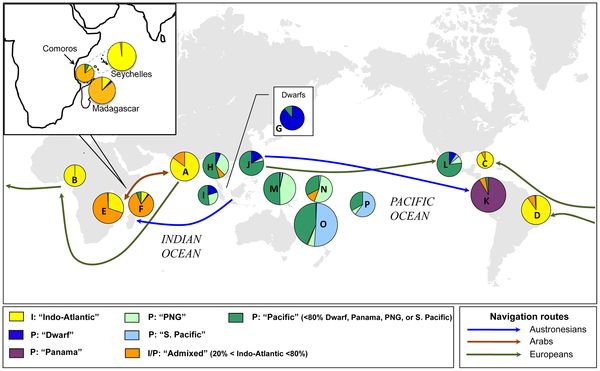
The picture really is worth a thousand words, but if you still want the words…
Agricultural Biodiversity Weblog
Agrobiodiversity is crops, livestock, foodways, microbes, pollinators, wild relatives …
The picture really is worth a thousand words, but if you still want the words…
…the Committee took up a draft resolution titled “International Year of Quinoa, 2012” (document A/C.2/65/L.16), with the representative of Bolivia noting that it had been the topic of constructive consultations and would be discussed in 2012. The issue of agricultural development and food security should remain an open item, and the Secretariat of the Second Committee would adopt the necessary provisions for that.
That was in December 2010. So where are we with that? Well, it looks like they’ll be discussing the whole thing in the next few days right here in Rome during the FAO Conference.
The idea seems to have some support from the indigenous people lobby:
Highlighting the agenda’s proposed half-day discussion on the right to food and food sovereignty, Saul Vicente Vasquez, a Forum member from Mexico, said the human right to food was not sufficiently dealt with in national legislation around the world. Not only should that right be recognized in State constitutions, he said, but the ability of traditional knowledge to ensure food for everyone must be advanced. Pointing out that indigenous types of food had not been adequately recognized, he also voiced support for proposals for an “International Year of Quinoa”.
Is it too late to throw in Andean roots and tubers?
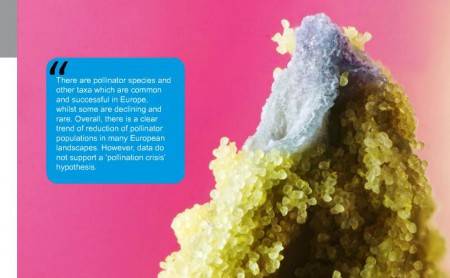
The European Crop Protection Association is organizing a conference on Pollinators and Agriculture in Europe in Brussels in a few day’s time. It come hot on the heels of a report which you can download as a pdf or read as a beautifully produced online book. Here’s the money quote:
This page is from the tractate Kilayim (which translates as ‘of two kinds’) which deals with the laws regarding forbidden mixtures of species in agriculture, breeding and clothing. It forms part of Zera’im (Seeds), one of the six divisions or orders of the Mishnah. Added to the text is Moses Maimonides’s commentary translated from the original Arabic. The diagrams show ways of dividing up plots of land to grow permitted types of seeds and mixed species. This book itself was printed in Naples in 1492 by Joshua Solomon Soncino, and was the first to contain the complete text of the Mishnah.
One of the many treasures awaiting you at the British Library, this one in the gallery section. And there’s more to come.