- Qataris work out how to sex date palms.
- The National Heirloom Exposition revs its engine.
- World Camel Day is coming up. No, really.
- Latin Americans planning their next congress on the biodiversity of domestic animals. Cuy, anyone?
- The Art of Coconut Craft. Wonderfully kitschy.
- So, you want to breed Alocasia, do you?
- Sweden stops oppressing its main minority.
- High Nature Value farming in Serbia.
- Non-wood forest products are all very well, but…
- Yes, yes, Feidherbia will solve all the problems of the Sahel, now can I go back to sleep?
Using ancient grains to remap perceptions of Central Asia
The Silk Road Symposium held at the Penn Museum in March 2011 was clearly quite a get-together, judging by the personalities involved. Some of the presentations are on Youtube, including one by Dr Michael Frachetti on “Seeds for the Soul: East/West Diffusion of Domesticated Grains,” which has been picked up and discussed by Dienekes on his blog. It’s really worth listening to the whole talk, even at 45 minutes, but in case you don’t have the time, here are the main points.
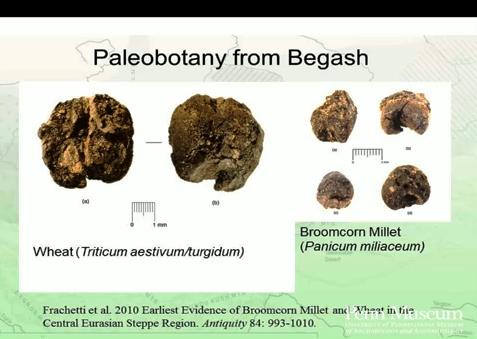 Dr Frachetti excavated at a place called Begash in Uzbekistan. This is a site which goes back to at least 2500 BC and was used by nomadic pastoralists for many centuries. The dig came up with the earliest evidence of wheat and broomcorn millet in Inner Asia, dating back to about 2200 BC. At left is what the seeds they found look like (click to enlarge).
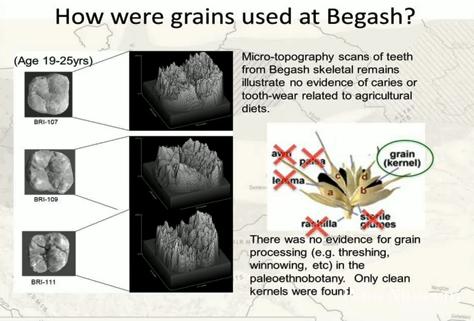 But here’s the thing. There’s no evidence that the people living at Begash at the time actually ate these things. 1 Their teeth just don’t look like the teeth of people who have a lot of cereals in their diet. Basically, no cavities. And there was no evidence of processing either. So what was happening?
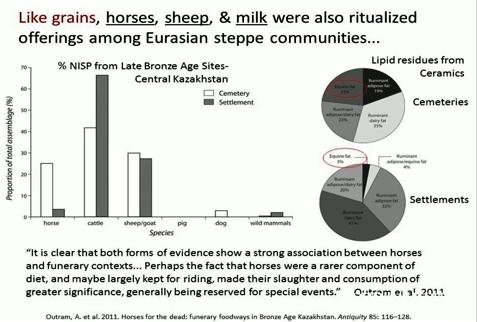 The seeds were recovered from a very particular context — a cremation burial. And only in that context. Along, incidentally, with horse remains. Both the cereals and horses were in fact ritual commodities, the excavators think. Not stuff to be consumed every day, but rather exotic commodities to be wheeled out on very special occasions to make an impression. As Dienekes points out, using wheat for funerary offerings goes on still.
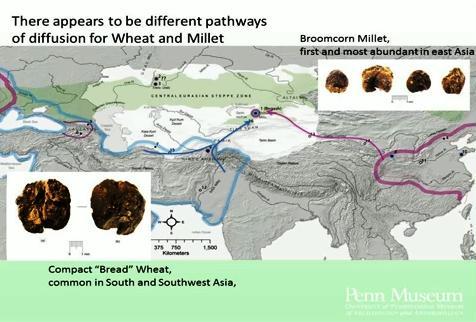 Where did the cereals come from? To cut a long story short, the wheat from the west and the Panicum millet from the east. 2 Which is the reason why Dr Frachetti thinks we need to remap our thinking about Central Asia. It’s not so much that the people who inhabited these regions were peripheral to the great Bronze Age civilizations, but rather (or, perhaps, also) that they were the link between them.
The 8th annual Great Lakes Indigenous Farming Conference passes us by
…Caroline [Chartrand] and about 100 other indigenous farmers and gardeners—along with students and community members—gathered in March on the White Earth reservation in Northern Minnesota to share knowledge, stories, and, of course, seeds.
Don’t know how we missed this from yes! magazine a couple of weeks back. In particular as one of the stories was about Pawnee corn, a topic we have covered here a number of times.
Bill Gates on the BBC on agriculture
Bill Gates had a short Q&A with a BBC interviewer and a couple of African farmers on the World Service’s The World Today this morning. You can of course listen to him on iPlayer, but only for the next week or so. His bit starts at about the 13:30 mark and lasts about 10 minutes. But you can also listen to him here on our blog, where you don’t have to fiddle with the cursor and we promise not to take him down. Mr Gates does a pretty good job of sidestepping a question on slash-and-burn, and dealing head-on with one on GMOs. The project on breeding stress-tolerant rice he mentions is one the Foundation has with IRRI. But would it have killed him to mention that all breeding is underpinned by genebanks?
More pain
Don’t get frustrated, there is always hope! We have now included the possibility of directly downloading the map of the recommended locations for genetic reserves in kmz, shp and tiff formats in the main webpage. This website is focused on the dissemination of information to the general public. For those interested in more detail, the webpage of each proposed site provided links to protectedplanet.net or Natura 2000 viewer where additional information concerning the protected area can be gathered including the download of the corresponding kmz file. Anyhow, the downloadable files at the main page should facilitate the job from now on.
Many thanks to Jose Iriondo for this comment on my recent post on the pleasure and pain of combining biodiversity data. It’s not quite as easy as he makes out. Yes, you can download the boundaries of protected areas from the sites he mentions. This is what I got for the Estrecho site in southern Spain.
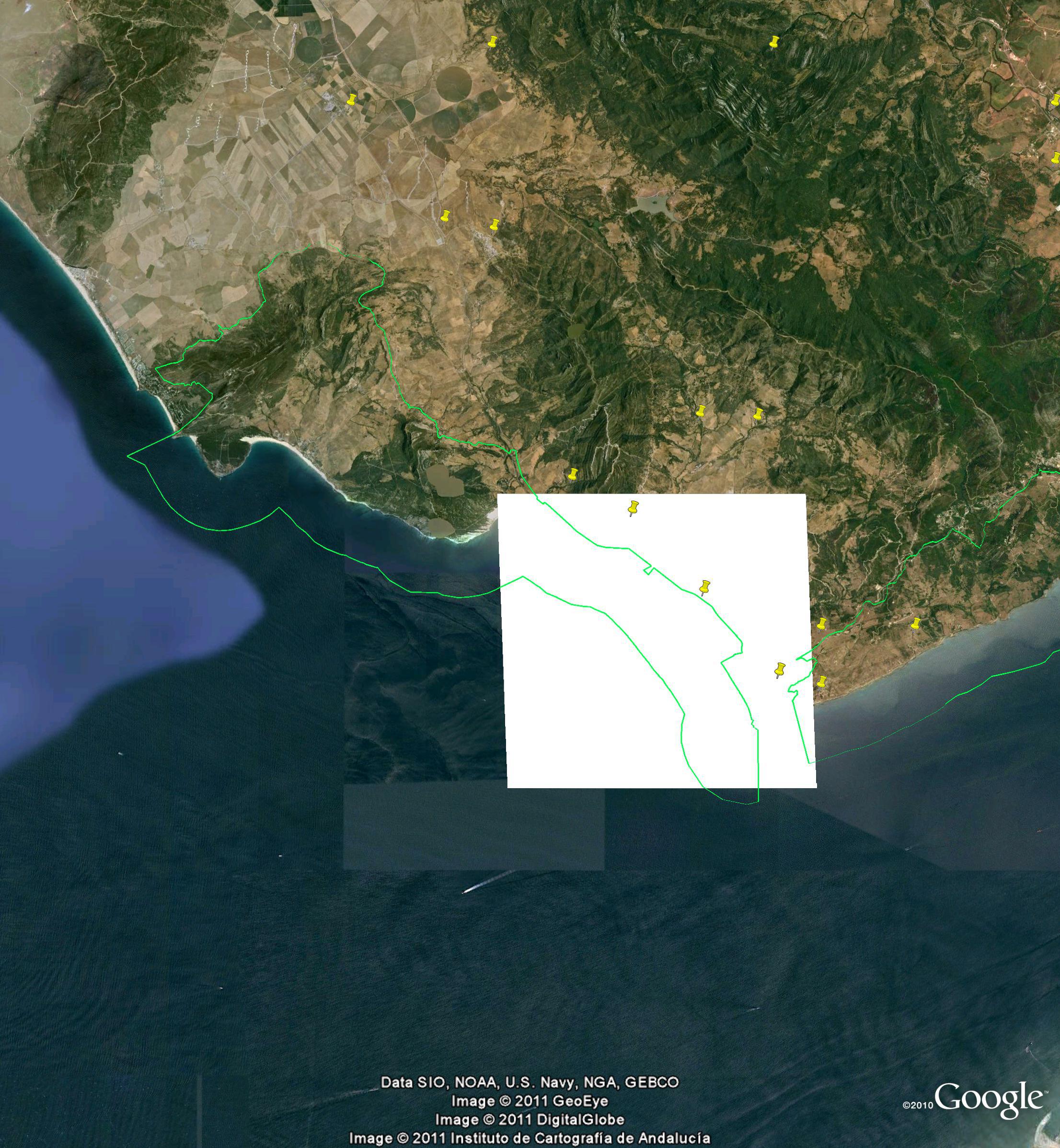
The white rectangle is all I could manage to extract from ProtectedPlanet, having gone through the pain of registering, though admittedly I’ve had better luck in the past. It could be something I’m doing wrong. The green shape I got from Natura 2000 and obviously it’s considerably better. But it still does not have the Avena, Beta, Brassica and Prunus species data in the original website AEGRO website. For that, however, it sounds like we wont have to wait for long. Jose again:
Futhermore, we will soon include the possibility of directly downloading the kmz file corresponding to each of the Google Earth plugins of each proposed site.
Hope does spring eternal.