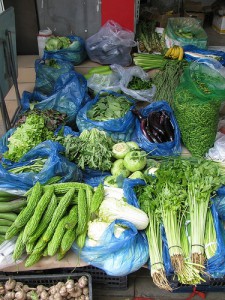
 So, in retaliation for Europe protecting Roquefort, Stilton cheese and Scottish farmed salmon (sic.), among other agrobiodiversity products, the Chinese have slapped Protected Denominations of Origin (PDO) on Guanxi honey pomelos, Shaanxi apples and Longjing tea and a Protected Geographical Indication (PGI) on Liaxian Mashan yams. 1 Well, no, not really, it was all much more amicable than that. And Dongshan asparagus, Jinxiang garlic, Pinggu peach, Yancheng crayfish and Zhenjiang vinegar are waiting in the wings…
Useful useful plants set on Flickr


Plants – crop wild relative, a set by Arthur Chapman on Flickr.
“Plants either used for food and agriculture or relatives of species that are so used. Includes images of plant species taken in fruit and vegetable markets around the world.”
Keeping bees in Hong Kong
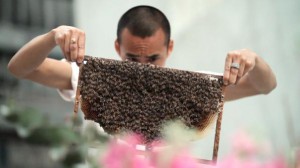 I can’t resist sharing this wonderful video about a guy I found, well, inspirational is the only way I can describe him. And believe me, I don’t often use that word, at least about people. Clicking on the photo will take you to Vimeo. Thanks, Grist.
What is and is not going to happen with antimalarial trees
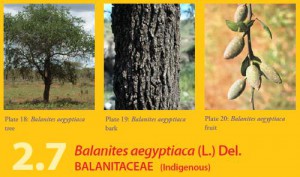 ICRAF’s project and publication on trees with antimalarial properties has made it into the prestigious medical journal The Lancet. Kudos indeed.
 UnLike that article, fortunately, the ICRAF publication is not behind a paywall. The project has been much in the news, and rightly so, but at least one report is inaccurate in suggesting that ICRAF are planning a major effort on ex situ conservation of antimalarial trees. This is how The Star entitled its article when the book was launched: “ICRAF starts trees gene bank project in Nairobi.” And this was their lede:
A project to document genetic properties of more than 3,000 forest trees across the continent has started in Nairobi.
In fact, ICRAF already has a genebank, of about 200 species, and there are no plans to either expand that to 3000 species or specifically focus on collecting antimalarials in the future. According to our sources, The Star correspondent may simply have conflated the malaria book project with the results of a recent meeting at ICRAF on the State of the World’s Forest Genetic Resources.
LATER: My sincere apologies to The Lancet. That paper is NOT behind a paywall. You just need to register. Which takes a bit of time and effort but does not involve the exchange of currency. Sorry!
Veggie genebank gets its seeds out
The University of California Davis (UC Davis) leads an international effort to help developing countries through improved marketing and production of high-value horticultural crops. Established by the United States Agency for International Development (USAID), the Horticulture Collaborative Research Support Program (HortCRSP) supports projects to improve the livelihoods of the world’s poor and builds on their needs highlighted in the Global Horticulture Assessment.
Oh hum, right? Not so fast. One of the projects being supported is this:
Dr. Ricky Bates, Horticulture Department of Penn State University has received a one-year exploratory grant from HortCRSP to look at methodologies for strengthening informal indigenous seed systems in Northern Thailand and Cambodia.
And it gets better. A genebank is involved. My cup runneth over.
The ECHO seed bank partnership is a very important integral part of this project. Dr. Bates states that, “ECHO has been around for awhile. ECHO is located in Ft. Myers Florida and has been around for at least 20 years. They see themselves more or less as an extension service where they are there to resource and support NGOs and people working all around the world with poor farmers. It is a little like an extension system where they provide information and printed material via online or telephone calls to people who may find themselves perhaps in India with World Vision. ECHO is there as a resource for NGOs that do not have an agricultural background. What grew up with the development of ECHO has been the development of a vey innovative seed bank in Ft. Myers Florida where they sort of specialize in tropical fruits and vegetables. They make these seeds available at low cost or no cost to individuals and NGOs working around the globe in development.