- The taxonomy of cow farts. Can’t improve on that title.
- What the hell is Hawaiian Plantain, and why is it needed in Panama?
- Ever eat a sedge?
- Bet they could do with some pepper.
- Ancient Japanese rice found. Let the DNA extraction begin.
- Indian farmers can now claim royalties on traditional varieties. What could possibly go wrong?
- How about paying them to preserve “traditional and fast disappearing millets“?
- Video on CIFOR’s greatest successes. I think the greatest failures would be more instructive.
- Self-consciously cool (but don’t let put you off) podcast on the domestication of the dog.
- The evolution of human lactose persistence, however, is not all about calcium.
- Today’s theory about honeybee deaths is sure to be discussed at today’s honeybee health summit.
- Can participatory mapping save the commons? Probably not, but fun nevertheless.
- Fun? How about the successful defence of a thesis on “The social structure of cultivated plants: the influence of exchanges, representations and practices on sorghum diversity in Mount Kenya’s people”.
- Keep calm and eat kangkung. Don’t you love it when one meme eats another?
- Say you want an African Green Revolution Forum … Well, you know, go to Maputo.
Nibbles: British foods, NBPGR wheat, CIMMYT wheat, Innovation, Ghana cowpea, Nordic grog, Medicinal purposes, Heirloom chocolate, Grünewoche, Dog genomics, Berry go Round, Broad beans, Ag landscapes, Tea and CC
- Google Map of British protected food names. Where’s fish and chips? Or the cream tea. Japan next?
- Indian genebank in the record books for characterizing wheat.
- And with no help from CIMMYT!
- Getting those damn smallholders to innovate already.
- Ghana gets a new cowpea to innovate with. Well, almost.
- And there I was thinking smallholders had been innovating for thousands of years. Even in the frozen north. Winter may be coming, but we’ve got grog. Which you know is good for you.
- As is chocolate, so go ahead and submit your heirloom cacao beans for evaluation. But don’t be tempted to cheat. We’ll know if you are.
- Oh damn, it’s Green Week.
- The story behind the methods used in a recent paper on dog diversity. Wonkish.
- We seem to have slipped off the Berry Go Round treadmill, which means we missed some gorgeous photos of broad beans.
- And another belated treat: UNESCO’s round up of World Heritage agricultural landscapes.
- …one of which is not tea in China, but maybe it should be, before it’s too late.
Nibbles: Agroecology, Genomics meet, African botany meet, Gardens, ISHS, Market chains, KFC in Africa, Wine terroir, Vanilla research, Dye mushrooms, French agrobiodiversity research, Indian genebank, Policy newsletter, Eels, Neolithic grain
- USDA should think about agroecology more. Or at all?
- The latest from PAGXXII. Lots on domestication, genebanks, crop improvement, all that cool stuff.
- There’s also AETFAT going on, and it’s just as cool. Maybe more so. Though less socially networked, I guess.
- How public gardens should build up living plant collections. You’d have thought they’d know.
- An update on plant genetic resources from ISHS. Lots happening…
- How to support agrobiodiversity through sustainable sourcing.
- KFC must have read that slideshare above.
- Breaking down the terroir. And not for the first time.
- Does vanilla have terroirs? I bet it does. Should ask the world’s expert.
- Dye mushrooms? Are you kidding me?
- ARCAD, DIADE: No matter how you spell it, lots of French interest (and money) in crop and livestock genetics.
- Likewise in India, it looks like from this piece on NBPGR.
- The Bioversity Policy Unit is apparently still alive and kicking.
- European eels a conservation success story?
- Let the ancient DNA sequencing begin!
Dorian Fuller on domestication, and not only of donkeys
Speaking of Dorian Fuller, in addition to his always fascinating The Archaeobotanist blog, he also curates five — count them — topics on Scoop.it, reflecting the wide range of his interests. Unlike many others on Sccop.it, including me, Dr Fuller always provides trenchant commentary on the material he posts. Browsing through his stuff, I ran across a post on a paper on donkey domestication which I had missed last year. I hope he won’t mind if I reproduce his insights here, to give a flavour of what you can expect if you follow him.
Donkey’s are undoubtedly one of the most important domesticates from Africa, but less well-documented then cattle or many crops, as they have rarely been food sources. This article provides updated review of the archaeology and genetics of donkey, including some ancient DNA evidence such as Uan Muhhgiag donkeys from prehistoric Libya. Of interest is the argument that reports of “wild” donkeys in the Levant or Arabia, such as the quantities from Ash-Shumah in Yemen, are early domesticates and not endemic wild populations. If this is the case then it would put donkey herding back to the early Holocene before 6000 BC, putting them in competition of Bos africanus for the earliest African domesticates [excluding Pleistocene bottlegourds]. Alternatively, as mapped in Boivin & Fuller (2009 in J. of World Prehistory) we extend the map of wild donkeys through the Sinai and down the west coast of Arabia to make the Ash-Shumah remains those of hunted wild animals. The latter would open the possibility of southern Levant donkey domestication. The current review by Kimura, Marshall and colleagues makes an interesting but inconclusive case against this. (Historical linguistic evidence does tend to point to African domestication among Afroasiatic/Cushitic sub-groups). As this paper concludes there is a need for more targetted research on donkeys!
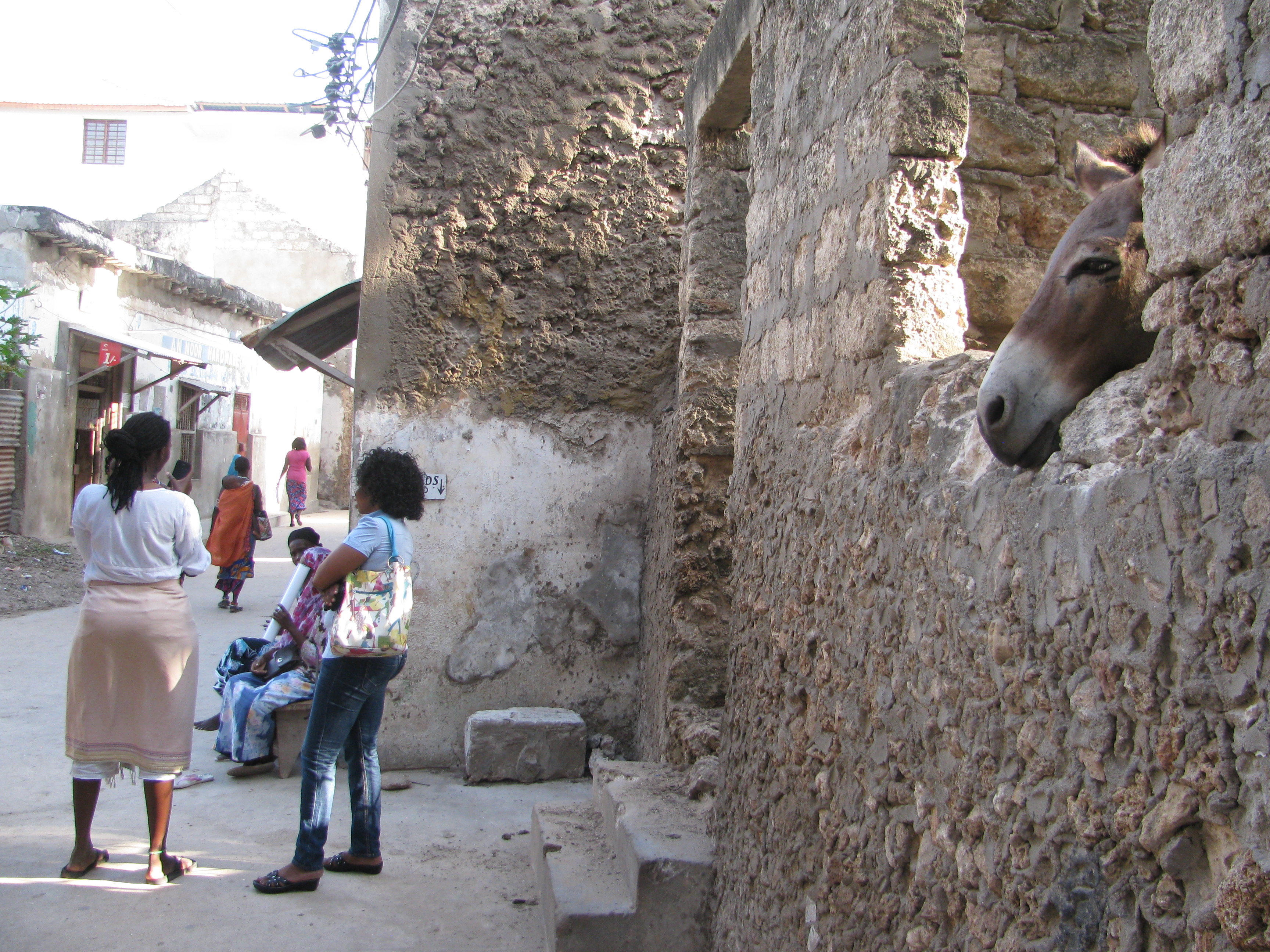
Which also allows me to post one of the pix from my recent holiday on Lamu island off the coast of Kenya, where donkeys are of course the only form of transportation.
Prof. David Harris RIP
Prof. David Harris, one of the giants of the study of the origins of agriculture, died during the holiday period. He was Professor Emeritus of Human Environment at the Institute of Archaeology (UCL) and a former director of the institute (1989-1996). Dorian Fuller, a friend and colleague at the institute, has an informative and touching piece about Prof. Harris on his blog. The comments there, and on my re-posting of Dr Fuller’s piece (see below), are ample evidence of Prof. Harris’ impact and legacy.