- IPR for indigenous peoples.
- A People’s Food Policy released today.
- Free the Seed! A sort of example of the above?
- Are club apples a sort of example of the above?
- Historical mangoes are disappearing in Hyderabad. If only they’d been, you know, protected.
- The origin of spicyness in (some) chilis.
- The downside of cassava in Venezuela.
- The upside of better seed yams in Nigeria.
- Ag comms: don’t be an eagle or a chicken. I’m a parrot, myself. Circumspice.
Using crop wild relatives in situ for improving sugar beet
Thanks to Brian Ford-Lloyd, Emeritus Professor of Plant Conservation Genetics at the School of Biosciences, University of Birmingham, for this contribution, hopefully the first of many.
Aside from beet cyst nematode, rhizomania is the most important disease of sugar beet worldwide, having plagued growers since the early 1950s. It can only be combated by growing resistant varieties, and there are two known major genes conferring resistance, one having been discovered by conventional means in the sugar beet crop, and the other in wild sea beet (Beta vulgaris ssp. maritima) populations in northern Europe. In a recent publication, Capistrano-Gossmann et al. (2017) have identified the actual wild beet gene involved (Rz2), using a complex but powerful molecular genetic process, a modified version of mapping-by-sequence together with the generation of a draft genome sequence and fine mapping. 1
But let’s leave aside the detailed methodology, including what the gene actually encodes! As far as readers of this blog are concerned, what is the significance of this piece of research? It all started with the existing knowledge that a large population of sea beet in Denmark contained some plants that showed the resistance trait, and in my recollection this population had been studied for many years. But success depended upon sampling plants (189 of them) directly from the in situ population that covered a stretch of at least 10 kilometers of the Danish coast. The magic is that, compared to conventional synthetic breeding populations, this wild population possessed a distinct benefit — many generations of ‘random’ outcrossing resulted in low linkage disequilibrium and high population admixture. This was the key to successfully fine-mapping and genomically pinpointing the causal gene within the beet DNA sequence.
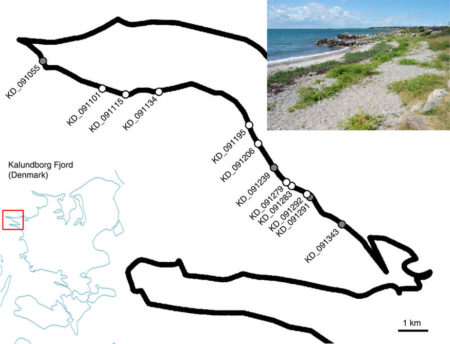
As the authors rightly point out, their research not only demonstrates the value of crop wild relatives, but it also highlights the need for ensuring that populations of these wild relatives are adequately conserved in their natural habitats and are subjected to appropriate and detailed evaluation for useful traits.
There are some important points that arise from this. Firstly, this particular use of a crop wild relative is not direct in the sense of transferring the gene by way of a plant breeding programme, but lies in the molecular isolation of the gene, that could then be subsequently transferred by whatever means, including genetic manipulation of one sort or another. Secondly, ‘evaluation’ of germplasm conserved in situ is something that has not received much attention, to my knowledge. And thirdly, preserving the population’s size and integrity would be important in maintaining its population genetic structure and ‘power’. Allowing it to go through a genetic bottleneck would diminish its value.
It is fortunate that wild sea beet is not categorised by IUCN as being under threat and large outbreeding populations do exist. The genetic potential of one or two other wild beets (Beta patula, for example), with smaller population sizes, is more in question.
Nibbles: Dog & cat domestication, Domestication book, CGIAR genebanks, Famous trees, “Ancient” beans, ACACIA, Beer book, Melon breeding, Farming trees, CC & health
- Ancient Japanese dog burials show they helped with the hunt. At least in some places and for a while. Maybe.
- Ancient cat DNA shows they just helped themselves.
- I guess Alice Roberts’ new book will cover all that.
- IITA and ICARDA genebanks in the news.
- Cool trees.
- Is this the real story of Anasazi beans?
- Speeding up crop improvement in Africa.
- Extreme fermented beverages: my kind of book.
- Wal-Mart’s fancy new cantaloupe .
- Registering on-farm trees in Ghana.
- Oh what’s the point, we’re all doomed anyway.
Brainfood: Maize regeneration, Watkins collection, Jordan barley landraces, CWR in Europe, Early agriculture, Papaya knowledge, Cryo, Tree diversity, AM, Indegee, Wild beet, Early NE ag, Fire!
- Ex-situ conservation of maize germplasm from different latitudes. You can do it, but not without some genetic changes.
- High density genotyping of the A.E. Watkins Collection of hexaploid landraces identifies a large molecular diversity compared to elite bread wheat. There’s plenty of interesting variation there, as you’d expect.
- Changes in barley (Hordeum vulgare L. subsp. vulgare) genetic diversity and structure in Jordan over a period of 31 years. No significant changes in the amount of genetic diversity in landraces collected in 1981 and in 2012, but later samples more homogenous and less locally distinct.
- Crop wild relatives range shifts and conservation in Europe under climate change. We’ll need genebanks.
- Isotope evidence for agricultural extensification reveals how the world’s first cities were fed. By opening up new land, basically, and never mind the fancy agronomic practices.
- Can the Introduction of Modern Crop Varieties in their Centre of Origin Affect Local Ecological Knowledge? A Case Study of Papaya in the Yucatan Peninsula. Yes, and not in a good way.
- Cryopreserved storage of clonal germplasm in the USDA National Plant Germplasm System. It really is a system.
- A meta-analysis of molecular marker genetic datasets for eastern Africa trees supports the utility of potential natural vegetation maps for planning climate-smart restoration initiatives. But you still have to do the trials.
- Global Diversity and Importance of Mycorrhizal and Nonmycorrhizal Plants. 72% of vascular plants have them.
- Factors associated with agrobiodiversity conservation: A case study on conservation of rice varieties in Barak valley, Assam, India. More connections means more varieties.
- Crop wild relative populations of Beta vulgaris allow direct mapping of agronomically important genes. Genotyping and phenotyping of 189 wild plants along a 10 km transect allows identification of disease resistance gene in the crops.
- Near Eastern Plant Domestication: A History of Thought. The punctuated-centric view is better, according to Occam.
- Fire and plant diversity at the global scale. They’re correlated, or at least associated.
Squeezing olives
BTW, if you want to see what that “olive plague” we blogged about a few days ago looks like, here’s a despatch from the front lines by our intrepid photojournalist on the spot, Layla.
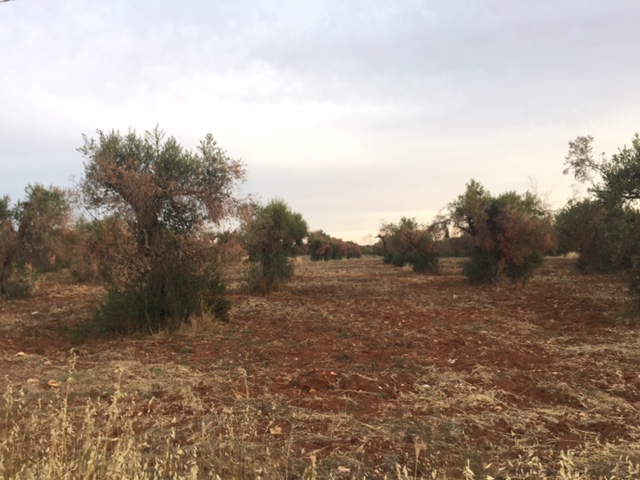
Incidentally, my attention has coincidentally recently been drawn to the Bioresources For Oliviculture (BeFOre) project (emphasis added):
The project aims at establishing a multi-lateral network of research and innovation staff active in OLIVE germplasm access, conservation, evaluation and exploitation, strengthening research capacities through the exchange of knowledge and expertise on a shared research programme focused on establishing integrated common protocols to phenotype and characterize plants at molecular, morphological and physiological level, and evaluating the olive oil quality related to varieties. Particular attention will be paid at establishing the international intellectual property rights for conserving and exchanging the olive genetic resources. The involvement of some Non Academic Organizations will allow the sharing of knowledge and ideas from research to all levels of the olive production chain, from plant propagation to fruit production and oil extraction (and vice-versa).
The bit about IPR is important because olives are not on Annex 1 of the International Treaty, at least for now, and one of the deliverables of the project is:
Core set of genotypes present in the main olive cultivar collections and grown under different agro-environmental conditions to evaluate their agronomical performance
Hopefully some of those genotypes are going to be of use against Xylella, either directly or through breeding.