- African Seed Access Index comes out for Kenya, Uganda, South Africa, and Zimbabwe.
- New way to fund crop diversity conservation to be unveiled at FFD3 in Addis Ababa next week.
- “When you looked for ‘Ethiopia’ in a dictionary, it would also always mention ‘famine’. Now that time is over.”
- Vote for me!!!! I so want to win this damn Bioversity photo competition.
- Yes, you can have your long-grain rice and yield too!
- Everybody loves floating gardens.
- Mapping chocolate.
- “Why Is there Wine on the UNESCO World Heritage List?” Why the hell not?
- Lost grapes in Shangri-La. UNESCO beckons?
- Flatbreads rule.
Climate smart agriculture = diverse agriculture, and vice versa
USAID is seeking feedback on the climate smart agriculture (CSA) strategy of its Feed the Future programme. Recall that CSA has three objectives 1
- Sustainably increasing agricultural productivity and incomes.
- Adapting and building resilience to climate change.
- Reducing and/or removing greenhouse gas emissions, where appropriate.
So it’s that triple-win we’re after, and it’s good to see diversification being highlighted in that context by the strategy document:
In general, Mission FTF programs work within diversified production systems that reflect farmer choice around crops, livestock or fish although one value chain may be the focus. Diversification includes not only the number of crops, but also using a wider range of improved varieties and staggered planting times for a given crop. Over a longer time period, crop choices by farmers may shift as risks with one crop rise while another crop option is viewed as a safer bet. Thus diversification can be a strategy for managing risk and optimizing returns, particularly when informed by information on potential shocks, seasonal forecasts and long term climate trends. Ultimately, it will be farmers who directly determine their risks, but FTF programs can help widen the array of appropriate options that confer greater resilience as well as more efficient production with a concomitant reduced GHG footprint.
But why a wider range of only improved varieties? Don’t landraces or varietal or other types of mixtures have any role to play at all? And why mention staggered planting times, but not intercropping, say?
And, most importantly, why no mention at all of conservation of crop diversity as a prerequisite for diversification, and the role of genebanks in that? After all…
…it is likely that some (if not all) countries will need germplasm that is currently grown elsewhere to adapt.
And where is that going to come from if not genebanks? You can let USAID know until noon on August 14, 2015.
Nagoya marches on in the EU
It seems that an attempt by Dutch and German plant breeders to get the EU to reconsider its ratification of the Nagoya Protocol has been unsuccessful. The breeders had said that the regulation…
…was insufficiently clear and created disproportionate red tape and additional expenses for their businesses.
Ouch. But what of the International Treaty on Plant Genetic Resources for Food and Agriculture? Wouldn’t the quite different access and benefit sharing system it established alleviate at least some of the breeders’ concerns? Well, maybe.
Regarding other avenues for plant breeders specifically, Article 2(2) of the Regulation in principle allows an exemption for genetic resources for which alternative “access and benefit-sharing” mechanisms are governed by “specialised international instruments”. Some commentators have argued that this could in theory allow at least some plant breeders to evade 2 the Nagoya Protocol using the benefit-sharing procedures of the International Treaty on Plant Genetic Resources for Food and Agriculture, as some industry leaders have also suggested. However, it remains untested, whether such an exemption would be upheld in practice.
To which I would say: why don’t the breeders in question do that testing? I’m not sure whether any of the ones involved in querying Nagoya specialize in breeding for organic agriculture, 3 but if it’s true what they’re saying about “additional expenses,” the new regulations would hit that segment particularly hard. A recent report points out that:
Organic plant breeding is of common interest and requires long-term funding. It is a common good with socio-environmental benefits greater than are mirrored by the modest royalties of its market value.
All the more reasons to test the International Treaty, and indeed make sure it works. Incidentally, recommendation 6 of the report (p. 19) will resonate with breeders — organic, and not so much — everywhere. And it might also be extended to genebanks (which unfortunately the report doesn’t mention):
Public awareness about the importance of plant breeding should be dramatically enhanced. It is literally in everybody’s best interest to develop an awareness of the foundational role that seeds play in health and nutrition. Since this topic is not always easy to communicate, new forms of communication should be sought. Hitherto, only breeders have been pushing for organically bred plant varieties, now consumers should start pulling retailers to further develop the market.
Meanwhile, various stakeholderts are gearing up to enforce the new rules, and monitor compliance, for example in the UK. The International Treaty came into force years ago in the EU, but I don’t recall frantic meetings being organized at the time to cope with it.
An evolving genebank in farmers’ fields
News that the Organic Research Centre has launched the ORC Wakelyns Population, an unusual new wheat “variety”, inspired Dr Salvatore Ceccarelli to write this blog post for us about his own efforts in a similar vein. He describes a different breeding paradigm, one based on providing farmers with lots of diversity, rather than with a single Next Big Thing.
One of the global issues most frequently debated today is the loss of biodiversity. What’s not often mentioned is that this can happen within agricultural as well as natural ecosystems, and that it can then have an effect on the ability of farmers to adapt to climate change, on food security and on human health.
In 2008, at ICARDA, we dusted off the old idea of evolutionary breeding 4 to bring biodiversity back into farming systems. We made large, widely diverse populations of barley, bread wheat and durum wheat by mixing lots of F2 lines. And I mean lots: 1600 in the case of barley, 2000 in the case of bread wheat and 700 for durum wheat. The populations went to different countries, including Jordan, Algeria, Eritrea, Iran, and lately even Italy. In Ethiopia, a specific population was made based more specifically on Ethiopian germplasm.
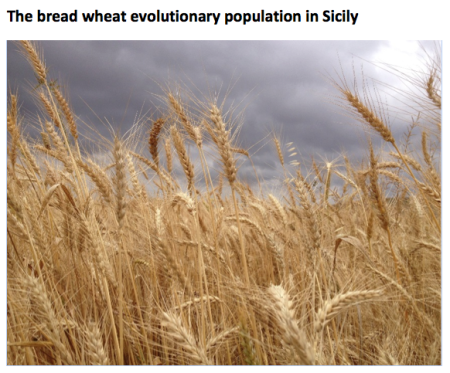
The objective was to provide farmers with what could be defined as an evolving gene bank. Because of natural crossing, the seed which is harvested from these populations is never genetically the same as what was sown. In other words, the populations evolve continuously, becoming progressively better adapted to the conditions (soil, climate and agronomy) in which they are grown — and in the long term to climate change.
We thought that as the populations evolved, farmers would be able to use them as a source from which to select, possibly with the participation of scientists, ever better adapted varieties. However, it went further than that. Iranian farmers started reporting that the evolutionary populations could themselves be used as crops, as they were high yielding, stable and did not require chemical protection against pests. As a result, the evolutionary populations of barley and wheat spread through 17 provinces in Iran, and new evolutionary populations are being established in rice and corn.
But perhaps the best finding was the one made by Iranian bakers: the bread made with the evolutionary population of bread wheat soon became a commercial success, not only because of its taste and flavour, but also because it was tolerated by people affected by allergies.
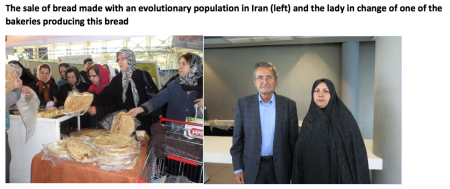
We are now having the same experience in Italy, where evolutionary populations of barley, durum wheat and bread wheat are grown in several regions: in Marche, bread made with the flour of the bread wheat population is now in great demand.
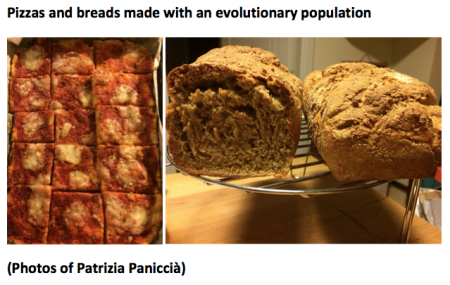
And an evolutionary population of zucchini, of all things, is currently grown by an organic farmer and new populations are being formed in beans and lettuce.
All these cases show that cultivating diverse populations can combine increasing biodiversity in farmers’ fields, adapting crops to climate change, and producing more, healthier, tastier food.
Brainfood: Weed collection, Japan vs China wheat, China wheat, Indian maize, Aromatic rice, African cattle, Food system vulnerabilities, SDGs & nutrition, Suitable days, Setaria phenotyping
- Genetic Resources of Cannabis sativa L. in the Collection of the Gene Bank at INF&MP in Poznan. I’d pay money to see this in the field at evaluation time.
- Specific median flour particle size distribution of Japanese common wheats; Comparison with Chinese common wheats. Japanese diversity is a small fraction of Chinese diversity. Also, can you really have semicolons in titles?
- Association and Validation of Yield-Favored Alleles in Chinese Cultivars of Common Wheat (Triticum aestivum L.). And among Chinese wheats, the modern cultivars are a small subset of the diversity in the mini core collection.
- Diversity among maize landraces in North West Himalayan region of India assessed by agro-morphological and quality traits. I like it when specific accessions are highlighted as being special in some way. But will breeders around the world have access to them?
- Genetic Diversity and Population Structure in Aromatic and Quality Rice (Oryza sativa L.) Landraces from North-Eastern India. More than just basmati. But will breeders around the world have access to them?
- African Indigenous Cattle: Unique Genetic Resources in a Rapidly Changing World. At least 150 breeds, many endangered, all important.
- Sustainable Sourcing of Global Agricultural Raw Materials: Assessing Gaps in Key Impact and Vulnerability Issues and Indicators. We don’t know the vulnerabilities well enough.
- Can the sustainable development goals reduce the burden of nutrition-related non-communicable diseases without truly addressing major food system reforms? No.
- Suitable Days for Plant Growth Disappear under Projected Climate Change: Potential Human and Biotic Vulnerability. Tropical areas are screwed.
- A versatile phenotyping system and analytics platform reveals diverse temporal responses to water availability in Setaria. Fancy equipment picks out differences among genotypes.