- Had no idea there were so many Maya nuts around. Glad Jeremy reminded me. And some Central Asian nuts for balance.
- The best of Afroculinaria.
- The best of HarvestPlus. Oh for the time to do a mashup. Anyway, does this count? And what’s that you say? You have a paper you’re writing on the subject?
- CIP genebank sees CIMMYT’s ISO accreditation (certification? whatever) and raises it a new piece of software. ILRI genebank doubles down.
- One Data Portal to Rule them All. At FAO. Somewhat underwhelming, frankly.
- Rice boffins target drought-stressed villages
- New map of bioregions. In the Daily Mail?
- Sustainable intensification debate gets nowhere. Pretty cynical note to leave you with, don’t you think?
- Ok, so here’s something a little more festive. California caviar.
- And some beer to go with that.
Finnish sea captain finds new banana in Vietnam
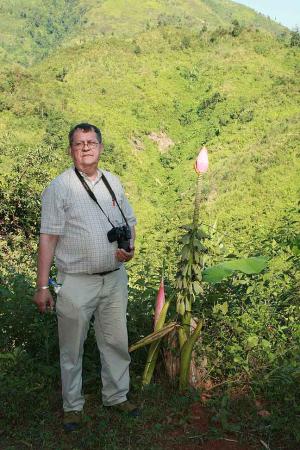
Finnish sea captain and amateur botanist Markku Häkkinen has studied wild bananas for nearly 40 years. Now he has found the new species to science.
That’s from ScienceNordic. The new species is called Musa haekkinenii, and was described earlier this year in Phytotaxa by a team of Vietnamese taxonomists, who graciously named it after Markku. Congratulations to all concerned. And we look forward to seeing the full details on ProMusa.
LATER: No, wait.
Nibbles: Rice farming, Funny teas, Funny fruits, Christmas fare, Online course, Seasonal genomes, Malaysia shares, School shares
- The most beautiful rice farm in the world. No, wait.
- Jasmine tea gets protection. But does it need it? Let’s ask the South Africans what they’re doing with their tea.
- Today’s funny fruit picture. Think it’s one of these Cuban mutants?
- How many micronutrients in a Mexican Christmas dinner? And how many in a British one, featuring parsnips of course.
- People’s University has online Appreciation Programme on Sustainable Management of Biodiversity starting January 2013.
- First farmers were first carpenters.
- And today’s genome story is very seasonally appropriate. Oh no, here’s another one!
- Malaysia implements the ITPGRFA. Cool, but why is that even news?
- School sends okra seeds to Haiti. But… No, I’m not playing the Grinch on this one, it’s too sweet.
Nibbles: Survival seeds, Turkish agrobiodiversity, Mainstreaming nutrition, Hot times for conservation, Ethiopian sesame, Conserved DNA
- Survival seed bank in the news again. Must be Christmas.
- Turkish nibbles: wine, pictachios. That wine one will no doubt run and run.
- How to make sure nutrition gets a seat at the agricultural development table. And Danny breaks it down for ya.
- What leads to spurts in conservation effort? In situ only, but instructive.
- Sesame is big business in Ethiopia.
- Boffins find yet another bit of DNA that will save the world.
Nibbles: Sesamum publications, Organic China, Melaku Worede biopic, Pre-breeding smackdown, Price of spice, Pineapple breeding
- A bibliography of sesame. Good to have.
- All you want to know about organic farming in China. Who knows when it might come in useful.
- The legacy of Melaku Worede. Proud to know him.
- European pre-breeding meeting. Would be good to go.
- The Spice Trade 2.0. Good gig if you can get it.
- Coconut-tasting pineapple. Why?