One of the FAO’s preferred responses to food emergencies is the Input Trade Fair. Farmers receive a voucher, which they can exchange for seeds and other inputs that they need for a better harvest. In 2007, for example, 20,000 government-selected families in central and eastern Swaziland received vouchers that they could spend at one of 25 Input Trade Fairs. Earlier this year, FAO described these fairs as “winners”. But as the 2008 planting season gets under way, the news from Mbabane is not good.
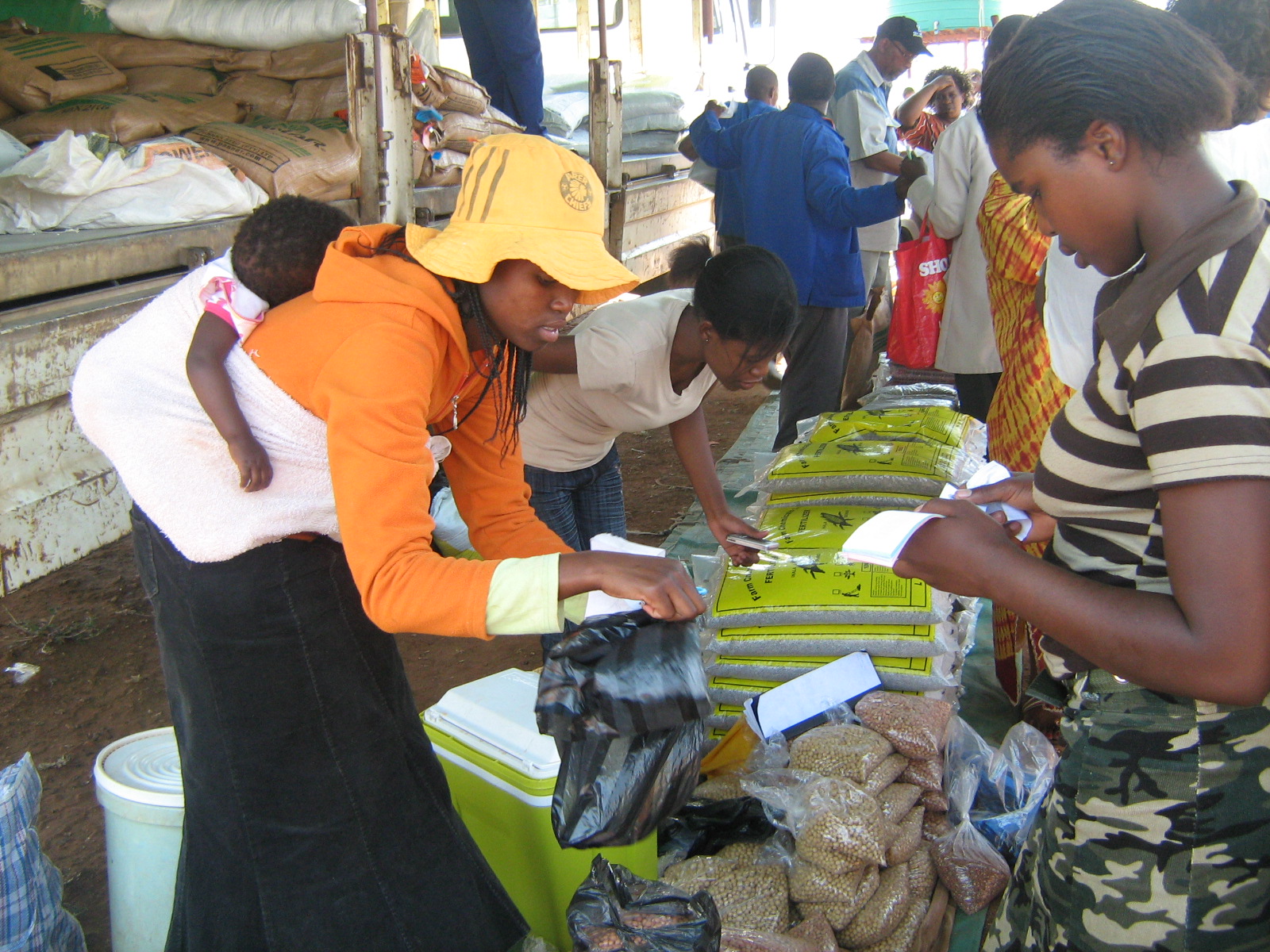 A report carried by IPS says that Swazi Input Fairs [are] Falling Short. Far fewer farmers have received vouchers this season. In the wake of rising prices the vouchers are not enough to purchase all the inputs needed. More vendors have entered the market, cutting down on sales for existing vendors. But most worrying of all, according to the report most of the subsistence farmers who have benefited from the scheme are no nearer being able to stand on their own feet than they were before the scheme started. Some, it is said, have no real interest in farming. They are just hungry, and wash the pesticidal dressings off the seeds before cooking and eating them. Many farmers refuse to switch away from maize, which needs far more water than crops such as sorghum.
While an on-the-spot report such as this one offers some insights, it does not indicate how Swaziland’s drought-stricken farmers could best tackle their problems. Maybe they need more extension help, to show them how to make better use of their inputs. Maybe they need radical changes in their methods. I was at a meeting in London on Wednesday where I saw a very short video called Greening the Desert. Geoff Lawton, of the Permaculture Research Institute of Australia, explained in tantalizing snippets how he had transformed a barren patch of Jordan into a flourishing orchard. No, I have not seen peer-reviewed results. But it seems worth trying elsewhere, and Swaziland could be a good place to do so.