- Call for proposals on African pollinator informatics.
- The Linnean Society puts “Wheat Taxonomy: the legacy of John Percival” online. Heroes all.
- The Brazilian genetic resources congress gets a Facebook page.
- There’s also a bamboo and rattan congress coming up.
- A time capsule is dug up in Canada, and it’s got seeds!
- Seeking rice SNPs? Use snp-seek.
- What links the Dutch Easy India Company with a measles outbreak in the US? The answer will probably not surprise you.
- We really need some new wine grape cultivars. I mean REALLY new.
Martha has a winner!
https://twitter.com/Prizeo/status/959228601899061250
Congratulations, Jennifer. Have a great time.
A lovely bunch of coconuts under threat
A Pavlovsk-like situation may be developing in Côte d’Ivoire. There have been rumours circulating for some months that the Marc Delorme Research Station of the Centre national de recherche agronomique (CNRA), home to one of the major coconut genebanks of the world, was threatened with redevelopment.
Well, things have just got real. A representative of CNRA’s unions held a press conference on 26 January alleging that the government does indeed have a project to move the collection from its present site, which has been sold. The researchers and other staff are resolutely against it. The relevant ministry denies all knowledge of the affair:

We’ll keep you posted. The collection is recognized under Article 15 of the Seed Treaty.
O Canadian genebank, we stand on guard for thee
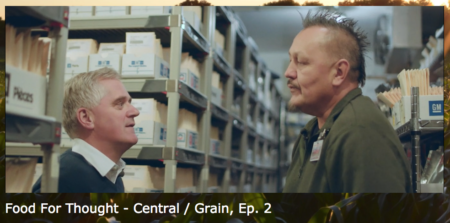
Art Napoleon is a Canadian “TV producer/songwriter/adventurer/wild game foodie…weekend shape-shifter & extreme berry picker,” which sounds like a pretty cool gig. You can watch him talk about Canadian agriculture, and the role the national genebanks plays in it, on the documentary Food for Thought. He visits the genebank about 16 minutes in, but watch the whole thing. In the screenshot below, one guy is Art, the other is the head of the genebank. I’ll leave you to guess which one is which.
Opportunities for seedy people
Two related (sort of) opportunities for you today. First, if you’re a young agricultural economist with an interest in impact assessment, you may want to check out the Crop Trust-CGIAR “Genebank Impacts Fellowship Program.” And second, if you want to study how to tweak seed systems and thus increase those genebank impacts, have a look at the call for proposals from NWO-WOTRO Science for Global Development, CGIAR and the Food & Business Knowledge Platform.
LATER: As you were, here’s a third one: a training course leading to certification in Seed System Security Assessment.