-
We’re moving house so this might be the last post for a while. See you on the other side. In the meantime, enjoy this bunch of papers on different applications of spatial analysis to agricultural biodiversity and associated topics.
- Addressing global hotspots of drought-related crop production losses. A crop-specific drought sensitivity metric for 17 major crops finds rainfed production losses of 10% globally under historically observed extremes, enough to feed 2 billion people, with hotspots in the US Midwest, eastern Brazil, the Mediterranean and South Asia. Sustainable irrigation expansion and crop switching could avoid 60% of those losses. No word on varietal change, but I’m sure it would help.
- GEM-Forest: A Global satellite EMbedding–based map of forests and tree crops for 2020. Using Google DeepMind’s Alpha Earth Foundation embeddings, this 10 m global dataset classifies forest, non-forest and tree crop areas with 90% accuracy, showing that lightweight classifiers on satellite embeddings 1 can rival more complex forest-monitoring pipelines built to support things like the EU Deforestation Regulation.
- Global distribution of cattle, horses, goats, sheep and buffaloes at 1 km resolution for 2000–2022 based on subnational census data and spatiotemporal machine learning. Harmonizing 55,336 census polygons across 147 countries produces annual 1 km livestock headcount and density layers for five species, letting users track shifting grazing pressure over more than two decades rather than relying on single-year snapshots. 2
- A Spatial-Econometric Analysis of Fruit Tree Diversity in Lebanon: A contextual framework for supporting smallholder farmers. How geography, socio-economic conditions and local context shape fruit tree diversity in Lebanon, helping identify where interventions could best support smallholder resilience.
- High-resolution mapping of rice cropping pattern, intensity, calendar, and ecosystem type across Southeast Asia. Joins the growing pile of fine-resolution rice products for the region, this one distinguishing not just how many harvests a field gets but which rice ecosystem (irrigated, rainfed, upland) it belongs to. Is which variety is being grown next on the agenda?
- Entrenchment of cropping patterns reinforces climate exposure for certain crops in US. County-level analysis of US cropping decisions finds that climate risk has actually risen for some crops (like rainfed soybeans) even as it fell for others, suggesting economic and policy incentives are keeping farmers planted in increasingly climate-mismatched patterns rather than nudging them toward the drought-sensitivity-driven switching the first paper above models.
Mind the conservation gap
In the interest of completeness, I feel it incumbent upon me to complement the post on gap analysis for crop diversity conservation that I put up a few days ago with a couple of additional links.
The Crop Trust and FAO elearning Academy have collaborated on a course on the Global Crop Conservation Strategies that includes a lesson on “Crop coverage assessments and gap analysis.”
And the Crop Trust has also made available a “Curriculum of an online lesson for gap analysis.”
So there’s really no excuse for not doing your own gap analysis, is there? And add to the storied history of the field.
A brief history of gap analysis for crop diversity conservation
Many thanks to long-time friend-of-the-blog Dr Colin Khoury for this latest contribution.
Conservation gap analysis using Geographic Information System (GIS) tools relies on several sources of biological and environmental data, including in situ species occurrences and climatic and other environmental variables used to conduct species distribution modeling, as well as passport data from ex situ collections. While species distribution modeling and associated methods had been in development since at least the 1970s (see Rebelo, 1994 and Booth et al., 2013), the widespread use of these tools was not possible until such biological and environmental data were more easily and widely accessible, for example through GBIF, WorldClim, and Genesys.
Genebank scientists, often in collaboration with academic researchers, began to apply available GIS-based tools to PGRFA conservation around the turn of the century, proceeding to develop new methods, software, and datasets (for early examples, see Guarino, 1995; Greene and Guarino, 1999; Guarino et al., 2002). Global climate datasets were compiled at relatively high spatial resolution (e.g., Hijmans et al., 2005), providing key inputs for species distribution modeling. Current distribution models for plant genetic resources began to be calculated, for example for wild relatives of potatoes and peanuts, while future distributions under climate change also began to be modeled, for example for wild peanuts, potatoes, and cowpeas. Field collecting was informed through these tools, for example for wild clover and wild chile pepper expeditions.
The focus on wild relatives of food and agricultural crops was not haphazard. These species were receiving increasing conservation attention at the time in recognition of their value as genetic resources for crop breeding, and because many wild relatives were known to be threatened in their natural habitats and were underrepresented in ex situ repositories. International conservation targets for crop wild relatives had been set at the Convention on Biological Diversity (CBD) (for 2011 to 2020 and again for 2020 to 2030) and in the United Nations Sustainable Development Goals (SDGs) (for 2015 to 2030). At the same time, species distribution modeling methods had primarily been developed for wild species, i.e. taxa whose distributions are mainly driven by climatic, edaphic, and other environmental factors, rather than human preferences (which are more difficult to model), therefore the application of these methods to crop wild relatives was relatively straightforward and a logical starting point for the agricultural research community.
Programs such as DIVA-GIS and FloraMap were created to make the methods more accessible to researchers and practitioners without extensive GIS experience and computing power. Such efforts continue, for example by CAPFITOGEN.
Through an international genebank initiative called the Global Public Goods Project II, run from 2007-2010, the distributions of the wild relatives of ten CGIAR mandate crops were mapped, with priorities for further collecting for ex situ conservation identified. A major milestone of that project was the publication of a standardized, replicable gap analysis methodology for the ex situ conservation of crop wild relatives, which made use of herbarium and other biodiversity observations acquired through GBIF and other sources, as well as genebank passport data, and which embraced recent advancements in species distribution modeling methods.
Continue reading “A brief history of gap analysis for crop diversity conservation”
Himalayan maize: The saga continues
I decided to dig a little deeper into the climatic adaptation of Himalayan maize. You may remember from my last post on this that Genesys has 96 maize accessions from over 2000 masl in the Himalayas, collected at some 50-odd unique localities. When I ran these accessions through the Subsetting Tool in Genesys, I got the following histogram.
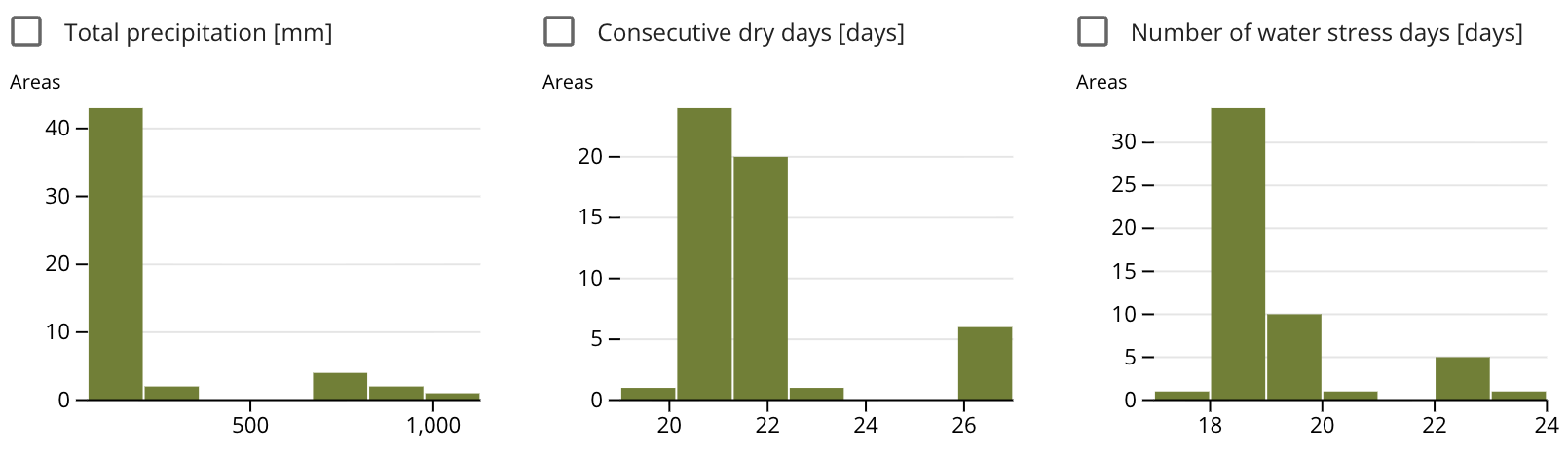
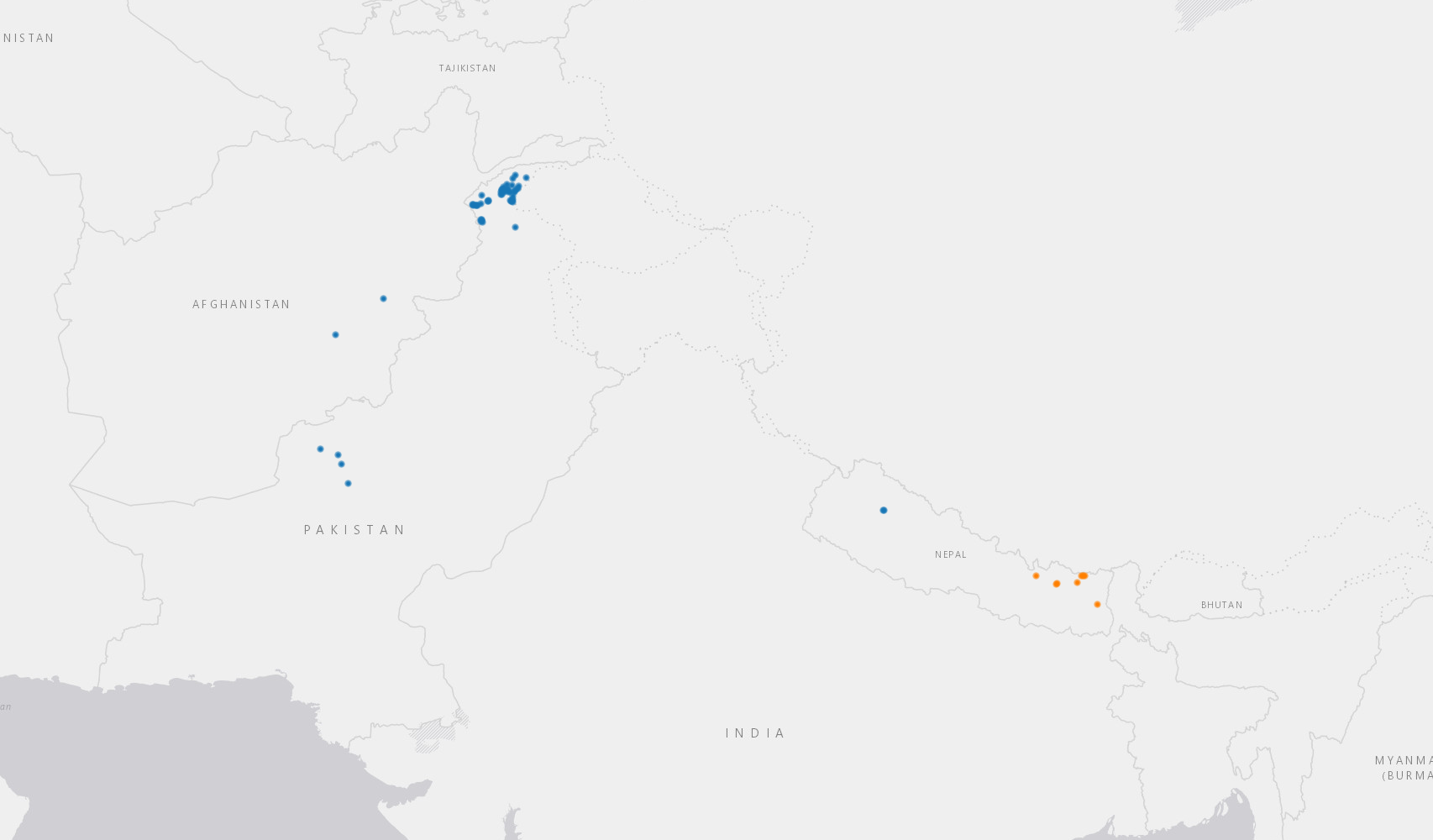
What struck me — and surprised me — was the spike of sites way at the left hand of the precipitation plot. So I took a closer look at the results of the subsetting analysis. And the clustering algorithm it uses to look for similar sites did in fact identify two climatically quite different groups of locations: 45 of the unique high altitude maize collecting sites (the blue ones) are indeed drier than the other 7 (in orange).
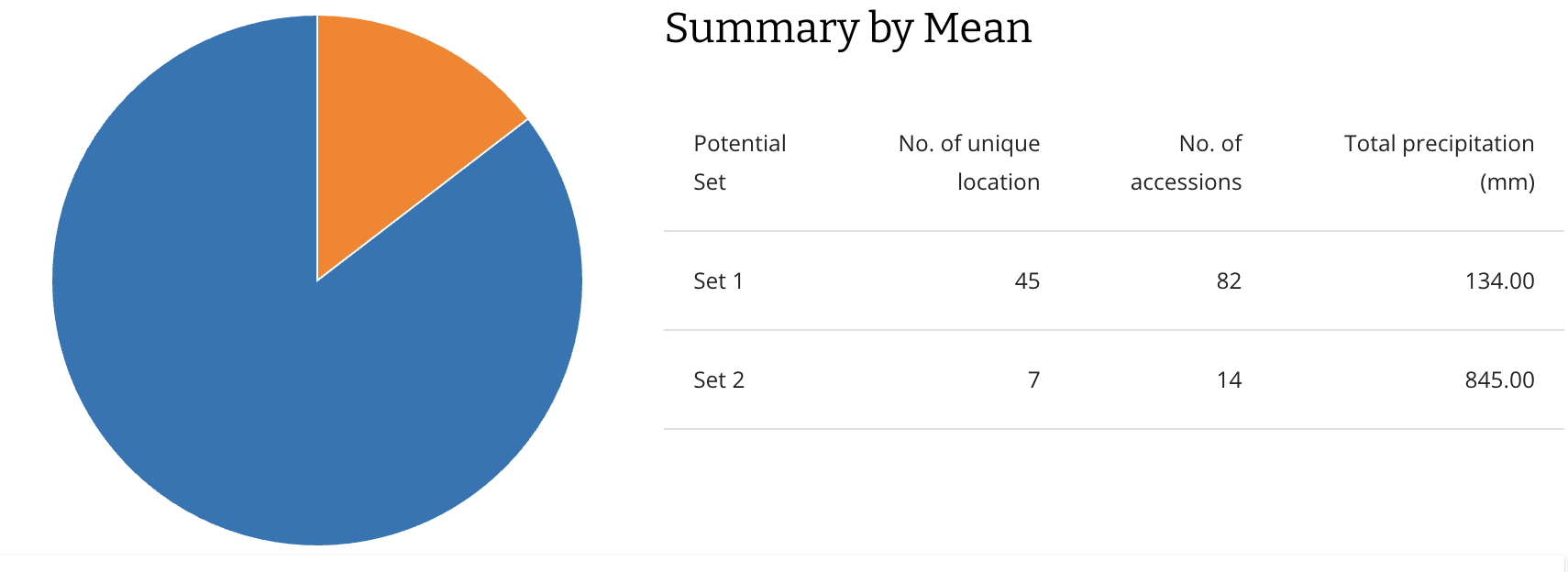
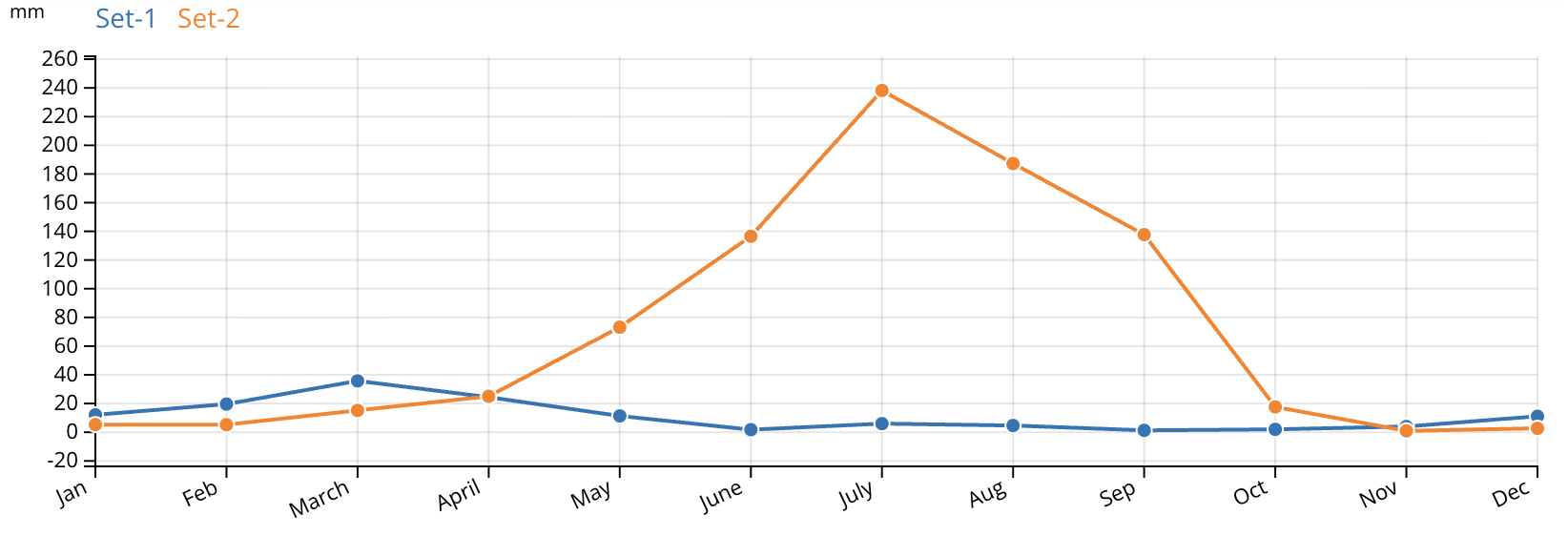
Much drier. (And also colder actually, but that’s another story.)
They’re the ones mainly collected in Pakistan and Afghanistan.
Now, I don’t know whether these areas really get 135 mm of annual precipitation, which seems really low, and in any case the agriculture there is clearly irrigated.
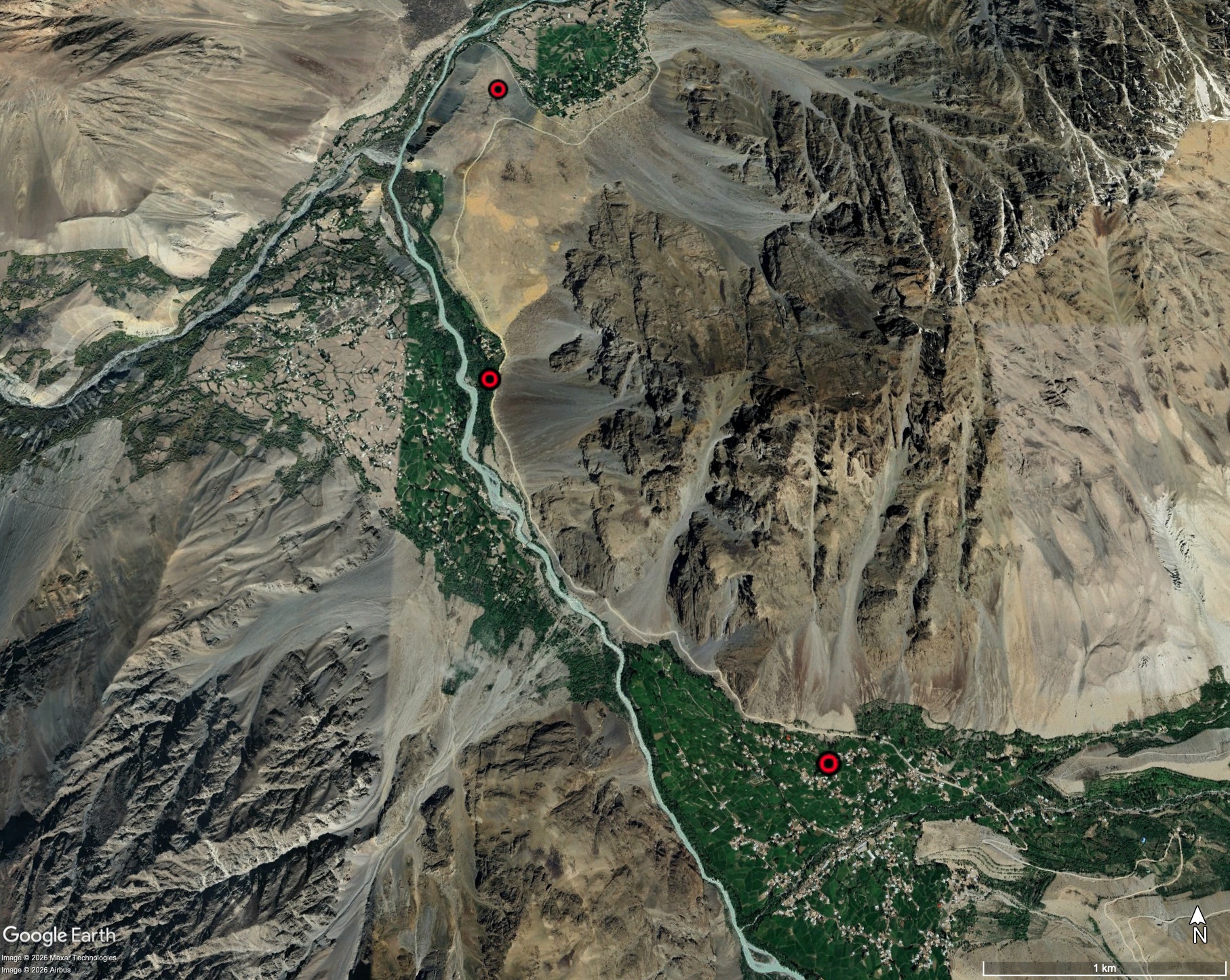
But those maize samples, mainly now conserved at CGN in the Netherlands incidentally, the results of something called the 1976 Netherlands-Pakistan Expedition by the Stichting voor Plantenveredeling, do seem to have some very unique adaptations.
Maize location, location location…
A quick search on Genesys revealed 302 maize accessions from above 1500 masl in the Himalayas, and 62 above 2500 masl. Of course, there are many more maize accessions from high altitudes in Central and South America, but their photoperiod adaptation (among other things) is likely to be quite different.
That’s from a post I put up here a few days ago. Some people said I should back up that “among other things,” so here goes.
I extracted from Genesys lat/longs for 2,388 maize landrace accessions collected above 2000 masl in the Andes, and for 96 in the Himalayas. I then asked ChatGPT to calculate separate averages for the two sets of accession collecting localities for two climate variables, i.e. mean annual temperature and precipitation. It asked me to supply it with the WorldClim data as a zip file, which I duly did.
It told me the Andean sites had a mean annual temperature of about 12°C and the Himalayan ones of about 6°C. Mean annual precipitation was around 750mm and 640mm, respectively. So there could well be some significant overall differences in adaptation between the two sets of germplasm.
But…
I used the coarsest WorldClim dataset, which is probably not a great idea in mountain areas. And many accessions were collected at the same sites: those 96 Himalayan maizes for example come from only 52 distinct places. I should probably have only used unique collecting localities to make the calculations. The “Subsetting Tool” in Genesys does do that, and displays nice histograms, but it doesn’t give you average values for the whole subset. Incidentally, when I looked at the histogram for total precipitation for the Himalayan material, there was a suspiciously big spike way at the dry end. Really not sure what’s happening there.
Maybe some climatologists or geographers or GIS jockeys can explain. And do a better analysis. And come up with a really easy way of extracting climate data for a long list of localities.