I started a post a few days ago with a quote suggesting that all that commercial farmers are interested in is yield. So let’s balance that today with this:
Geisha in undoubtedly a luxury, but in one important way, it deserves the hype. It is the first coffee to be grown commercially just because it tastes good.
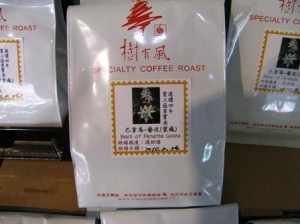 We blogged about the journey of the remarkable coffee landrace called Geisha (or Gesha) a few years ago: from Ethiopia’s forests to the CATIE genebank in Costa Rica to the Peterson family farm in Panama to all over the world, or, more specifically, a hipster coffee shop in Taiwan. But Hanna Neuschwander‘s Coffee in the New Millennium tells the story at much greater length, not to mention with much greater skill. For example, I wish I had thought to describe hillside coffee plantations, with their neat, undulating rows of bushes, as “living corduroy.”
The piece ends with a neat juxtaposition between World Coffee Research’s monumental International Multi-location Variety Trials and the more geographically focussed, but no less ambitious, in its own way, effort by the Peterson family. They’re looking for a new Geisha among hundreds of other Ethiopian landraces they are now testing on their Panamanian farm. I only have one bone to pick with Ms Neuschwander: why not fully acknowledge the role of the genebank at CATIE in all this, rather than just referring, anonymously, to “a research facility in Costa Rica”?