- Grazing is good for grassland.
- Saving British food. And that of Ghana too, why not?
- Amaranth the next superfood? Maybe, but I vote we ban that silly term.
- The case for fortification: diverse diets are just too hard.
- And the latest fruit that’s in trouble is…the avocado.
- Wanna “[s]pend your summer in lovely Kew Gardens interacting with the public and opening people’s eyes and noses to the delightful world of spices”?
- Photographing the soul of coffee.
- Atlas of Living Australia adds nifty phylogenetic thingie.
- World Bank says “agriculture has a unique and critical role in improving nutritional status” so it must be true.
- Protecting forests from the air.
Nibbles: SDGs, Seed book, Magic millets, Medieval diets, Obsessive botanist, Cocoa melting gene, Double sake, Simcock, CIMMYT double, Popular breeder, Georgian wine odyssey, Cinnamon vid, Yam bean factsheet, Jackfruit bandwagon, Prairie berries
- Agriculture and the SDGs in one nice infographic thingy.
- Seeds: The Book.
- Seeds like millets?
- Those medievals really knew how to eat.
- An obsessive botanist? Whatever next.
- Deconstructing chocolate, one gene at a time.
- Sake 101. And for a more in-depth look…
- Joseph Simcox, self-described “Internationally Renowned World Food Plant Resource Authority” takes you “on a World Adventure to learn about little known edible plants!” On Facebook.
- A journey into the heart of CIMMYT. They’ll even screen your maize for you.
- The people’s breeder.
- Tracing wine to its source: Georgia.
- Harvesting cinnamon. With video goodness.
- FAO unleashes its mighty comms machine on another poor neglected crop: yam bean. Not many people hurt.
- Watch out jackfruit, you’re probably next.
- Or maybe saskatoon berries (Amelanchier alnifolia).
A pioneer passes
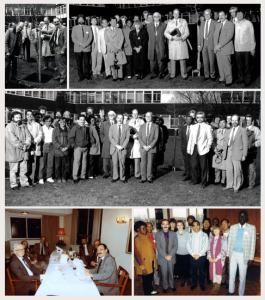 Trevor Williams, one of the key early figures in the movement to conserve crop diversity, has passed away at 76. Mike Jackson has done a great job of summarizing Trevor’s pivotal contribution to the field over at his blog. Many have left touching tributes, including a number of people whose careers Trevor was instrumental in getting off the ground. I’m proud to be in that category. Mike is also working on obituaries for the Daily Telegraph, and for Genetic Resources and Crop Evolution, to both of which I’ll be sure to link in due course. The funeral will be held on Wednesday 22 April at 13:30, at St Chad’s Church, Handforth, Cheshire. Trevor’s sister Wendy has asked that a donation be made to the Millennium Seed Bank at Kew in lieu of sending flowers. Further details on Mike’s blog.
A book worth waiting for
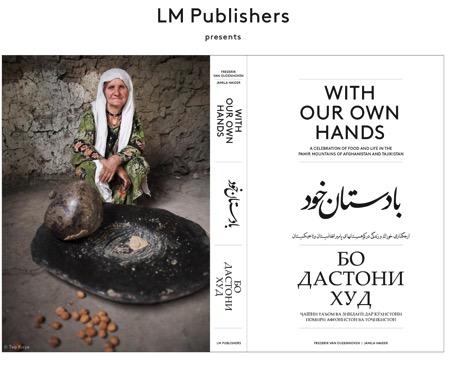
An old friend, Frederik van Oudenhoven, and his friend and colleague Jamila Haider, are deep in the proofs of what looks to be a wonderful book. With Our Own Hands “tells, for the first time, the cultural and agricultural history of the Afghan and Tajik Pamirs, one of the world’s least known and most isolated civilisations”. Should be a great read, with stunning photographs to accompany the local recipes, essays, stories and poetry. Better yet, generous donors are allowing 1800 copies to travel back to the Pamirs to be given to communities, schools, cooks and libraries.
If you’re interested, you should pre-order. Details here.
Brainfood: Resilience and diversity, Cold tolerant rice, Old baobabs, VIR, Local adaptation, Prunus phylogeny, Bactris mating, Land use change, Wheat landraces, Amazonian agrobiodiversity
- Does Plant Species Richness Guarantee the Resilience of Local Medical Systems? A Perspective from Utilitarian Redundancy. It depends on how knowledge is distributed.
- COLD1 Confers Chilling Tolerance in Rice. From a wild relative.
- Searching for the Oldest Baobab of Madagascar: Radiocarbon Investigation of Large Adansonia rubrostipa Trees. 1,600 years seems to be the record.
- Genetic resources of cultivated plants as the basis for Russia’s food and environmental security. VIR needs Roubles 425 million a year ($14.3 million).
- Using archaeogenomic and computational approaches to unravel the history of local adaptation in crops. Models say that adaptation to higher latitudes was rapid, simple (few genes) and unstable.
- Combining conservative and variable markers to infer the evolutionary history of Prunus subgen. Amygdalus s.l. under domestication. Almonds and peaches were domesticated on either side of the Central Asian Massif from different sections of the genus that had been there for 5 million years.
- Conservation implications of the mating system of the Pampa Hermosa landrace of peach palm analyzed with microsatellite markers. Bactris effective population size in genebanks is too small.
- Global effects of land use on local terrestrial biodiversity. Within-sample total terrestrial species diversity down by 13.6% globally. About the same for crop wild relatives?
- Exploiting genetic diversity from landraces in wheat breeding for adaptation to climate change. It would be a good idea.
- Household Agrobiodiversity Management on Amazonian Dark Earths, Oxisols, and Floodplain Soils on the Lower Madeira River, Brazil. Age of household head, size of household and area of land under cultivation predict amount of agricultural biodiversity managed.