- The impact of whole genome sequence data to prioritise animals for genetic diversity conservation. Relationships from whole genome sequence data were better than SNPs at preserving rare variants when selecting individuals for inclusion in a genebank.
- Genetic variation in wild populations of the tuber crop Amorphophallus konjac (Araceae) in central China as revealed by AFLP markers. Diverse, endangered, somewhat isolated populations, with some geographic structuring.
- Manihot allemii sp. nov. (Euphorbiaceae s.s.) with entire and unlobed leaves from northern Brazil, with notes about foliar anatomy. It never ends.
- Novel Genetic Resources in the Genus Vigna Unveiled from Gene Bank Accessions. Japan sorts out its genebank. It really does never end.
- Uncoupling of sodium and chloride to assist breeding for salinity tolerance in crops. We’ve been breeding for exclusion of Na+, but we should be breeding for tolerance to it.
- How can higher-yield farming help to spare nature? By making sure that lower prices and/or higher profits don’t encourage agricultural expansion.
- Seed exchange networks, ethnicity, and sorghum diversity. Culture drives diversity.
The status of wheat landraces in Tajikistan, Turkey and Uzbekistan
Six years in the making, FAO announced today the publication of surveys of wheat landraces in farmers’ fields in Tajikistan, Turkey and Uzbekistan. The work was done in collaboration with CIMMYT, ICARDA and national researchers. Although, perhaps surprisingly, dozens of landraces were still found — 162 distinct names in Turkey — they are certainly under threat:
Local landraces today account for less than 1 percent of total wheat production. Over the past 75 years, according to field surveys, the number of wheat landraces fell from 37 to 7 in Balikesir, a western province of Turkey.
Here’s the distribution of the landrace Zerun, according to the Turkey survey.
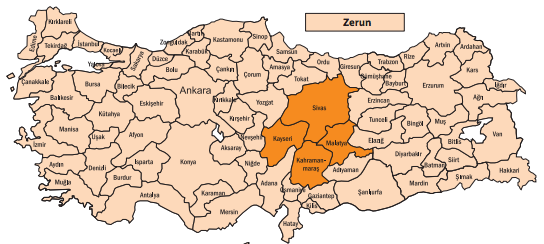
There are 14 accessions with this name listed in Genesys, and they do indeed come from the region in question, though mainly from close to roads (click to see better):
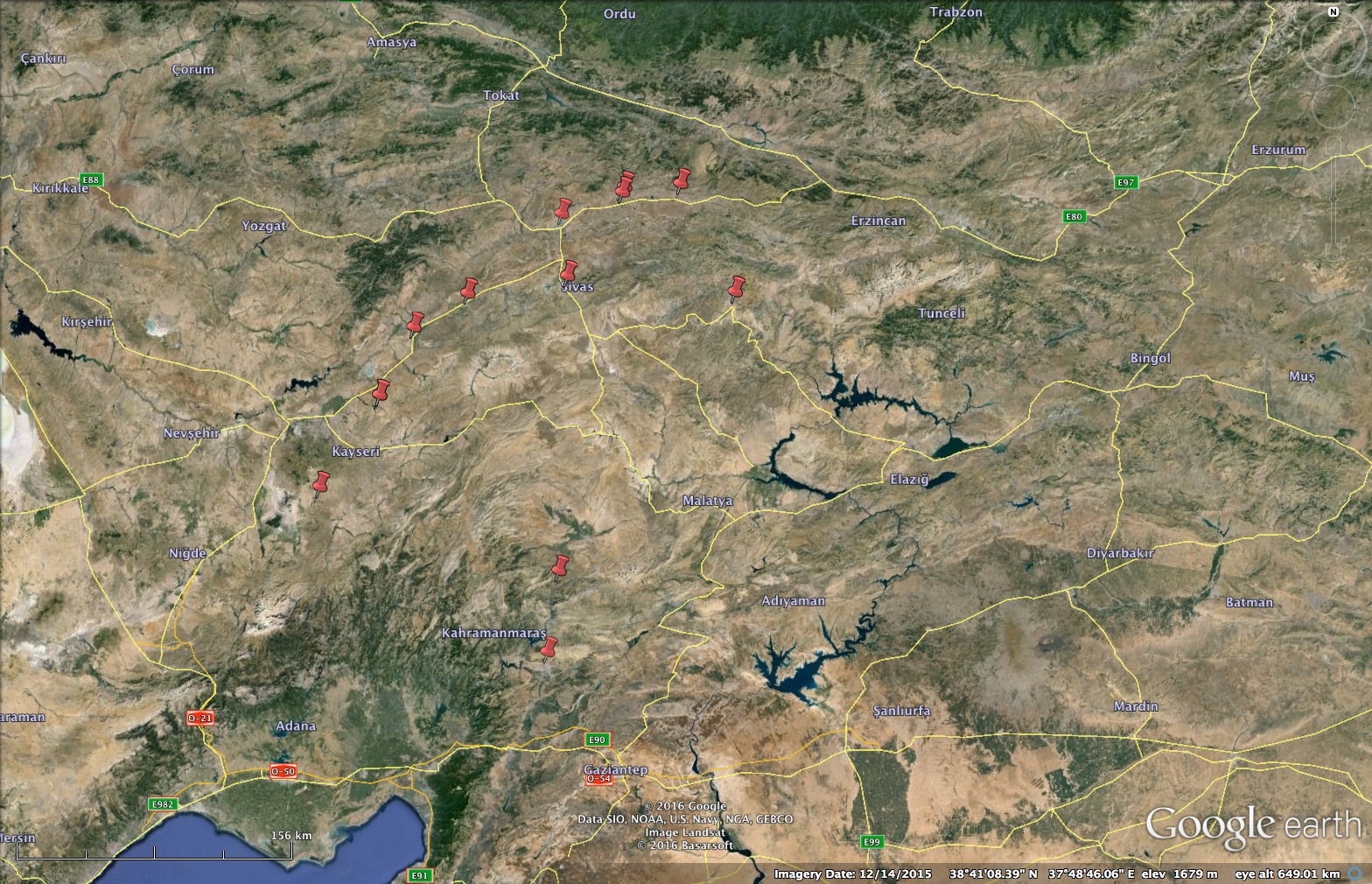
It was not clear to me from the report of the work in Turkey whether samples were taken for ex situ conservation, or at least genotypic comparison with existing accessions. But if this one landrace is anything to go by, there might still be scope for some gap-filling collecting.
Nibbles: Gastronomy edition
- Gastronomy comes to the Amazon.
- Maybe it should come to Tikal too.
- You know it’s already in Mexico.
- Not to mention Peru.
- Preparing decent coffee counts as gastronomy, I guess. But SL28 is not genetically engineered. Not in the usual sense, anyway.
- Not sure that eels have much of a future in gastronomy.
- Into Africa: Indian seeds. And Indian gastronomy along with them?
- Feralization is not domestication in reverse. Lots of gastronomic potential, though.
- Meanwhile…
Brainfood: Barley landrace evaluation, Aceh cattle, Zizania diversity, French apple cores, Vanuatu food security, Tomato genomics, Cacao fermentation, Wild foods, Activist anthropologists, Ancient wheats
- Performance of 50 Lebanese barley landraces (Hordeum vulgare L. subsp. vulgare) in two locations under rainfed conditions. 47 individual plants were as good or better than the 2 checks in terms of grain yield per plant.
- Phylogenetic analysis of Aceh cattle breed of Indonesia through mitochondrial D-Loop region. A specific haplotype, mainly indicus but with some taurus.
- Genetic diversity assessment of in situ and ex situ Texas wild rice (Zizania texana) populations, an endangered plant. Diversity is dynamic in situ, and some of it is missing ex situ.
- Genetic Diversity, Population Structure, Parentage Analysis, and Construction of Core Collections in the French Apple Germplasm Based on SSR Markers. 2163 accessions divide into Old Dessert, Old Cider, and Modern Cultivar subgroups.
- Community Food Security: Resilience and Vulnerability in Vanuatu. High population pressure associated with shorter fallows but higher yields, not associated with purchasing of imported foodstuffs. Not clear what high crop diversity associated with.
- Using genomic repeats for phylogenomics: a case study in wild tomatoes (Solanum section Lycopersicon: Solanaceae). Repetition can be useful.
- The cocoa bean fermentation process: from ecosystem analysis to starter culture development. It takes a microbial community.
- Wild harvest: distribution and diversity of wild food plants in rice ecosystems of Northeast Thailand. There’s much more to rice than rice.
- Free seeds and food sovereignty: anthropology and grassroots agrobiodiversity conservation strategies in the US South. Activist anthropology for better food systems.
- Comparative Study of Hulled (Einkorn, Emmer, and Spelt) and Naked Wheats (Durum and Bread Wheat): Agronomic Performance and Quality Traits. Will need to fiddle with classic baking techniques.
Nibbles: Svalbard, Fish tissue, Homegardens, Mothers’ seeds double, Citrus diversity, Paul Smith, Pulses, Hohokam, Nutrition profiles, Zulu cattle poetry, Cereals & CC, Soil biodiversity
- Svalbard on the BBC.
- Fish biorepository in Penang.
- Kitchen gardens in Kenya.
- Mothers transmitting seeds and knowledge to their daughters.
- Challenges faced by female farmers in preserving seeds after harvest: leave your suggestions. Maybe they could talk to the above?
- Trying to save citrus.
- Paul Smith of BGCI wins the Fairchild Medal. Congrats!!!
- The Washington Post has its finger on the pulses.
- “…a peaceful, multi-lingual, multi-ethnic economic system stretching from New Mexico to California that persisted for 600 years…”
- Country Nutrition Profiles: the infographics.
- The most beautiful cattle in the world.
- Extreme weather has been bad for cereals. Well I never.
- Threats to Europe’s soil biodiversity.