 You may remember that in
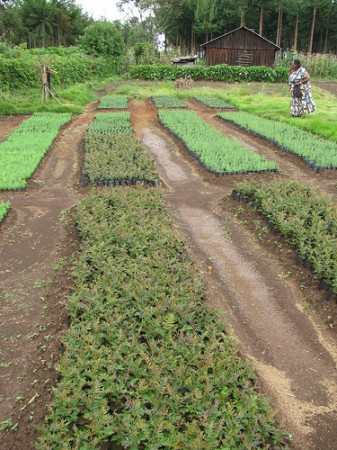
 last this week’s Brainfood we linked to a paper which looked at agroforestry input supply systems, and recommended a commercial, decentralized model for getting high quality tree seeds to smallholders. Now I’ve come across “Gender and agroforestry in Africa: a review of women’s participation.” The bottom line — not surprisingly, alas — is that women’s participation tends to be lower in enterprises in which there’s more money at stake. But this second paper only looked at the outputs, not the inputs. It would be interesting to know whether women tend to be edged out of commercial tree seed supply enterprises too. I suspect they do, which suggests that following the recommendation of the first paper for tree seed supply systems might result in even more pronounced gender inequity. So what could be done about it? Both papers include ICRAF staff as co-authors, though there’s no overlap. Maybe some of them have already thought about this and might like to comment here.
Brainfood: Chinese landscapes, Agroforestry seed, Italian lentils, Carrot heterosis, Taro in islands, Indian wheat, AnGR ex situ, Woodland shrines, Vitamin A, Caraway, Adansonia, Neotropical blueberries, Yeast genetics, Rotations
- Agricultural landscapes and biodiversity in China. Traditional farming practices good for biodiversity, modern bad. Therefore need intensification, to take pressure off natural habitats. But no, wait, that usually means monocultures and chemicals, which are bad. Oh crap. No mention of genebanks.
- Innovation in input supply systems in smallholder agroforestry: seed sources, supply chains and support systems. Decentralized commercial system probably best for getting quality agroforestry seed to smallholders. Unfortunately, nobody listening.
- Characterization of Italian lentil (Lens culinaris Medik.) germplasm by agronomic traits, biochemical and molecular markers. I object in principle to any paper that says a particular landrace is “the best.”
- The relationship between heterosis and genetic distances based on RAPD and AFLP markers in carrot. It is positive. Was this really not known before in carrots? What am I missing?
- Genetic diversity of taro (Colocasia esculenta (L.) Schott) in Vanuatu (Oceania): an appraisal of the distribution of allelic diversity (DAD) with SSR markers. 10 villages, 344 landraces, 324 distinct multilocus genotypes, genetic pattern reflects social networks. Situation in Andaman Islands not quite so interesting.
- A study of genetic diversity among Indian bread wheat (Triticum aestivum L.) cultivars released during last 100 years. More diversity after Green Revolution than before, but steadily decreasing.
- Ex situ conservation genetics: a review of molecular studies on the genetic consequences of captive breeding programmes for endangered animal species. Restricted access, and you know what? I couldn’t care less.
- Consequences of wooded shrine rituals on vegetation conservation in West Africa: a case study from the Bwaba cultural area (West Burkina Faso). I expect there are some, but with restricted access, what’s the point of even linking?
- Evaluating sweet potato as an intervention food to prevent Vitamin A deficiency. To have an effect, you’d have to replace all the other types with orange-fleshed ones. Well, almost. Wonder whether it will be presented at the “International Scientific Symposium on Food & Nutrition Security Information: From valid measurement to effective decision-making” early next year.
- Evaluation of variability of morphological traits of selected caraway (Carum carvi L.) genotypes. They’re actually breeding this stuff in Poland. But they had to get their germplasm from botanical gardens around Europe.
- Variation in baobab seedling morphology and its implications for selecting superior planting material. There is some.
- Edible Neotropical blueberries: antioxidant and compositional fingerprint analysis. The 5 species involved have different ones.
- Population genomics and speciation in yeasts. There’s a question as to whether yeast species in fact exist in any meaningful sense.
- Cereal–forage rotations effect on biochemical characteristics of topsoil and productivity of the crops in Mediterranean environment. Continuous cereal stressed the soil.
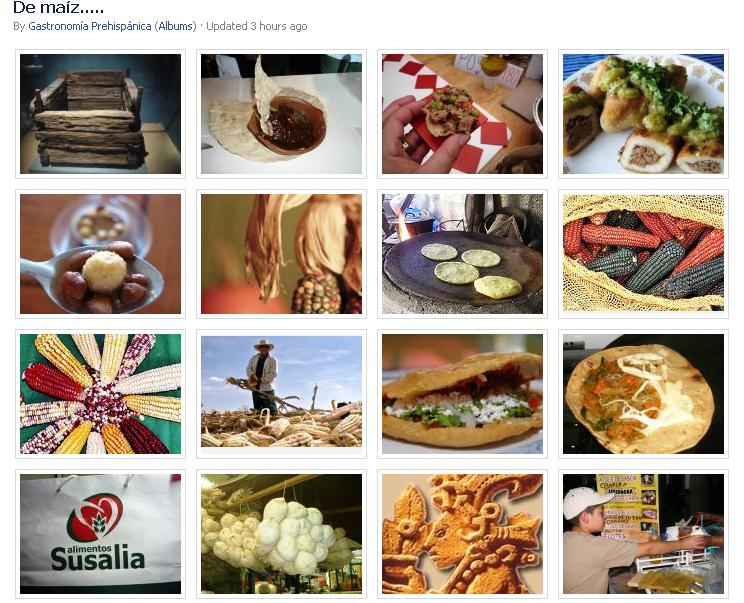
The wonder of maize in images
Gastronomía Hispanica has a great set of photos on its Facebook page on the “miracle of maize.” 1 Here’s a totally inadequate teaser. Go and friend them.
Nibbles: Goats, Nordic food, Roman beer, Mopani worms, South Sudan
- So apparently there’s a British Goat Society.
- More on that Nordic Food Lab. Note connection to NordGen.
- Beer Chicks do Rome artisanals. So much one could say about this.
- Mopani worms in London. Best place for them.
- South Sudan’s seed system.
Brainfood: Pollinators, Cattle foraging, Sweet potato-pig system, Kava quality, Pastures, Pollen flow, Agrarian reform, Genotype diversity, Cacao cropping, Outcrossing
- Contribution of pollinator-mediated crops to nutrients in the human food supply. 90% of Vitamin C for a start.
- Foraging behavior of Alberes cattle in a Mediterranean forest ecosystem. It’s a semi-feral breed in NE Spain and its foraging behaviour may well decrease the risk of fires.
- Assessing the impact of the SASA/CASREN technology interventions in the sweet potato-pig production systems in Zitong County (Sichuan, China). All well and good but in this day and age one would expect some exploration of the sustainability of the interventions.
- Proposal for a Kava Quality Standardization Code. Very much needed because poor quality was probably responsible for examples of liver toxicity in the past. This is how to avoid that in the future.
- Clipping stimulates productivity but not diversity in improved and semi-natural pastures in temperate Japan. Semi-natural pastures are more diverse than improved pastures, and can be reasonably productive. So there.
- Pollen flows within and between rice and millet fields in relation to farmer variety development in The Gambia. Depends on breeding system. Likely higher within fields than between. Still no cure for cancer.
- Land, landlords and sustainable livelihoods: The impact of agrarian reform on a coconut hacienda in the Philippines. It seems to be mainly in the mind.
- Genetic divergence is not the same as phenotypic divergence. It isn’t? I’ll alert the media.
- Scope economies and technical efficiency of cocoa agroforesty systems in Ghana. Multi-crop cocoa farms are better, in multiple ways.
- Gene flow increases fitness at the warm edge of a species’ range. Outcrossing between edge populations better for living on the edge than outcrossing within edge populations, outcrossing with a center population or selfing. For a Californian annual anyway. Interesting consequences for in situ CWR conservation, in particular in context of re-introductions. Do we worry too much about “genetic pollution”?