- Introgression from cultivated rice alters genetic structures of wild relative populations: implications for in situ conservation. Not totally wild any more.
- Genetic Variation and Population Structure of Oryza glaberrima and Development of a Mini-Core Collection Using DArTseq. 2,179 accessions, 5 geographic groups, 16% recover >95% of polymorphisms.
- Geographic mosaics and changing rates of cereal domestication. Applying fancy maths to archaeobotanical remains shows that selection pressures varied in time, and started slow.
- Tapping the economic and nutritional power of vegetables. Eat your veggies, damn it!
- To what extent can ecosystem services motivate protecting biodiversity? Not enough.
- Genetic diversity of Afrikaner cattle in southern Africa. 3 groups, but not geographically determined, and lots of diversity despite recent declines in numbers.
- Nominal 30-m Cropland Extent Map of Continental Africa by Integrating Pixel-Based and Object-Based Algorithms Using Sentinel-2 and Landsat-8 Data on Google Earth Engine. Next level. But when will be be able to distinguish crops?
- Reductions in global biodiversity loss predicted from conservation spending. But the impact of spending goes down with with increasing development pressure.
Brainfood: Yeast census, Kansas collections, Species abundance, Dietary diversity, Seed longevity, Tree conservation, Yam metabolomics, Ethiopian mustard shattering, Improving ITPGRFA
- Census of Yeasts Isolated from Natural Ecosystem and Conserved in Worldwide Collections. 27 countries, 41 collections, 58,095 strains.
- The Curiosity of Collections: A Behind-the-Scenes Look at What’s in the Drawers, Cabinets and Refrigerators of K-State Collections and Why It’s Important. Including the Wheat Genetics Resource Center.
- Species are not most abundant in the centre of their geographic range or climatic niche. Even trees.
- Tartary Buckwheat Genetic Diversity in the Himalayas Associated with Farmer Landrace Diversity and Low Dietary Dependence. Relying on fewer food crops is bad for crop genetic diversity.
- Contrasting tocol ratios associated with seed longevity in rice variety groups. It’s the relative amounts of different homologues, not the total.
- Gene conservation of tree species — Banking on the future. Proceedings of a workshop. USA-centred, but lessons more generally applicable.
- Deep Learning for Multi-task Plant Phenotyping. Computer can count wheat spikes and spikelets.
- Metabolite profiling of yam (Dioscorea spp.) accessions for use in crop improvement programmes. 200 compounds on 49 accessions in 4 species. But now what?
- Molecular diversity analysis and genetic mapping of pod shatter resistance loci in Brassica carinata L. 5 QTLs for shatter resistance found in Australian collection. In other news, there’s an Australian collection of Ethiopian mustard.
- Access without benefit-sharing: Design, effectiveness and reform of the FAO Seed Treaty. Hybrid SMTA/subscription model, gradual Annex I expansion, successively improving domestic implementation.
Nibbles: Coffee nomenclature, Sardinian pasta, Kernza, Wheat landraces, Roman sauce, Czech potato, Yeast et al, Agricultural biodiversity, Apple seedlings
- Coffee: variety or varietal?
- Malloreddus: from Campideno or Campidano?
- Wheat: annual or perennial?
- Landrace conference: to go or not to go?
- Garum: to be or not to be?
- Potato: but blue?
- Microbial collections: to charge or not to charge?
- Agrobiodiversity: use it or lose it?
- Apples: but seedlings?
Reports galore for the CFS
It’s the time of year for major reports, I guess. Here’s what’s on the table:
- HLPE. 2017. Nutrition and food systems. A report by the High Level Panel of Experts on Food Security and Nutrition of the Committee on World Food Security, Rome.
- FAO. 2017. The State of Food and Agriculture 2017 — Leveraging food systems for inclusive rural transformation. FAO, Rome.
- IPES-Food. 2017. Unravelling the Food–Health Nexus: Addressing practices, political economy, and power relations to build healthier food systems. The Global Alliance for the Future of Food and IPES-Food.
You can follow the discussion on all these and more on the webcast of the 44th session of the Committee on World Food Security.
Maybe we should just have stayed hunters and gatherers?
Botanical gardens need to look to the tropics
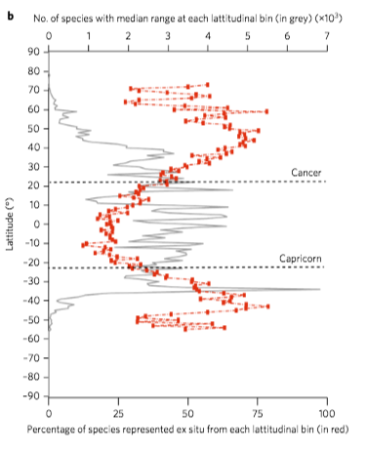 A monumental study of the plant species conserved in botanical gardens has just been published, and is getting quite a lot of traction in the media. The headline numbers are impressive: “botanic gardens manage at least 105,634 species, equating to 30% of all plant species diversity, and conserve over 41% of known threatened species.” It is worrying, however, that three quarters of the species that are absent from botanical gardens collections are tropical in origin. Lots of hot, sweaty work still do be done.