G20 chief ag scientists eat, shoot and leave

The reaction by the Association of International Research and Development Centers for Agriculture (AIRCA) to the communiqué put out by G20 chief agricultural scientists after their latest meeting in June in Australia brings up some good points, but also reminds me that we probably didn’t give that event the space it warranted. Just a Nibble, if memory serves.

Anyway, good to see diversity highlighted in a couple of places. 1 The participants “agreed that diverse farming systems will require a broad range of innovations and approaches,” which seems to imply that they think those diverse farming systems are a good thing, and worth striving for. And here’s another interesting excerpt from their communiqué: they

…recognised the importance of biodiversity of plants, animals and micro-organisms in an agricultural setting, and noted with interest the global and stakeholder driven DivSeek initiative. We recognised the importance of the next generation genetic resources, open access information system — that will enable the speeding up of crop improvement processes and thereby enhance resilience, food and nutritional security.

Nice enough, but am I the only one to find that comma after “genetic resources” problematic. I think they meant “next generation, open access information system on genetic resources” there. Who says punctuation is not important.

Susan McCouch, who’s been involved in DivSeek, was on youtube recently, by the way. She doesn’t mention DivSeek directly, but her talk does suggest why something like it is needed.
Searching Genesys: The Video

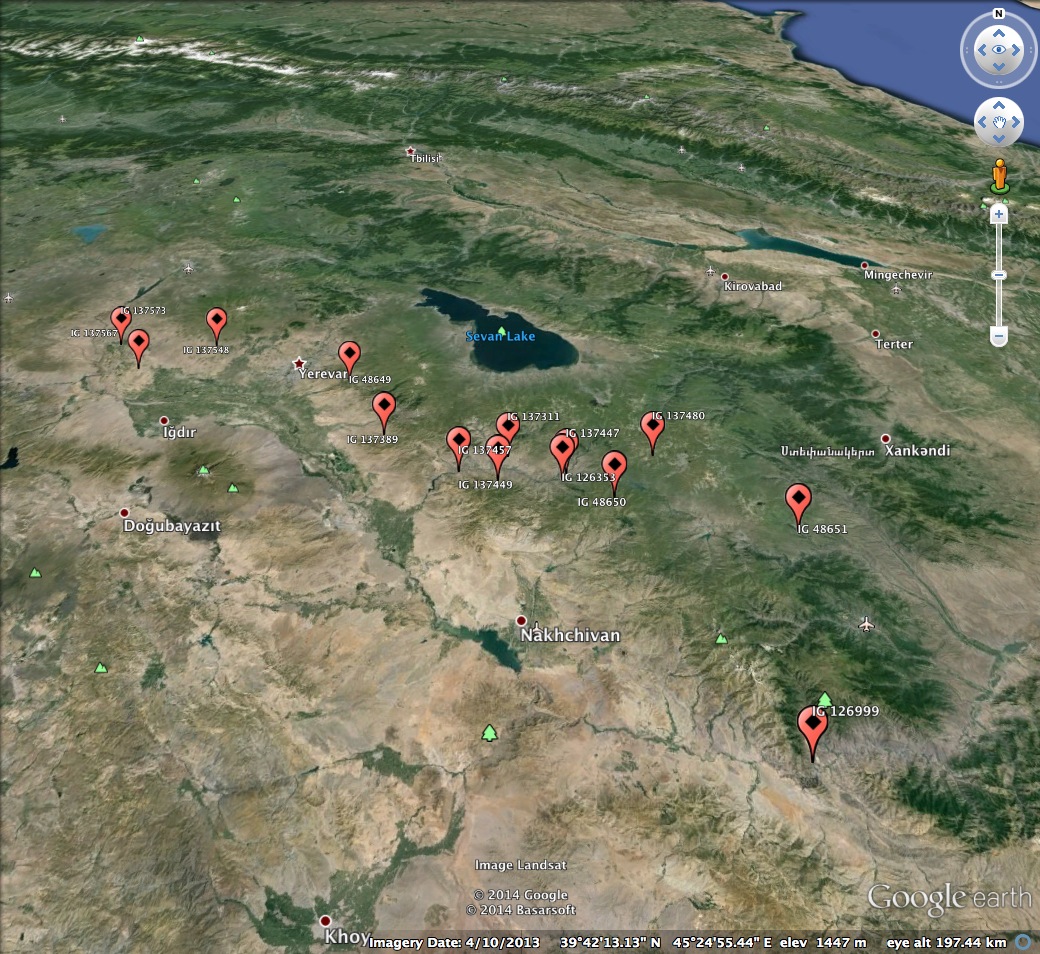
Genesys is trialling an improved data filtering mechanism. Say you want to find Aegilops tauschii from Armenia with frost tolerance. Go to Browse and play around with the Filter button. If you have trouble, see if this little video helps you figure it out. The answer, by the way, is that there are 14 accessions that satisfy those requirements, all at ICARDA. Here’s where they are:

armenia wheat

Did you get the same answer? Any suggestions for improvements?

An e-atlas for the ages

I do love maps. I love looking through atlases, even their faintly ridiculous 21st century incarnation, the e-atlas. But really, in this world we live in now — rather than that of bewhiskered gentlemen poring over suspiciously stained folios in the libraries of London clubs, motes of dust dancing in the air as each leaf is turned over and final plans are agreed for their next foray into the Heart of Darkness — what is an atlas for? Surely it is for more than just displaying the ingenuity and skill of the mapmakers? There is much ingenuity and skill on display in the new online version of the Atlas of African Agriculture Research & Development, don’t get me wrong. But what do the mapmakers think their atlas is for? I don’t think it is enough to say that there are

…plans for an online, open-access resource of spatial data and tools that will be generated and maintained by a community of research scientists, development analysts, and practitioners working in and for Africa.

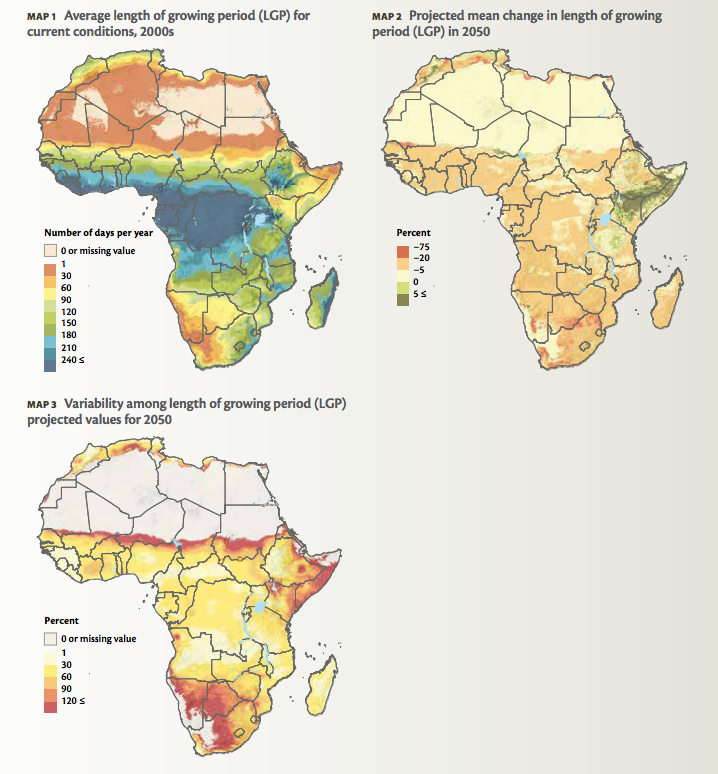
If you’re going to call something an e-atlas and put it online, to much fanfare, you can’t just make the maps available for download and sharing as PDFs. That’s really no use to anyone. Take these maps on growing season length and its likely changes.

Screen Shot 2014-07-01 at 9.23.05 AM

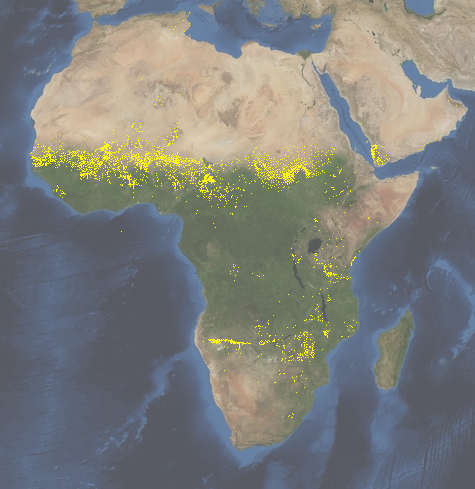
What anyone would want to do is start combining these with other data, say on — oh I don’t know, let me think — the distribution of germplasm in genebanks? Like this on pearl millet, according to Genesys.

Screen Shot 2014-07-01 at 9.06.14 AM

I’m pretty sure that there must be some pearl millet landraces in genebanks somewhere with the adaptation to shorter growing seasons that we’re going to need in the sorts of places highlighted by that Map 2 from the e-atlas. And that we might find those with the help of their Map 1 and the data from Genesys (which I can donwload as a KML). But how can I be sure, when Maps 1 and 2 are only available as PDFs? 2

Anyway, maybe I won’t have long to wait. There are plans, after all. I don’t know, maybe the maps in the e-atlas are already available elsewhere as KMLs or shapefiles or something usable, and you just have to ask? But then, what is this e-atlas for? Nice maps, though. Lots of fun to leaf through.

Robert Rhoades remembered

It was just over four years ago that Prof. Robert Rhoades, pioneer of agricultural anthropology, passed away. He’s remembered this month in a Special Issue of the journal Culture, Agriculture, Food and Environment entitled Tending the Field.

Prof. Rhoades didn’t just invent the field of agricultural anthropology. Here’s an extract from one of the papers, Long in the Horn: An Agricultural Anthropology of Livestock Improvement, by Tad Brown, one of his students, on the conservation of the Pineywoods cattle landrace in the southern US:

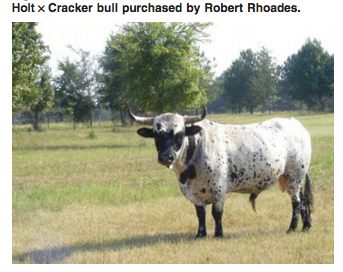
Through my fieldwork, I also located one lone bull descending from a Holt cow in Alabama. It is the offspring of a cross with a Florida Cracker bull. After some deliberation, Rhoades bought that half-bred Holt bull, and he would jokingly threaten to start his own strain (see Figure 2). To Rhoades, a purebred landrace was a bit of a contradiction in terms. Just as cattlemen derived named-strains from the larger population of woods cattle, the division and recombination of family herds was the process by which people and cattle came to inhabit the southeastern pines. As such, the emphasis on genetics and purity of descent in livestock conservation efforts today can be somewhat averse to the social history from which the landrace breeds were derived (R. Rhoades, personal communication).

Screen Shot 2014-06-23 at 11.14.28 AMAnd here’s that Fig. 2. Prof. Rhoades practiced what he preached. How many of us can say that?