- Genetic diversity in shea tree (Vitellaria paradoxa subspecies nilotica) ethno-varieties in Uganda assessed with microsatellite markers. Three geographic populations revealed by SSRs, not much related to the folk classification.
- Malaysian weedy rice shows its true stripes: wild Oryza and elite rice cultivars shape agricultural weed evolution in Southeast Asia. The weed is caught in the middle and swings both ways.
- Farmers without borders—genetic structuring in century old barley (Hordeum vulgare). Nordic barley structured latitudinally, with lots more variation within landrace accessions than now, according to historical specimens.
- The Agrodiversity Experiment: three years of data from a multisite study in intensively managed grasslands. Does increasing plant diversity in intensively managed grassland communities increase their resource use efficiency? No idea, but here’s the data from a huge multi-site experiment. Go crazy.
- Genetic diversity in selected stud and commercial herds of the Afrikaner cattle breed. It’s doing just fine, genetically, despite recent declines in numbers.
- The African baobab (Adansonia digitata, Malvaceae): Genetic resources in neglected populations of the Nuba Mountains, Sudan. Maybe a little more variation in homesteads compared to the wild. Maybe.
- Seeing the trees as well as the forest: The importance of managing forest genetic resources. The first State of the World’s Forest Genetic Resources and the first Global Plan of Action for the Conservation, Sustainable Use and Development of Forest Genetic Resources summarized: exchange, test in common gardens, and be clever with genetics, in breeding, management and restoration.
- Are small family farms a societal luxury good in wealthy countries? Rich countries don’t mind inefficient farms because they look nice.
- DIVECOSYS: Bringing together researchers to design ecologically-based pest management for small-scale farming systems in West Africa. Where do I sign up?
- Ecosystem governance in a highland village in Peru: Facing the challenges of globalization and climate change. Big Dairy doing for Andean crops.
- Intensive agriculture reduces soil biodiversity across Europe. What they said.
- The climate of the zone of origin of Mediterranean durum wheat (Triticum durum Desf.) landraces affects their agronomic performance. 4 main climatic zones, accounting for up to 30% of variation in important evaluation traits. FIGS, anyone?
- Indicators for the on-farm assessment of crop cultivar and livestock breed diversity: a survey-based participatory approach. And only 5 of them too!
Speaking about Speaking of Food
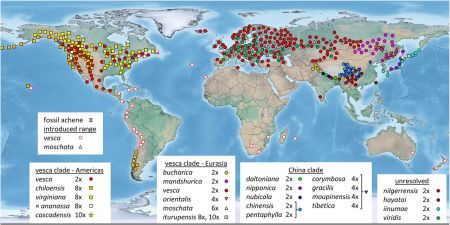
This special issue, “Speaking of Food: Connecting basic and applied plant science,” aims to provide concrete examples of how a wide range of basic plant science, the types of scientific studies commonly published in AJB, are relevant for the future of food. This Special Issue was inspired by Elizabeth A. Kellogg’s 2012 Presidential Address to the Botanical Society of America, and resulted in part from a symposium and colloquium by the same name that took place at the 2013 Botany meetings in New Orleans, LA. The issue editors are grateful to the Botanical Society of America, the American Society of Plant Taxonomists, and the Torrey Botanical Society for support of this work.
Special issue of the American Journal of Botany, that is. Alas, only one of the papers, the one on strawberries, is open access, though.
Nibbles: Georgian kitchen garden, Italian citrus history, Domestication infographics, AVRDC, Zambian nutrition policy, Camel-keeping, ESA states its case, Making lunch
- Podcast double: Georgian kitchen gardens (with pix) and Italian citrus.
- Domestication infographics are now officially a thing.
- Feeding the world with vegetable research, courtesy of AVRDC. Need to register, alas.
- Zambia biofortifies. Maybe they didn’t register for the above.
- Camels as biocultural artifacts.
- European Seed Association breaks down the tumultuous last 18 months of the European seed sector.
- “It takes more than 40 different species to make a simple lunch…”
Nibbles: CIAT genebank, Breeding course, Tomato sequencing, EUFORGEN celebrations, Gates projects, GCP quiz & video, CFS41 ITPGRFA side event
- A new genebank for CIAT?
- DuPont Pioneer sponsors a plant breeding symposium at Wageningen University. You can attend by webinar but you have to register. But I fear this is going out way too late. Sorry! Nevermind, you’re still in time for this.
- 360 tomato genomes give an all-round view of its evolution.
- EUFORGEN turns 20. Don’t know EUFORGEN? Watch this video. Or go to this side event.
- Self-reproducing hybrid cowpea and sorghum? Gates Foundation is on it. Ah, but it’s not all sweetness and light in Seattle.
- It’s also a bit late, so don’t expect a prize, but you can still take the GCP World Food Day quiz just for fun.
- But for real fun, watch their cassava video.
- Oh my! Judge for yourself whether it was worth listening to.
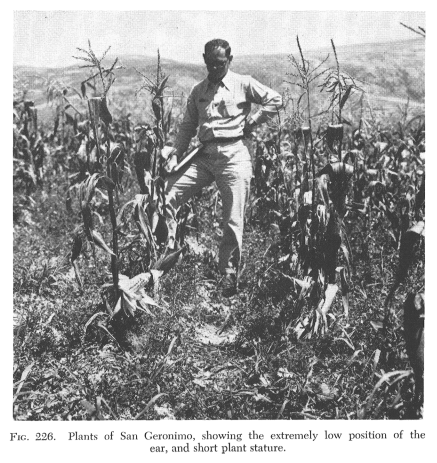
Historical maize information online
The core set of the Races of Maize volumes were a result of investigations by Maize Geneticists and were published by the National Research Council, National Academy of Sciences between 1952 and 1963. The set represents a unique source of information, which characterizes and describes the races of maize and their respective geographic origins. These volumes have been out of print and unavailable to researchers for decades. The Maize Crop Germplasm Committee (CGC) recognized the importance of the availability of this scientific literature and recommended that they be electronically reproduced and distributed via the National Academy Press, Washington, D.C.
And a great idea that is too. I was given a nice CD-ROM by Dr Candy Gardener of the USDA genebank in Ames, Iowa. But you can also access the PDFs online. It’s a real treasure-trove. Happy browsing!