- Rice symposium wows Hong Kong.
- Fruits and nuts of Kyrgyzstan.
- Rothamstead’s archives look totally cool.
- One does wonder whether Afghanistan could learn something from Colorado.
- When did continued collaboration become news, CIAT?
- Cherokee continue to save seeds.
- Agricultural expansion a continuing a bad thing for nature.
Nibbles: Kangkong, Fun labwork, Breadfruit beer, Saving juniper, Green Week
- Ipomoea aquatica in the news.
- DNA extraction made fun.
- Samoa launches breadfruit beer.
- Gin maker protects his livelihood.
- The Treaty goes to Green Week.
Dorian Fuller on domestication, and not only of donkeys
Speaking of Dorian Fuller, in addition to his always fascinating The Archaeobotanist blog, he also curates five — count them — topics on Scoop.it, reflecting the wide range of his interests. Unlike many others on Sccop.it, including me, Dr Fuller always provides trenchant commentary on the material he posts. Browsing through his stuff, I ran across a post on a paper on donkey domestication which I had missed last year. I hope he won’t mind if I reproduce his insights here, to give a flavour of what you can expect if you follow him.
Donkey’s are undoubtedly one of the most important domesticates from Africa, but less well-documented then cattle or many crops, as they have rarely been food sources. This article provides updated review of the archaeology and genetics of donkey, including some ancient DNA evidence such as Uan Muhhgiag donkeys from prehistoric Libya. Of interest is the argument that reports of “wild” donkeys in the Levant or Arabia, such as the quantities from Ash-Shumah in Yemen, are early domesticates and not endemic wild populations. If this is the case then it would put donkey herding back to the early Holocene before 6000 BC, putting them in competition of Bos africanus for the earliest African domesticates [excluding Pleistocene bottlegourds]. Alternatively, as mapped in Boivin & Fuller (2009 in J. of World Prehistory) we extend the map of wild donkeys through the Sinai and down the west coast of Arabia to make the Ash-Shumah remains those of hunted wild animals. The latter would open the possibility of southern Levant donkey domestication. The current review by Kimura, Marshall and colleagues makes an interesting but inconclusive case against this. (Historical linguistic evidence does tend to point to African domestication among Afroasiatic/Cushitic sub-groups). As this paper concludes there is a need for more targetted research on donkeys!
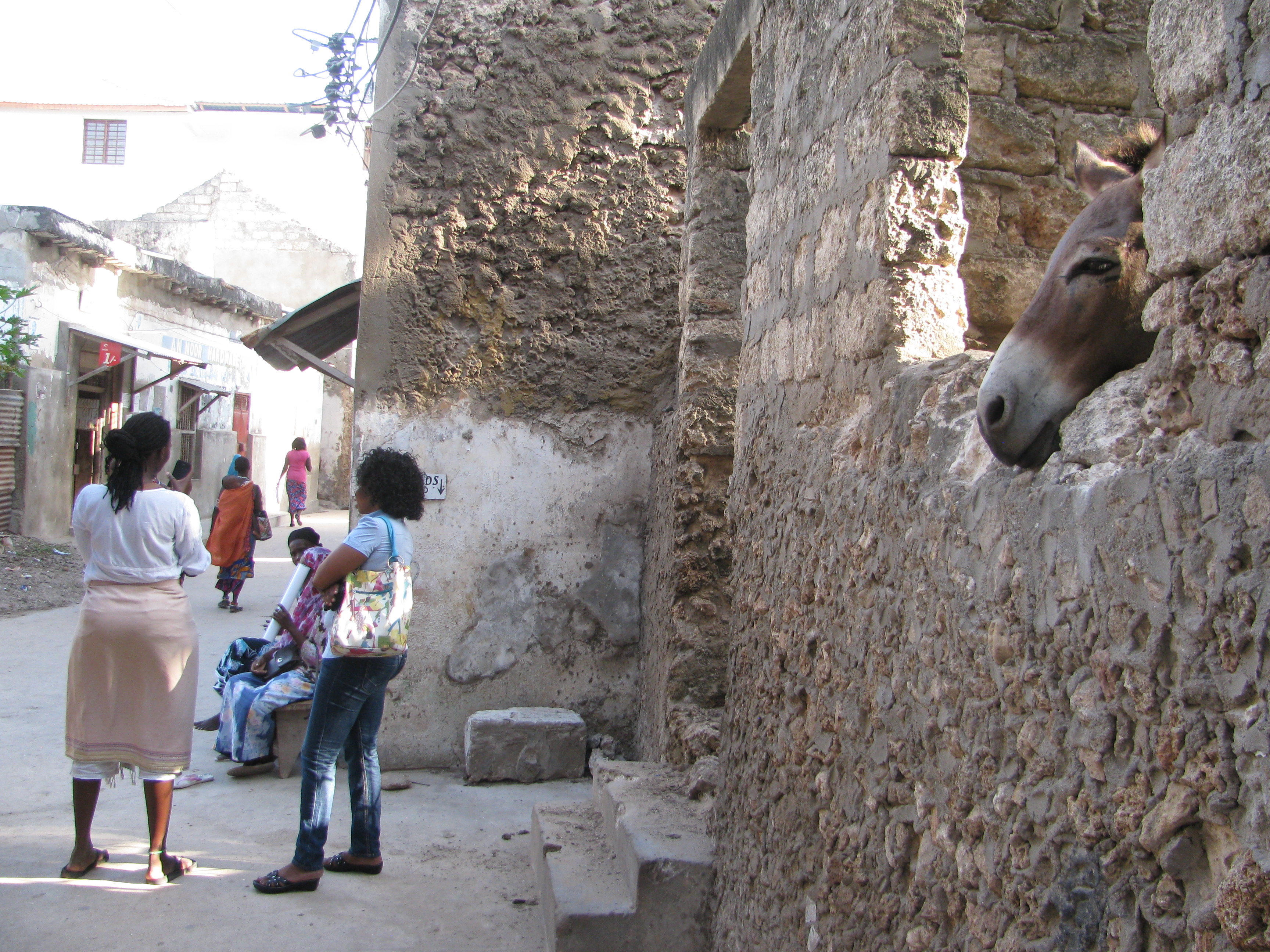
Which also allows me to post one of the pix from my recent holiday on Lamu island off the coast of Kenya, where donkeys are of course the only form of transportation.
Nibbles: Potato journeys, European collections, European bees, Wheat breeding, Mountains, Forest restoration, Tall trees, Symbioses, Guanaco reintroduction, Plant genomes, Improving GBIF, 2 sides of beef
- The European encounter with the potato. A Google Earth tour by Jorge L. Alonso, and really rather fun. In Spanish.
- The European encounter with virtual germplasm collections. AEGIS takes another step.
- The European encounter with the honeybee. Bad news for the latter.
- The European encounter with wheat. Its promiscuity will save us. Wheat’s, that is, not Europe’s. No, wait…
- Nope, mountains will save us. Including Europe’s?
- We should be doing reforestation in discrete patches, not huge swathes. Even on mountains, I suppose.
- But if you want those trees to grow really tall, your options are limited.
- No harm in adding a few fungi though. On the contrary…
- And maybe a few guanacos?
- Well we must have at least one genome piece in Nibbles, mustn’t we? Turns out plants are good models for everything else, including us.
- And one database hell piece too, natch. Some thoughts on improving GBIF. Could be applied to Genesys too, I fear.
- Meat: One side, and the other.
Forestry and agriculture information resources latest
Good news from FAO for all interested in forests and their products:
After much reflection, we have decided to merge the NWFP Digest and Non-Wood News into a single e-publication, which will be distributed quarterly: the present NWFP Update. Whilst possessing many of the same features of its predecessors, we are placing increased emphasis on views and contributions from our readers, with the hope of building a dynamic platform for practitioners to exchange views on NWFPs in the long-run… Finally, we would like to thank Tina Etherington, long-time editor of the NWFP Digest and Non-Wood News who retired last year. Tina provided such momentum to the NWFP “conversation” in previous years through her work and was an inspiration to many.
Happy to add our thanks and congratulations for Tina. You can subscribe from the appropriate FAO Forestry web page.
And since we’re on the subject of data and information, have you heard about agINFRA? It’s all part of this Global Open Data for Agriculture and Nutrition (GODAN) thing. :
agINFRA is pioneering the connection of Agricultural Data through an Open and Participatory Data Infrastructure. Our website is here to provide you with everything you need to know to discover exciting new developments in the field and get yourself or your organization involved.
So now you have no excuse.