- Of course garlic and dill are innovative crops – if you live in the Pamirs.
- So is Stevia, in Spain.
- A big new book on saving your own seeds. Ignore the rhetoric, and don’t try this in Europe, folks.
- Crops for the Future calls Jatropha a “debacle”. Hard to argue with that.
- All about CIMMYT at an agro-biodiversity fair.
- Put a price tag on natural resources, and you risk undermining common ownership.
A chilli farmer spills the beans
Bioversity International has released a video featuring Esaú Hidalgo del Águila, 2010 winner of the Aji de Plata (Silver Chilli) for his chilli diversity.
This is part of a project to supply a growing demand in markets for new and different chilli flavours.
Safeguarding safflower
In the late 1950’s and mid 1960’s, Knowles traveled over 32,000 miles with his wife and son overland across North Africa, the Middle East, and South Asia gathering germplasm of wild and domesticated safflower species, an effort which produced most of the species now in the USDA world safflower collection.
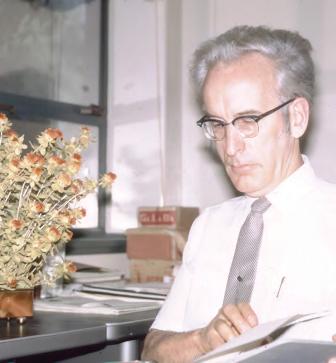 Paulden F. Knowles worked at UC Davis for 35 years, retiring in 1982. Just before he died in 1990, he wrote out in longhand the story of his career in safflower development. That document has now been edited Patrick E. McGuire, Ardeshir B. Damania, and Calvin O. Qualset of the Department of Plant Sciences, and is available online. It makes for fascinating reading. But I can’t resist the temptation of leaving you with an excerpt from the editors’ summary, rather than the report itself.
Paul Knowles’ work finished with the decade of the 1980s. At the time of his death in 1990, work was underway that would culminate with the opening for signature in 1992 of the Convention on Biological Diversity and its subsequent entry into force at the end of 1993. It is an important question whether he could have done his work in the international germplasm access and exchange environment that exists post-CBD. Certainly under the CBD, there is nothing in theory that would prevent his accomplishments, but in practice the many bilateral agreements for exchange of germplasm necessary today and the difficulty in obtaining these (as exemplified by the records of the past 20 years) make it highly unlikely that the current state of safflower knowledge and productivity would have been possible. The International Treaty for Plant Genetic Resources for Food and Agriculture and its Multilateral System for genetic resources access that emerged in the early 2000s would not have helped Knowles’ safflower work either. Safflower is not one of the crops covered under the Treaty.
Follow the root and tuber conference…
Ongoing session on Roots, Tubers and Bananas at #ISTRC conf in #Abeokuta #rtb
— RootsTubersBananas Breeding (@RTB_CGIAR) September 25, 2012
…and send us the juicy bits, of course!
LATER: Here’s the live webcast.
LATER STILL: No, wait…
Over 200 scientists from 33 countries attending the 16th ISTRC International symposium on root and tuber crops,lets use #ISTRC16 for tweets!
— NRI (@NRInstitute) September 25, 2012
Nibbles: Cryo primer, Ag development paradigms smackdown, Edible book, Roots & tubers conference, Deep taxonomy, WWF ag investment report, Forecasting rape disease, Amaranth, Competition
- Science 2.0 Conservation 101 #fail.
- It’s the roads, stupid. Well, not only. Cowen cowed.
- Big book on the edible plants of Central America online.
- Big root and tuber meet gets off the ground in Nigeria with pean for cassava.
- How to link taxonomic names to everything
- Responsible investment in agriculture. Mitt Romney alerted.
- Video on diseases of oilseed rape, Rothamsted shares forecast (and it’s not good). So, is there any diversity in host response?
- Amaranth, big time.
- Correcting the capitalist tools on their misunderstanding of evolution. The tragedy is, they don’t seem to know they don’t know.