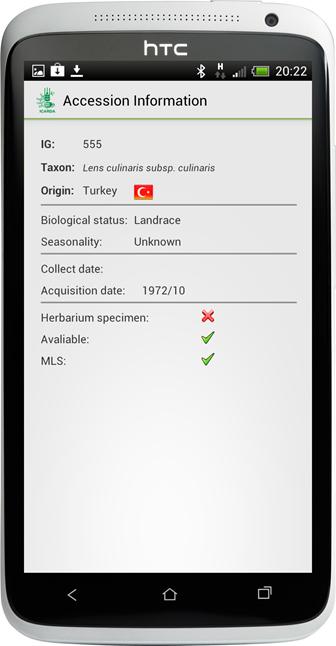
 With a mighty leap, the ICARDA genebank has just landed squarely in the 21st century. You can now download an app and search the international collection managed by the centre from your Android phone. iPhone version coming soon. If you test it out, leave your comments here and they will reach the relevant ICARDA geek.
Nibbles: Environmental health index, Data visualization, Hungry World, Vegetables meeting, FFS, ICTs in ag, ILRI review, Devil’s claw, Cassava pests, Greek seed meet, Dolphins
- “…the world’s first environmental health index to be based on long term historical data” not actually as interesting as it sounds.
- Data porn. Aggregated. There oughta be a law… Speaking of infoporn, though, check out the third one here.
- AlertNet site on Solutions for a Hungry World pretty but broken. Media alerted, so by the time you read this they may have fixed it and you won’t get Haiti no matter what you click.
- Warwick meeting to look at vegetables and food security. You going? Will you tell us about it?
- Farmer field schools in El Salvador. Diversification seems to be on the curriculum. But diversity?
- And are they using — or being taught — ICTs?
- ILRI reprises a high-impact article. And why not. Nice idea, actually. I may steal it.
- Devil’s claw: weed or NUS? Both!
- Cassava not such a Rambo after all? Heading for a quagmire in SE Asia.
- Greek seed savers met a couple of weeks back. Where you there? Would you like to tell us about it?
- Speaking of seeds, would you like to help save the D. Landreth Seed Company?
- More social dolphins more likely to help humans fish. I wonder if the same for, say, ancient wolves.
Nibbles: Hula skirts, Livestock at Rio, Sea buckthorn, Kenyan ag-blogs
- Grass skirts not made of grass shock. Nope, they’re made from cabbage palm. Ah common names.
- Farm animals set off on the road to Rio, kinda, sorta.
- Enthusiast cracks sea buckthorn (Hippophae rhamnoides) propagation.
- The Bloggers Association of Kenya announces shortlist for Best Agriculture Blog.
Berry Go Round hits 50
While everyone else in the civilised world enjoys a May Day off, we’re still here, toiling to bring you the best of the interwebs. Today, that includes the 50th edition of Berry go Round, the carnival of botany blogging. Fittingly (and this wasn’t planned) the host this month is Laurent at Seeds Aside, who began the whole thing way back, er, 50 editions ago. Head over there for links to a great selection of words and images about all manner of botanical subjects.
Before you go, however, consider hosting an edition of Berry go Round yourself. It’s actually quite rewarding, in its own way. All months’s from July are open. And of course submissions for May are welcome at any time.
Indian animal genetic resources institute sets its priorities
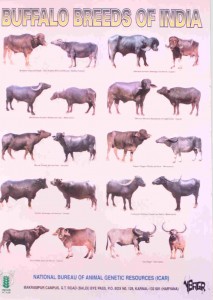 While looking for something else 1 I came across the news on the website of India’s National Bureau of Animal Genetic Resources (NBAGR) that the genome of the water buffalo has been sequenced. I also found out that you can buy attractive calendars featuring native breeds such as the one you see here. And that NBAGR has a catchy song. Alas, the Information System on Animal Genetic Resources of India does not seem to work.